

&imwidth=800&imheight=600&format=webp&quality=medium "Japan pushes for trade breakthrough as Trump tariffs loom, G7 summit nears")
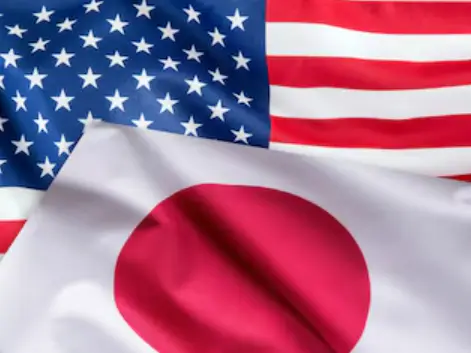
Japan is stepping up efforts to secure a breakthrough trade deal with the United States before the Group of Seven (G7) summit in Canada, even as Prime Minister Shigeru Ishiba warns Tokyo will not accept a rushed or one-sided agreement.
Speaking in Washington on Friday, Japan’s top trade negotiator Ryosei Akazawa confirmed that detailed talks had taken place with US Treasury Secretary Scott Bessent and Commerce Secretary Howard Lutnick, aimed at resolving tariff tensions and securing economic security cooperation. The two meetings lasted over two hours in total.
“To achieve an agreement that is mutually beneficial, we engaged in very in-depth discussions… on expanding bilateral trade, non-tariff measures, and economic security,” Akazawa told reporters after the sixth round of talks, as quoted by Reuters.
However, no indication was given on whether a formal deal might be announced during the G7 summit, set to begin Sunday in Charlevoix, Canada. Prime Minister Ishiba and President Donald Trump are expected to meet on the sidelines, but a final schedule remains unconfirmed.
High tariffs, high stakes
At the heart of the standoff is the Trump administration’s aggressive tariff regime, which includes a 25 per cent tariff on Japanese auto imports, a 50 per cent duty on steel and aluminium, and an across-the-board 10 per cent levy on other Japanese goods set to rise to 24 per cent from July 9 if no deal is reached.
Trending Stories
&imwidth=180&imheight=135&format=webp&quality=medium)
Houthis claim Riyadh airport attacks, Aramco strikes; issue fresh warning to airlines, travellers and workers
&imwidth=180&imheight=135&format=webp&quality=medium)
'Ouch!!! That must hurt': Kangana Ranaut hails Kamal Haasan's sharp reply to Elon Musk over Starlink row
&imwidth=180&imheight=135&format=webp&quality=medium)
Wasim Jaffer blames Ajit Agarkar-led selection panel for Virat Kohli’s Test retirement
&im=FitAndFill=(700,400)&imwidth=180&imheight=135&format=webp&quality=medium)
Is sending robots to Mars easier than sending humans?
&imwidth=180&imheight=135&format=webp&quality=medium)
Anthropic's AI invented a murder witness and sent the fake tip to Philadelphia police
&imwidth=180&imheight=135&format=webp&quality=medium)
UK school ditches technology, shifts from screen to pen and paper for learning
&imwidth=180&imheight=135&format=webp&quality=medium)
'Just coincidence': Police mistakes protester as AISA chief Neha Bora, arrests her from site
&imwidth=180&imheight=135&format=webp&quality=medium)
iPhone Duo price index: Tracking Apple’s latest pricing trends
&imwidth=180&imheight=135&format=webp&quality=medium)
McSweeney reveals how studying Virat Kohli’s YouTube clips helped Australia A conquer India
&imwidth=180&imheight=135&format=webp&quality=medium)
Nana Patekar's cause of death confirmed; here's what his postmortem report says
&imwidth=180&imheight=135&format=webp&quality=medium)
One Indian killed in Riyadh airport attack; 11 others injured : MEA
&imwidth=180&imheight=135&format=webp&quality=medium)
1,500 drones illuminate Mumbai sky as Cordelia Cruises unveils second ship, Cordelia Sky
&im=FitAndFill=(700,400)&imwidth=180&imheight=135&format=webp&quality=medium)
Navratri 2026: 9 days, 9 forms of Goddess Durga and 9 colours- Check the complete list
&imwidth=180&imheight=135&format=webp&quality=medium)
'Turn approver, resign, we'll forgive you': Rahul Gandhi claims receiving messages from CEC Gyanesh Kumar
&imwidth=180&imheight=135&format=webp&quality=medium)
Portugal Federation confirms Cristiano Ronaldo’s return to national team despite suspension
&imwidth=180&imheight=135&format=webp&quality=medium)
Congress demands action against chief election commissioner
&imwidth=180&imheight=135&format=webp&quality=medium)
BCCI rejects venue shift reports, India vs Sri Lanka 1st ODI to remain in Delhi
&imwidth=180&imheight=135&format=webp&quality=medium)
Anti-SIR protest in Mumbai: Protestors wear black masks & ribbons in Mumbai
&imwidth=180&imheight=135&format=webp&quality=medium)
Delhi protests: 'Court should not be dragged into political activity', says CJI Surya Kant
&imwidth=180&imheight=135&format=webp&quality=medium)
Diljit Dosanjh’s Delhi concert gets a new date: When and where to catch the singer
&imwidth=180&imheight=135&format=webp&quality=medium)
Microsoft's Nadella says treat every AI model as already hacked, and build an 'emergency brake'
&imwidth=180&imheight=135&format=webp&quality=medium)
Maharashtra appoints FDA commissioner Tukaram Mundhe as secretary of committee for MPSC overhaul amid stir
&imwidth=180&imheight=135&format=webp&quality=medium)
Saif Ali Khan is finally on Instagram! Here's what he shared in his first post
&imwidth=180&imheight=135&format=webp&quality=medium)
Telangana ATM heist: Thieves in nighties arrive in ambulance, break into SBI ATM in Kamareddy - VIDEO
&imwidth=180&imheight=135&format=webp&quality=medium)
Delhi protest: CJI Surya Kant declines to meet India Bloc leaders
&imwidth=180&imheight=135&format=webp&quality=medium)
'Say no to Muse': Meta has no control over its own moderation AI while it forces a security nightmare on everyone
&imwidth=180&imheight=135&format=webp&quality=medium)
CJI Surya Kant declines INDIA bloc leaders’ request for meeting ahead of march to SC, asks them to file petition
&imwidth=180&imheight=135&format=webp&quality=medium)
Telangana man allegedly recruited into Russian military dies near Ukraine border
&imwidth=180&imheight=135&format=webp&quality=medium)
Top AI models flunked a test of inventing new AI research, so much for self-improving AI
&imwidth=180&imheight=135&format=webp&quality=medium)
A watchdog rated 'ChatGPT for Teens' an unacceptable risk and says keep under-18s off it
&im=FitAndFill=(700,400)&imwidth=180&imheight=135&format=webp&quality=medium)
New OTT releases this week (October 12-18, 2026): Sacrifice, Koffee with Karan S9, Roadies Rebirth- 6 titles coming on Netflix, JioHotstar and more
&imwidth=180&imheight=135&format=webp&quality=medium)
Sidhu Moose Wala’s younger brother wins hearts by recreating late singer’s signature move at Toronto Hologram Show
&imwidth=180&imheight=135&format=webp&quality=medium)
Other Mommy leads North American box Office as Verity, Resident Evil round out top four
&imwidth=180&imheight=135&format=webp&quality=medium)
China imposes first-ever sanctions on ministers from Taiwan allies: What this means
&imwidth=180&imheight=135&format=webp&quality=medium)
Iran: US accepted some conditions, Clarity needed on others
As per Reuters, Japan’s government is pushing hard to secure tariff relief before the summit or risk further economic fallout.
Last week, Akazawa made it clear Japan “won’t necessarily wait” until the G7 to reach a deal if both sides find common ground earlier. But he admitted that no agreement was imminent as of yet.
Economic pressure mounts on Tokyo
Japan’s Ministry of Economy, Trade, and Industry (METI) has already flagged that the current tariff levels threaten to tip the economy into a technical recession, especially after weak industrial output in Q1 2025. In response, Prime Minister Ishiba approved emergency funds to shield small businesses and households from the tariff impact.
According to Bloomberg, Ishiba also met with opposition leaders last week, calling for cross-party unity to address what he described as a “national crisis.”
“Progress is good,” Ishiba said. “But we won’t compromise Japan’s interests just to announce a quick deal,” he added, as quoted by Bloomberg.
The pressure is compounded by Japan’s looming upper house elections in July, where Ishiba’s political standing could be damaged if the G7 fails to yield results.
US–Japan trade: Deep ties, deeper divides
The US remains Japan’s second-largest trading partner after China, with exports worth over $135 billion in 2024, according to Japan’s Ministry of Finance. However, 19 per cent of those exports come from the auto sector, which has been directly targeted by Trump’s tariffs, as per World Bank data.
Trump has defended the duties as a necessary move to reduce the US trade deficit and strengthen domestic manufacturing. Commerce Department data this week showed the US trade gap shrinking by 55.5 per cent in April, with imports falling by a record 16.3 per cent, numbers the administration views as validation of its tariff strategy.
But Japan sees things differently. Economists warn that caving to US pressure could weaken Japan’s industrial competitiveness and set a precedent for further concessions.
“Japan cannot afford to be seen as conceding too much ahead of the G7,” said Noriko Hama, professor of economics at Doshisha University, speaking to Nikkei Asia. “Yet there’s immense pressure to keep US relations stable.”
G7: Window for diplomacy or pressure tactics?
The upcoming G7 summit from June 15–17 is widely seen as a litmus test for Japan–US ties. Trump is expected to push his agenda for “fairer trade deals”, including calls for greater market access for US agriculture and a possible rollback of Japan’s tech export restrictions.
Diplomatic officials quoted by Reuters said a last-minute bilateral between Trump and Ishiba remains possible, even if not officially announced.
Still, Japanese negotiators insist they are not negotiating under pressure.
“We are not going to negotiate under media spectacle,” said a senior trade ministry official, speaking anonymously to Reuters. “We seek a rules-based outcome with mutual respect.”
Outlook: Tokyo cautious, but determined
Whether or not a deal materialises at the G7, Japan appears to be signalling one clear message, it won’t be rushed. With rising costs at home, businesses on edge, and the clock ticking toward a key election, Ishiba’s government is balancing political necessity with strategic restraint.
As the G7 opens in Canada, all eyes will be on whether Trump and Ishiba can find common ground — or whether the tariff cloud will continue to loom over one of the world’s most important bilateral trade relationships.
(With inputs from the agencies)