India's manufacturing growth slows to five-month low in September: Report

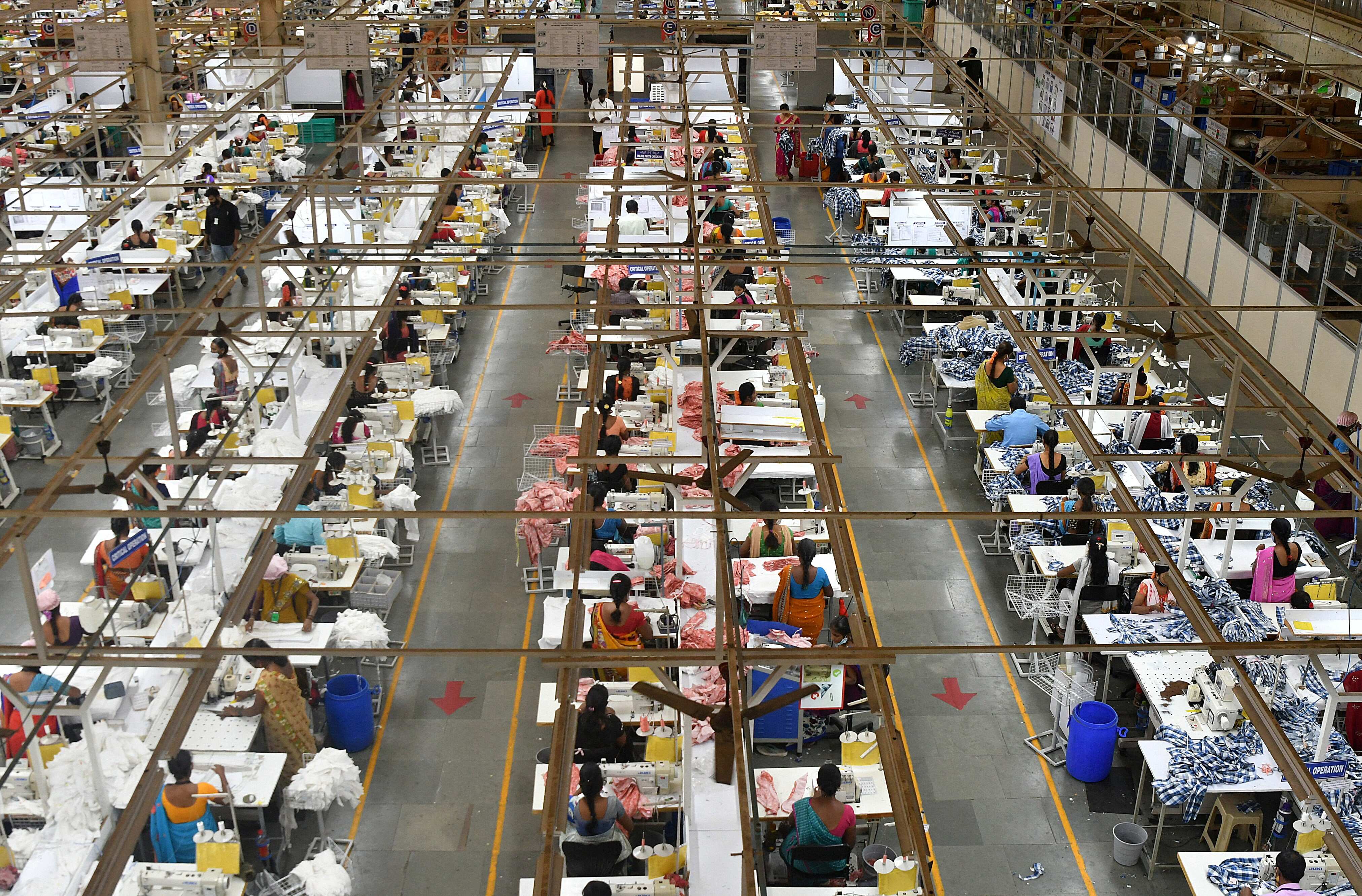
Garment workers stitch shirts at a textile factory of Texport Industries in Hindupur
India's manufacturing sector witnessed a mild slowdown in September, registering a five-month low, according to the S&P Global India Manufacturing Purchasing Managers' Index (PMI), which slipped from 58.6 in August to 57.5.
A PMI reading of 50 signifies no change in activity levels. The Hindu report indicated that this shift was attributed to a softer increase in new orders, affecting production growth. Despite this moderation, both demand and output demonstrated significant improvements, leading to robust business confidence and a positive production outlook.
The Hindu quoted Pollyanna De Lima, the economics associate director at S&P Global Market Intelligence, as saying, "Upbeat forecasts continued to drive job creation efforts and initiatives to replenish input stocks. Together, these indices point towards a favourable trajectory for the Indian manufacturing industry."

However, De Lima also warned about the notable increase in output charges, which, despite decreasing cost pressures, may hinder future sales prospects.
According to a report by The Economic Times, she also said that the slowdown in manufacturing activity was driven by a softer increase in new orders, which tempered production growth.
Nevertheless, the manufacturing industry in India remains robust, with substantial growth in new orders and production in September. This surge in activity can be attributed to strong demand, both domestically and internationally. Notably, international demand has been expanding for the 18th consecutive month, reflecting a positive trend.
The encouraging demand dynamics have fostered a highly positive outlook among businesses. This optimism has translated into a notable boost in hiring, with the employment index reaching its highest level since November. Although employment growth remains moderate, the index has consistently stayed above 50 for six consecutive months, indicating continued expansion.
Despite the buoyant demand, input costs saw only a mild increase in September, marking the weakest pace in over three years. Participants noted lower prices for commodities such as aluminium and oil. However, strong demand has prompted companies to raise their selling prices. The output charges index has risen, primarily driven by higher labour costs, surpassing its long-run average. This surge in output charges has raised concerns about potential inflationary pressures.
Considering these developments, the trajectory of India's manufacturing sector in the coming months will be closely watched. The ability to balance rising output charges and strong demand while navigating inflation concerns will be pivotal in sustaining the industry's growth.
WATCH WION LIVE HERE