
&imwidth=800&imheight=600&format=webp&quality=medium "India surpasses Japan to become world's fourth-largest economy, poised to overtake Germany soon: Report")
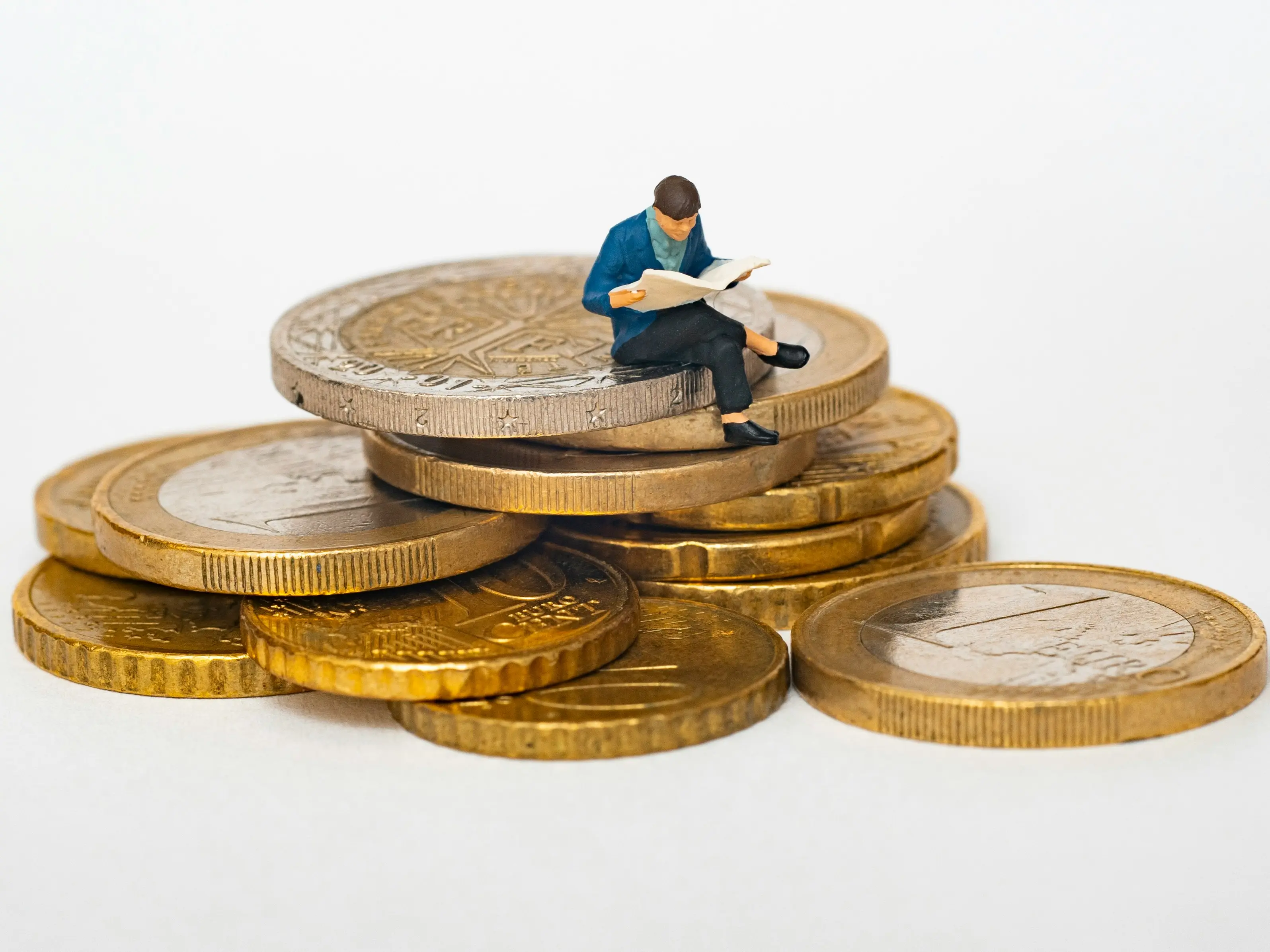
India has overtaken Japan to become the fourth-largest economy globally, as confirmed by the Indian government's year-end economic review. According to the projections, India is on track to surpass Germany in the next few years and become the third-largest economy by 2028.
What is India's GDP?
India’s gross domestic product (GDP) has reached approximately $4.18 trillion, with forecasts suggesting it will grow to $7.3 trillion by 2030. On its current trajectory, India will only be behind the United States and China in terms of economic size. The country's GDP grew by 8.2% in the second quarter of the 2025–26 fiscal year, up from 7.8% in the previous quarter, marking the highest growth in six quarters.

Additionally, India’s export sector is performing well, with merchandise exports hitting $38.13 billion in November 2025, a rise from $36.43 billion in January. This boost is driven by growth in engineering goods, electronics, pharmaceuticals, and petroleum products. However, the official confirmation of these figures will only be available in 2026 when the final annual GDP numbers are published. The International Monetary Fund (IMF) has indicated that India is likely to surpass Japan in the coming year.
What is driving the Indian economy?
Trending Stories
)
Nigeria: Protesters take to the streets, police fire shots
)
US-Iran war: Tehran draws red lines — seven demands before any peace talks
)
Russia-Europe tensions: Polish PM warns Russian attacks could test NATO's unity
&im=FitAndFill=(700,400))
‘Not the US or China’: These are the countries leading the world in arable land
)
Mark Carney mimics Trump in hilarious moment over C$70 billion clean-energy investment; room erupts in laughter
)
Pentagon revives mandatory testosterone testing for male troops aged 30 and above
)
Delhi voter roll shake-up: 3.31 million electors flagged in SIR review
)
‘End of my career...’: NSA Doval recalls tense Sikkim mission when China captured Indian intelligence team
)
Report: Iran rebuilding Taleghan 2, nuclear site tied to past weapons research, hit twice by Israel
)
Trump defends AI amid growing alarm, announces new 'AI force' and promises an 'AI czar'
)
Iran sets 7 conditions to end war with US: What are Tehran’s demands?
)
Trump announces ‘AI Force’ as debate grows over AI risks and regulation
)
China may have gained access to US's classified F-35 jets; parts meant for repairs diverted to Hong Kong, sparking Pentagon inquiry
)
Gaza under attack: Health chief's son killed in IDF strikes
)
Arvind Kejriwal, family members, Delhi CM Rekha Gupta get SIR notices
)
Cochin shipyard starts building Indian Navy's next-gen missile vessels
)
Saudi vs Houthis: Houthis claim missiles & drones used in attack on key Saudi sites
)
Ed Sheeran addresses Macklemore's removal, Gaza conflict during Philadelphia concert: 'I cannot hide how I feel'
)
‘Will go to any extent’: Pakistan vows to defend Saudi Arabia amid Houthi attacks
66 years of the Indus Waters Treaty: How India and Pakistan settled a bitter river dispute
)
The Verdict | When precision fails: US commits war crime in Minab school strike, UN finds
)
9 women found dead near Johannesburg: South Africans rally, demand 'enough' to femicide
)
Kampala-Ankara rift deepens: Uganda suspends military ties, seeks Fred Lumbuye's extradition
)
Trump wants to rename ‘Artificial Intelligence’, gives 3 options: Which one would you pick?
)
US-Iran war: Tehran sets seven conditions to re-engage in talks with US
)
Reacher star Alan Ritchson opens up about alleged blackmail, suicide attempt during difficult period
)
Africa is splitting, and a lot sooner than estimated, giving way to a new ocean
)
Flying cars in UAE: Ras Al Khaimah signs deal with Chinese company to test new transport
)
Trump bans CNN, MS NOW and Politico from White House over ‘FAKE NEWS’
)
Trump 2.0: Dark days ahead for America’s ‘imperial presidency’
&im=FitAndFill=(700,400))
How many F-35s does Britain, Japan and Israel have?
)
Harry Brook targets long reign at top of T20I rankings after Sri Lanka sweep
)
Russia's deadly Ukraine strikes kill 2 in Sumy, hit Dnipro mall
)
Russia holds first parliamentary elections since the beginning of the Ukraine war
&im=FitAndFill=(700,400))
Meet top 5 Indian batters with fastest T20I centuries
)
Raphinha hat-trick powers Barcelona to 3-1 win over Sevilla in La Liga
)
The country's growth has largely been driven by domestic demand, especially robust private consumption, despite global trade challenges and policy uncertainty. The government described the current phase as a rare "Goldilocks" moment, combining high growth with low inflation. Strong corporate finances, steady credit flow, and ongoing reforms have set India on a path to sustained growth. With ambitions to reach high middle-income status by 2047, the centenary of its independence, India is building on solid foundations for both economic expansion and social progress.
What are the challenges for India's economy going forward?
Despite impressive growth, India’s income gap with advanced economies remains significant. In 2024, India’s GDP per capita stood at $2,694, which is about 12 times lower than Japan’s and 20 times less than Germany’s. As India’s population grew to 1.4 billion, it overtook China as the most populous nation in 2023. A major challenge lies ahead in creating enough well-paid jobs for millions of young graduates. However, the report remains optimistic, noting that India's demographic advantage, its young population, could fuel future growth if quality employment opportunities can be created.
This year, Prime Minister Narendra Modi introduced large-scale consumption tax cuts and labor law reforms to boost the economy, following a slowdown to a four-year low. However, the rupee faced challenges, hitting an all-time low against the dollar in December 2025, partly due to concerns about trade relations with the U.S. and the effects of higher tariffs on Indian goods. India surpassed the UK to become the world's fifth-largest economy in 2022, and now, with its rapidly expanding economy, it’s set to move into third place soon.

