

&imwidth=800&imheight=600&format=webp&quality=medium "From $900 to $1 billion: How Dave’s Hot Chicken became America’s spiciest success story")
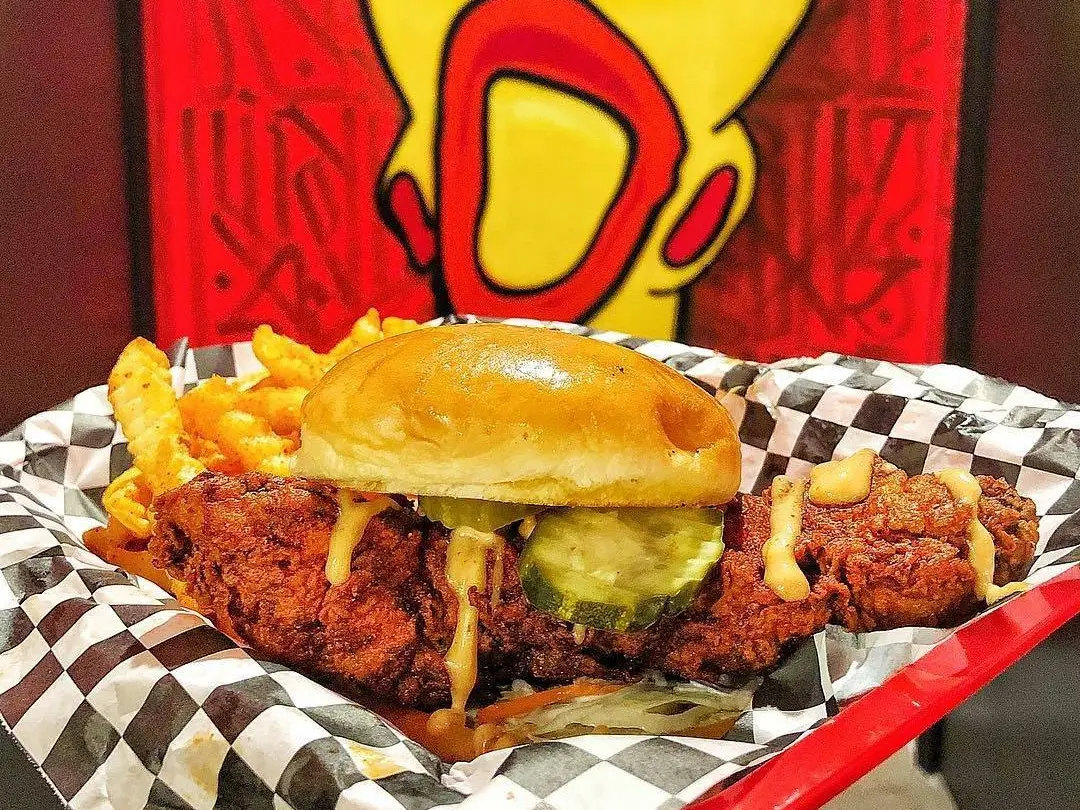
In 2017, three childhood friends stood under a flimsy canopy in a Los Angeles parking lot, armed with a fryer, borrowed tables, and a dream. Their capital? Just $900. Their product? Nashville-style hot chicken served with fries, slaw, and a fiery spice level called “Reaper” that requires a waiver to eat.
Eight years later, Dave’s Hot Chicken has gone from pop-up to phenomenon. This week, the California-based fast-casual chain was sold in a deal reportedly worth close to $1 billion to private equity firm Roark Capital, the latest sign of how red-hot the chicken market has become.
“It’s insane what we did,” said CEO Bill Phelps in an interview with CNBC. “The vision of these guys was just great. Arman Oganesyan was the founder. A high school dropout, but a marketing genius, and he created all of this in his head.”
A humble start
It all began with Arman Oganesyan, then a 24-year-old aspiring comedian making $50 a night with no restaurant experience. He pitched the idea of selling hot chicken to two childhood friends: Dave Kopushyan, a classically trained chef who had worked at Michelin-starred establishments like The French Laundry, and Tommy Rubenyan. There was just one hiccup: Kopushyan didn’t eat meat.
“Chicken? First of all, I don’t even like chicken,” Kopushyan reportedly told him.
Trending Stories
&im=FitAndFill=(700,400)&imwidth=180&imheight=135&format=webp&quality=medium)
Navratri 2026: 9 days, 9 forms of Goddess Durga and 9 colours- Check the complete list
&imwidth=180&imheight=135&format=webp&quality=medium)
Russian woman and Bihar boy's love story goes viral after she reaches India to marry him
&imwidth=180&imheight=135&format=webp&quality=medium)
Arijit Singh 9-city India stadium tour to start from January: Check venue and ticket prices
&imwidth=180&imheight=135&format=webp&quality=medium)
F1 set to return to Africa for first time since 1993
&imwidth=180&imheight=135&format=webp&quality=medium)
'Don't ever mess with nature!': Trump’s tiger attack post triggers social media backlash as victim's family issues heartbreaking tribute
&imwidth=180&imheight=135&format=webp&quality=medium)
US judge blocks Trump administration sanctions on human rights groups supporting Gaza war crimes investigation
&imwidth=180&imheight=135&format=webp&quality=medium)
Washington calls for 'de-escalation' as Ethiopia-Eritrea tensions fuel war fears
&imwidth=180&imheight=135&format=webp&quality=medium)
Trump's $100,000 H-1B fee: Why neither Republicans nor Democrats want to make it a 2026 US Midterm issue
&im=FitAndFill=(700,400)&imwidth=180&imheight=135&format=webp&quality=medium)
Which jobs are safest from humanoid robots?
&imwidth=180&imheight=135&format=webp&quality=medium)
US midterms: Trump rallies behind Husted as Brown mounts challenge in crucial Ohio race
&imwidth=180&imheight=135&format=webp&quality=medium)
US police foil alleged mass shooting plot targeting Illinois Hindu temple; 19-year-old’s manifesto called Indians ‘subhumans’
&imwidth=180&imheight=135&format=webp&quality=medium)
‘Rise up, young patriots!’: American singer Mary Millben says US donors funding CJP, backs Modi govt
&imwidth=180&imheight=135&format=webp&quality=medium)
Nobel Peace Prize winner Navi Pillay calls on US to 'get back to' being defender of human rights
&imwidth=180&imheight=135&format=webp&quality=medium)
Iran war: Will Trump, Netanyahu escalate conflict ahead of crucial elections? | Race to Power
&imwidth=180&imheight=135&format=webp&quality=medium)
Iranian woman, 23, handed death sentence for ‘blasphemy’ in social media post; appeals for help
&imwidth=180&imheight=135&format=webp&quality=medium)
'Turn approver, resign, we'll forgive you': Rahul Gandhi claims receiving messages from CEC Gyanesh Kumar
&imwidth=180&imheight=135&format=webp&quality=medium)
'Leakers should be shot': Trump rages over leak of US military plans to attack Iran, slams media
&imwidth=180&imheight=135&format=webp&quality=medium)
Somaliland celebrates after Trump calls it 'a totally different country', raise hopes of US recognition
&imwidth=180&imheight=135&format=webp&quality=medium)
‘My president, I mean my husband’: Trump's new press secretary Katie Zacharia's first briefing goes off the rails in 14 minutes
&imwidth=180&imheight=135&format=webp&quality=medium)
Mars is not for man: Human heart is too weak to survive the trip, study shows
&imwidth=180&imheight=135&format=webp&quality=medium)
Sheikh Hasina warns of 'deep sense of insecurity' among Bangladesh's minorities in Durga Puja message
&imwidth=180&imheight=135&format=webp&quality=medium)
FBI refutes media report claiming Kash Patel is in Russia for talks, says he is in Virginia
&imwidth=180&imheight=135&format=webp&quality=medium)
'Ouch!!! That must hurt': Kangana Ranaut hails Kamal Haasan's sharp reply to Elon Musk over Starlink row
&imwidth=180&imheight=135&format=webp&quality=medium)
Girl 'dead' for 8 hours wakes up at her own funeral, dad insists she wasn't breathing
&imwidth=180&imheight=135&format=webp&quality=medium)
Durga Puja 2026: Kolkata roads get a splash of colours
&im=FitAndFill=(700,400)&imwidth=180&imheight=135&format=webp&quality=medium)
New OTT releases this week (October 12-18, 2026): Sacrifice, Koffee with Karan S9, Roadies Rebirth- 6 titles coming on Netflix, JioHotstar and more
&imwidth=180&imheight=135&format=webp&quality=medium)
Did the US withhold missile warnings? Ukraine questions Washington's 'bad weather' explanation after Russian strikes kill six, cut power to 600,000
&imwidth=180&imheight=135&format=webp&quality=medium)
US Singer Mary Millben alleges foreign funding for CJP, warns against anti-Modi forces: All you need to know
&imwidth=180&imheight=135&format=webp&quality=medium)
Global energy crisis hits Indian economy
&imwidth=180&imheight=135&format=webp&quality=medium)
Durga Puja 2026: Power banks, water bottles and more, a foolproof guide to pandal hopping
&imwidth=180&imheight=135&format=webp&quality=medium)
Netflix layoffs: Streaming giant to cut 1,000 jobs globally amid slow growth and declining user engagement
&imwidth=180&imheight=135&format=webp&quality=medium)
Hidden video recording device found on Australian Navy ship amid claims of secret filming
&imwidth=180&imheight=135&format=webp&quality=medium)
Zelensky feels betrayed by Trump, urges Musk to restore Starlink in Ukraine; Musk responds
&imwidth=180&imheight=135&format=webp&quality=medium)
'Girls are uncomfortable': Salman Khan calls out paparazzi for bad angles, speaks on PR on Koffee With Karan
&imwidth=180&imheight=135&format=webp&quality=medium)
After flydubai co-pilot attack, Air France bans Pakistani, Muslim-majority crew on Israel flights
&imwidth=180&imheight=135&format=webp&quality=medium)
US midterms 2026: Trump under election watch? Democrats deploy 100 observers across nine states
But Oganesyan convinced him. Together, the trio scraped together their savings and started experimenting in kitchens, inspired by cult favourites like Howlin’ Ray’s and Gus’s World Famous Fried Chicken. Their research was intense, stuffing themselves with hot chicken across LA, studying recipes on YouTube, and even discovering the power of pickle juice by accident.
Their first night in business brought in just $40, mostly from friends. But within a week, a rave review from Eater Los Angeles sparked long lines outside their stand. Within months, they were selling out daily and paying themselves $10,000 a month, more money than any of them had ever seen.
The Hollywood twist
Their big break came when a man named John Davis walked into their first brick-and-mortar store and left a Post-it note asking for a call. Davis, a Hollywood producer and early investor in Wetzel’s Pretzels and Blaze Pizza, was ready to bet big on fried chicken.
In 2019, Davis led an investor group including actor Samuel L. Jackson, former NFL player and TV host Michael Strahan, and Boston Red Sox owner Tom Werner to buy a roughly 50 per cent stake in Dave’s Hot Chicken. Phelps, a fast-food veteran who co-founded Wetzel’s Pretzels, became CEO. His experience, particularly in franchising, proved invaluable.
Unlike Wetzel's, where franchises were handed to just about anyone, Dave’s focused on multi-unit operators who committed to opening at least five stores. The result was explosive: from a handful of LA stores, the brand has grown to 315 locations across the US, Canada, the UK, and the Middle East—with plans to hit 1,000 in the next five years.
The billion-dollar chicken boom
Dave’s success isn’t just about clever branding or spicy wings. It’s part of a broader trend: Americans are eating more chicken than ever. According to Technomic, sales at US chicken chains jumped 9 per cent last year—triple the growth rate of burger joints. Fast-casual chicken spots like Raising Cane’s, Wingstop, and Dave’s saw sales surge 24 per cent.
In 2024 alone, Dave’s raked in over $600 million in systemwide sales. This year, it expects to double that to $1.2 billion. “We’re extremely profitable at the franchise level and corporate level,” said company president and COO Jim Bitticks.
Private equity firms have taken notice. Roark Capital—already the owner of Dunkin’, Subway, Arby’s, and Buffalo Wild Wings—has now added Dave’s to its growing restaurant empire. The firm reportedly had its eye on the brand since 2021 and attended early store openings, leading company insiders to joke that they had a “private equity stalker”.
Though Roark now holds a majority stake, Dave’s original team—including Oganesyan, Kopushyan, the Rubenyan brothers, and Phelps—will retain minority shares and continue leading the brand.
Staying true to the flame
Despite its rapid growth and billion-dollar valuation, Dave’s hasn’t lost touch with its humble roots. Stores still display graffiti-covered walls and a simple four-combo menu. The “Reaper” spice level remains—along with the waiver customers must sign acknowledging risks of “bodily injury” and “emotional distress”.
Chef Dave Kopushyan continues to serve as chief culinary officer, while Oganesyan, now 32, steers the brand’s image as chief brand officer. Their success may seem improbable, but for them, the formula was simple: obsession with quality, authenticity, and timing.
“When we started”, Oganesyan once said, “our goal was to have a single store in a few years.”
Instead, they built one of the fastest-growing restaurant chains in America. Not bad for a guy who didn’t eat chicken, another who dropped out of high school, and a third who couldn’t even afford a food truck.