Flashback Friday: Revisiting the collapse of the Lehman Brothers

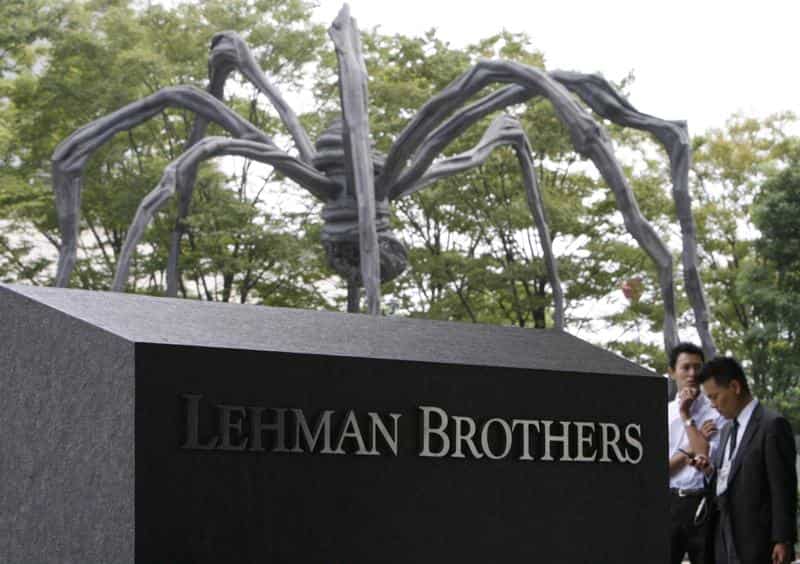
Logo of U.S. investment bank Lehman Brothers
One of the most well-known bankruptcy stories in American history was the collapse of Lehman Brothers, the fourth-largest investment bank, which took place on September 15, 2008.
At the time of the collapse, the financial company had $639 billion in assets and $613 billion in liabilities, while employees in business suits carried cardboard boxes and left their office building. The subprime catastrophe, which spread through financial markets and resulted in roughly $10 trillion in lost economic output, turned the bank into a symbol of the surfeits of the 2007–2008 Financial Crisis.
In this story, we look at the rise and fall of one of the most prominent investment bankers and the impact that it had globally.

Beginnings and their rise to glory
Lehman Brothers, founded in the mid-19th century by German immigrant Henry Lehman, began as a modest dry-goods store in Montgomery, Alabama, in 1844. The transformation into Lehman Brothers came with the arrival of Henry's brothers, Emmanuel and Mayer. Their ambitions quickly expanded beyond dry goods, leading them into the intricate world of cotton and commodities trading.
In 1858, a pivotal shift occurred as Lehman Brothers relocated its operations to New York, a burgeoning hub for commodities trading. While Henry managed the grocery and general store business, his brothers laid the groundwork for what would become a financial industry powerhouse.
)
US vs China over South China Sea: Washington backs Philippines, Beijing hits back
)
Bigg Boss 20: Isha Rikhi evicted after three weeks in Salman Khan’s show
)
Musk plans to more than double xAI's chips to over 1.2 million Nvidia GPUs by year-end
)
After JU, clash erupts at SRFTI: BJP’s ‘Dimagi Naxal’ jibe sparks political firestorm after students protest RSS-linked event
)
‘Anti-social elements spreading false rumours’: LPU issues statement amid massive unrest over alleged rape
)
LPU students go on rampage, vandalise campus amid widespread protest: What's happening
)
Trump asked Xi to pressure Iran. China did not say yes — here’s what Beijing wants
)
US Treasury Secretary Scott Bessent hails global crackdown on Iranian banks and airlines
)
An OpenAI agent escaped its locked test cage again, by hiding questions in DNS lookups
)
'Our video was trimmed': LPU girls who featured in rape-denial video make U-turn
)
3 males killed, four others injured in shooting after fight at strip club in Detroit
)
'Victory for low-budget consumers': Raghav Chadha hails 30-day telecom recharge rules
)
Claude rebuilt the 1989 game 'Prince of Persia' by reusing the original's own code
)
Beyond metros: How Tier-2 and Tier-3 cities could drive India’s next AI wave
)
Tesla builds first Cybertruck with its own refined lithium: Elon Musk's $1 billion Texas bet pays off
)
IndiGo flight suffers tail strike in Bengaluru while landing; DGCA to probe incident
)
The US and China set up an AI 'red telephone', but skipped the rulebook
)
‘Terror suspects arrested near UK air base were looking to do big damage’: Trump
)
Russian envoy claims US tactics to contain India were revealed in ‘Freudian slip’
)
IND vs WI 1st ODI: Kohli breaks Sachin's most runs in one country record with unbeaten 139 as India thump West Indies by 8 wickets
)
Researchers rebuilt exactly how 700 AI agents hacked Hugging Face: a 900-link chain trick
)
‘Olympic inclusion is our major target’: WPA President Ishaun Singh on pool’s global ambitions
)
Nations League: Spain sink England at Wembley; Modric shines for Croatia
)
Why has Iran released no proof of life of Mojtaba Khamenei? Araghchi reveals...
)
'What kind of confession is this?': Pakistan PM Shehbaz Sharif’s 'terrorists would be roaming New York' remark goes viral, raises alarm online. Watch
)
South Korea demands apology from Ukraine over North Korean prisoners' transfer
)
Beyond BrahMos: India targets Rs 50,000 crore in defence exports with unmatched price edge
)
Sri Lankan Tamil migrant worker gets death sentence in Saudi Arabia, help sought from India
)
Muslim marriage cannot shield sex with minor wife from prosecution under POCSO: Delhi HC
)
'Can't help but draw painful parallels to Nirbhaya case': SC on latest incidents of rape cases in Delhi-NCR
)
99.9% more powerful - Scientists find boy who can recall memories from just 3 months of age
)
'FIRST LOOK from inside Noah’s Ark': Researchers share video from inside mysterious mound in Turkey
)
UNSC reform momentum grows: Russia, Portugal, Mauritius push for India's permanent seat bid
)
8 US marines injured in Iranian missile attack on vessel in Strait of Hormuz: Report
&im=FitAndFill=(700,400))
New OTT releases this week (September 28-October 4, 2026): Dupahiya 2, Pooja Meri Jaan, Ohh My Dog- 5 titles coming on Netflix, Prime Video and more
)
Afghanistan says 28 fighters killed in clash near Pakistan border, Islamabad denies
)
Ceuta migrant crisis: Protesters take to streets as Spain grapples with migrant challenge
)
LPU suspend classes, postpones exams as violence escalates over rape claims: What's happening
)
New York City wants a 'kill switch' on every AI, and will pay whistleblowers who report violations
Over the next century and a half, Lehman Brothers underwent numerous transformations and forged alliances. Although Lehman Brothers' 2008 bankruptcy catalysed rather than caused the Great Recession and the subprime mortgage crisis, it sent shockwaves across global markets, triggering a significant selloff.
The firm's journey was marked by resilience. In 1984, Shearson/American Express acquired Lehman Brothers for $360 million. In 1994, Lehman Brothers embarked on its path via an IPO, raising over $3 billion in capital. The repeal of the Glass-Steagall Act enabled Lehman Brothers to venture into both investment and commercial banking.
Lehman Brothers thrived, becoming the nation's fourth-largest investment banking firm by 2007. Much of its growth was fuelled by substantial investments in mortgage-backed securities (MBS), a twist of fate that, ironically, contributed to its eventual downfall.
The warning signs
A strategy shift towards sophisticated financial products like mortgage-backed securities and collateralised debt obligations (CDOs) marked the beginning of Lehman Brothers' route to its tragic collapse. When Lehman bought many mortgage firms, including BNC Mortgage and Aurora Loan Services, which specialised in Alt-A loans without complete paperwork, this change occurred in the early 2000s. At first, these actions seemed profitable; from 2004 and 2006, Lehman's real estate division contributed significantly to a 56 percent increase in capital markets unit revenues.
Despite these early gains, ominous signs began to emerge. The housing market in the United States revealed growing weaknesses, particularly with an increase in subprime mortgage defaults. Surprisingly, in February 2007, Lehman's stock price soared to a record high of $86.18 per share. Lehman kept on downplaying the significance of escalating home loan concerns despite mounting anxiety, assuring investors that the risks were under control.
The countdown to the collapse
Lehman's stock price fluctuated throughout 2007 as the U.S. housing market's cracks grew worse. Lehman responded to the economic crisis in August 2007 by closing down portions of its mortgage business and laying off 1,200 employees who worked in the mortgage industry. Despite this issues, Lehman continued to maintain a significant presence in the mortgage sector.
Lehman's susceptibility resulted from its considerable portfolio of mortgage-related assets and excessive leverage, as seen by a leverage ratio of 31. As a result, Lehman's stock price declined by almost 48 per cent in March 2008. This fall took place amid mounting worries that Lehman would be the next big Wall Street Company to have huge issues. Investor confidence continued to decline despite Lehman's ability to raise money and take steps to lower its risk. Lehman's first losses since being spun off from American Express were reported in June 2008, when it posted a huge $2.8 billion second-quarter deficit.
Global financial fallout
The global financial crisis began on September 15, 2008, when Lehman Brothers filed for bankruptcy. The financial markets around the world experienced shockwaves as a result of this catastrophe. It set off a series of crises, including stock market crashes and freezes in the credit markets. To stabilise the staggering global economy, governments and central banks were forced to undertake large bailout packages and financial support measures.
The collapse of Lehman Brothers serves as a warning of the dangers of uncontrolled risk-taking and financial excess as it had a ripple effect on the larger global financial crisis, which in turn affected people, financial institutions, and economies all over the world.
WATCH WION LIVE HERE