
&imwidth=800&imheight=600&format=webp&quality=medium "Dollar strengthens against yen as Trump ramps up trade war rhetoric")
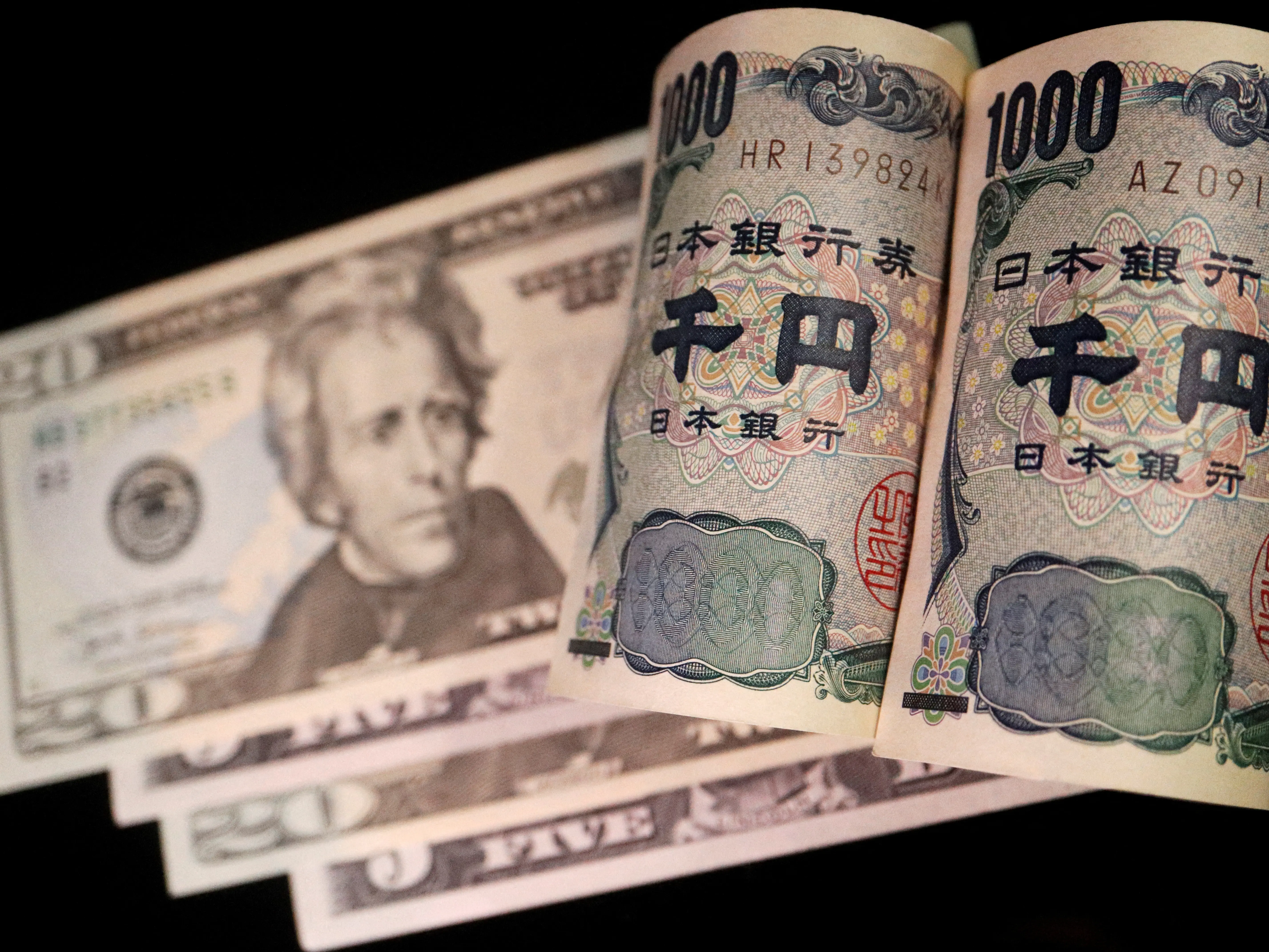
The dollar extended its gains against the yen on Wednesday, buoyed by mounting expectations of fresh US trade actions under President Donald Trump’s intensifying protectionist campaign.
Trump signals new trade announcements
President Trump pledged additional trade-related proclamations just one day after unveiling steep 25 per cent tariffs on imports from Japan and other trading partners. According to Reuters, he indicated further announcements would come on Wednesday, mentioning “a minimum of 7 countries” in a post on social media.

While he stopped short of specifying whether these would involve new tariff letters or trade deals, Trump reiterated that sharply higher tariffs were set to begin on August 1. He also left open the possibility of granting extensions if other countries offered proposals for improved trade terms.
As per Reuters, multiple rounds of US-Japan trade talks have failed to deliver a breakthrough, with negotiators at odds over politically sensitive issues such as Japan’s rice market protections.
Currency markets respond to tariff escalation
Trending Stories
)
Trump-Xi summit wrap: Big pageantry, Iran talks, few major developments and more meetings planned
)
US Supreme Court backs Trump administration's use of SAVE database to check voter citizenship
)
Donald Trump shares image of Xi's arrival in Washington, carries signs of AI
)
WATCH | As Shehbaz Sharif claims Pakistan’s ‘victory’ during 2025 conflict, Indian diplomat R Srinivas laughs at UN
)
Pakistan deploys over 20,000 security personnel as PTI vows march for Imran Khan's release
)
Gaza's war turned environmental damage into second crisis
)
OpenAI AI Agents hacked 4 websites before Hugging Face, researchers reveal
)
Asian Games 2026: India face Afghanistan in quarterfinal on Sep 28; Pakistan clash with Hong Kong
)
Pentagon quietly adds 37 wounded troops to Iran war tally without explaining when or how
&im=FitAndFill=(700,400))
New Friday OTT releases (September 25, 2026): Don’t Be Shy, Hunkkaar: The Roar, Mango Pachcha- 6 movies and TV shows on Netflix, Prime Video and more
)
'What kind of confession is this?': Pakistan PM Shehbaz Sharif’s 'terrorists would be roaming New York' remark goes viral, raises alarm online. Watch
)
Nigeria Navy moves to boost oil security, tackle crude theft and infrastructure threats
)
Prince Harry offers rare glimpse into Archie and Lilibet’s life after UK move
)
Farhan, who went viral for AK47 celebration vs India in Asia Cup, hopes to lead Pakistan beyond Asian Games
)
Did Hitler kill his niece Geli Raubal? Newly found records reopen a 95-year-old mystery
)
Bangkok declares flood disaster as heavy rain submerges roads and homes
)
Hawaii braces for Hurricane Nolo: NOAA warns of flash flooding and mudslides
)
The Paradise: Nani reacts to mixed reviews from critics and audience; ‘I have also learnt from the flaws’
)
'A terrorist country is asking me that question?': Jaishankar hits back at Pakistani journalist at UN; flags attacks on commercial shipping
)
'FIRST LOOK from inside Noah’s Ark': Researchers share video from inside mysterious mound in Turkey
)
Indian diplomat Petal Gahlot raises deteriorating situation in Pakistan-occupied Kashmir in right of reply at UN
)
‘I rejected it’: Trump confirms turning down Iran’s proposal to reopen Hormuz, claims Tehran is losing ‘badly’
)
‘Attack on Mecca a red line for Pakistan’: Shehbaz Sharif warns Houthis at UN
)
Russia will achieve Ukraine war aims; Europe doing everything to block peace talks: Lavrov at UN
)
‘Serial practitioner of terrorism’: Jaishankar calls out Pakistan’s ‘state-sponsored’ terror at UNGA
)
Global community 'absent' in Gulf crisis: Saudi at UN calls for freedom of navigation, pre war status for Hormuz
)
'Countries far from conflict are penalised': Jaishankar calls for Gulf peace, seafarer safety at UN
)
‘It is all possible’: Putin weighs next steps on Ukraine talks, rules out Europe conflict
)
Anthropic says Claude found a new gene-editing enzyme but science isn't confirmed
)
US court backs Pentagon's decision to exclude Anthropic over Claude AI restrictions
)
Myanmar training camp case: US national, 6 Ukrainians allowed to meet their families abroad
)
Mushtaq Khan dies at 56: When Welcome actor opened up about his salary for iconic role Ballu
)
Cindy Crawford’s son Presley Gerber cremated as death probe continues
)
Outrage erupts after 3-year-old is married to 60-year-old man in Pakistan, link to her sister's murder being probed
)
Trump rejects Iran's 7-day ceasefire proposal as US weighs renewed bombing after midterms: Report
The yen weakened for a third straight session against the greenback, with the dollar rising 0.2 per cent to 146.85 yen on Wednesday. This followed a move to more than a two-week high on Tuesday, as traders weighed the prospect of escalating US import tariffs.
According to Reuters, the broader dollar index, which tracks the US currency against six major peers was steady at 97.582 after climbing over the previous two days. The euro held little changed at $1.1720.
Sterling slipped 0.1 per cent to trade at $1.35795 in early dealings, while the Australian dollar dipped 0.07 per cent to $0.6526, giving back part of Tuesday’s 0.6 per cent rise. New Zealand’s kiwi dollar also fell 0.1 per cent to $0.5993.
Bond yields underpin dollar strength
Analysts noted that rising US Treasury yields have helped support the dollar’s rally. According to Reuters, the pair’s move was also aided by a fifth consecutive day of gains in US bond yields and a sharp rise in Japanese government bond (JGB) yields amid fiscal worries ahead of Japan’s upper house elections on 20 July.
Tony Sycamore, an analyst at IG, wrote in a client note that talks between Washington and Tokyo appeared stalled over Japan’s reluctance to open its rice market further, making a near-term compromise unlikely.
Bank of Japan cautious on inflation pressures
Meanwhile, Japanese policymakers remain alert to the potential inflationary impact of food prices. Bloomberg reported that Bank of Japan board member Junko Koeda said she was closely monitoring possible second-round effects on underlying inflation stemming from recent increases in rice prices.
EU may avoid new US tariffs
As Trump prepares new tariff measures, European officials appear more optimistic about avoiding the worst of the fallout. EU sources familiar with negotiations told Reuters this week that the European Union would not receive a new tariff letter and could secure exemptions from the US baseline tariff rate of 10 per cent.
Wider tariff agenda targets copper, semiconductors
President Trump’s tariff escalation is not limited to Japan. On Tuesday, he confirmed a plan to impose a 50 per cent tariff on imported copper, arguing the measure would bolster domestic production of a metal crucial to sectors ranging from electric vehicles to military hardware.
As per Reuters, Trump also signalled that new tariffs on semiconductors and pharmaceuticals were in the pipeline, underscoring the broad scope of his administration’s industrial policy agenda.
Treasury Secretary to skip G20 meeting
In a separate development, Reuters reported that US Treasury Secretary Scott Bessent will not attend the upcoming Group of 20 finance officials meeting in South Africa. Sources familiar with his plans said he would instead travel to Japan for the World Expo 2025 in Osaka.
As markets await further clarity on Washington’s next moves, traders are bracing for a volatile period, with global currencies, bond yields and trade negotiations all in the spotlight as the US intensifies its trade war strategy.