

&imwidth=800&imheight=600&format=webp&quality=medium "China’s Zeekr, Neta under fire for inflating EV sales figures")
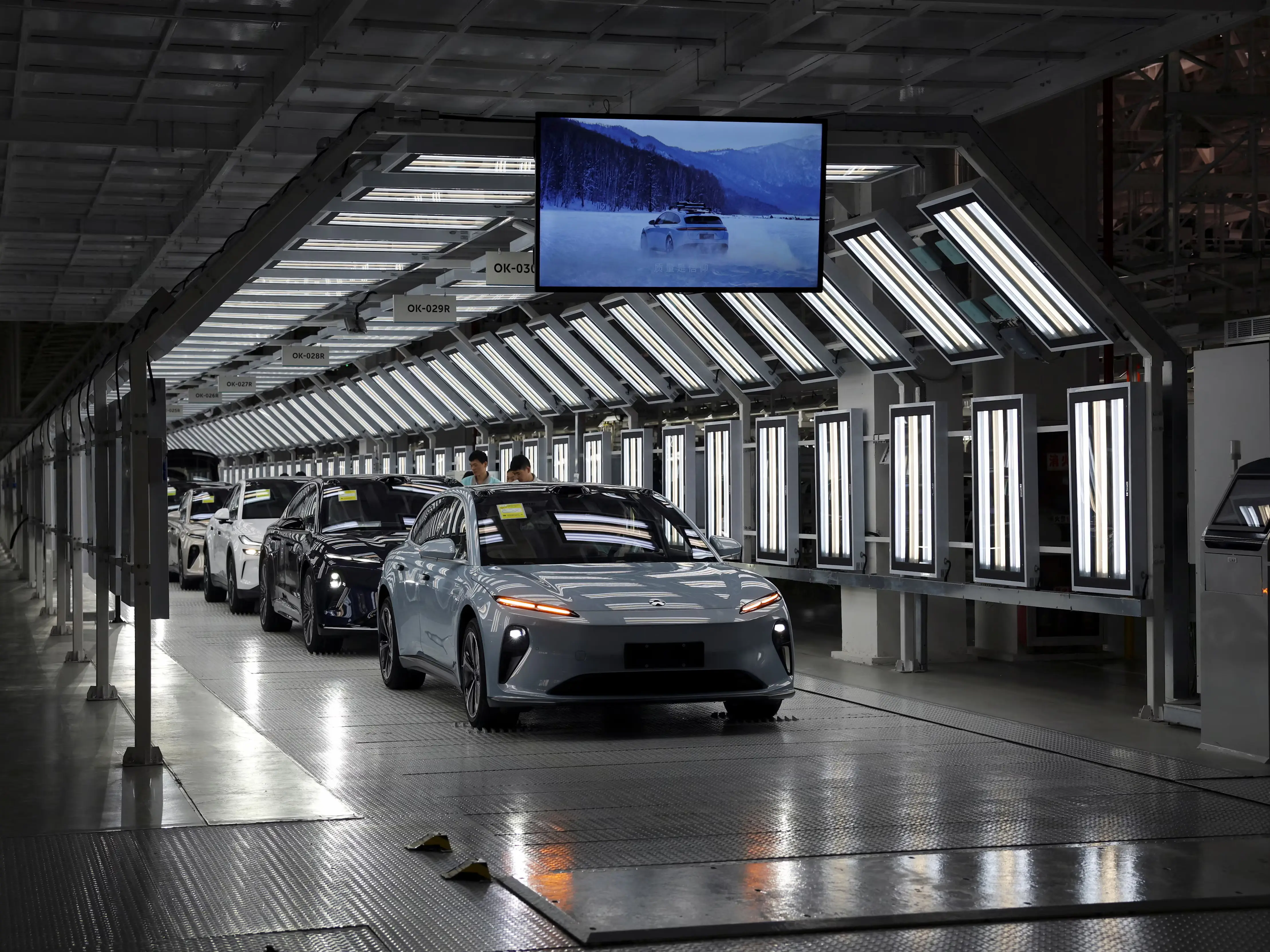
Reports of sales figure manipulation have sent shockwaves across China's EV market. Two prominent Chinese electric vehicle makers, Neta and Geely’s Zeekr, have been allegedly caught inflating sales figures to meet aggressive targets, as per a Reuters investigation. The companies allegedly booked cars as “sold” by purchasing insurance policies before handing them over to customers, a loophole that allowed them to report higher sales without actual buyers.
The scheme is reportedly widely used in China’s hyper-competitive auto market, highlighting growing concerns about unethical sales practices in the country’s booming EV sector.
Neta’s inflated sales crossed 64,000 units
According to documents reviewed by Reuters and testimonies from dealers and customers, Neta reported early sales of at least 64,719 vehicles between January 2023 and March 2024. That figure represents more than half of the 117,000 vehicles it claimed to have sold during the period.
The EV startup, owned by Zhejiang Hozon New Energy Automobile, achieved this by pre-purchasing insurance policies for unsold cars and registering them as sold. This practice is permissible under China’s car registration rules, which allow sales to be recorded once a vehicle is insured.
A dealer affiliated with Neta, speaking anonymously to Reuters, confirmed that, “in Neta’s case, the company made it clear to dealers that the cars were insured ahead of time and therefore counted as sold". The dealer added that many of these zero-mileage vehicles still sit unsold in warehouses.
Trending Stories
&imwidth=180&imheight=135&format=webp&quality=medium)
Sidhu Moose Wala’s younger brother wins hearts by recreating late singer’s signature move at Toronto Hologram Show
&im=FitAndFill=(700,400)&imwidth=180&imheight=135&format=webp&quality=medium)
Navratri 2026: 9 days, 9 forms of Goddess Durga and 9 colours- Check the complete list
&imwidth=180&imheight=135&format=webp&quality=medium)
Anti-SIR protest in Mumbai: Protestors wear black masks & ribbons in Mumbai
&imwidth=180&imheight=135&format=webp&quality=medium)
Korean peninsula tensions escalate as North Korea launches multiple ballistic missiles, PACOM says 'no threat to US personnel'
&imwidth=180&imheight=135&format=webp&quality=medium)
Congress demands action against chief election commissioner
&imwidth=180&imheight=135&format=webp&quality=medium)
India's Ajit Doval, Iran's Mohsen Rezaei hold talks amid escalating West Asia tensions, discuss 'issues of mutual interest'
&imwidth=180&imheight=135&format=webp&quality=medium)
1,500 drones illuminate Mumbai sky as Cordelia Cruises unveils second ship, Cordelia Sky
&imwidth=180&imheight=135&format=webp&quality=medium)
Rahul Gandhi's plea against Election Commission delayed as Supreme Court registry flags 14 ‘defects’
&im=FitAndFill=(700,400)&imwidth=180&imheight=135&format=webp&quality=medium)
The world’s best places to live in 2026: Is your city on the list? Top 7 ranked
&imwidth=180&imheight=135&format=webp&quality=medium)
Robotic surgery, advanced treatment: What is coming to this small Gujarat town?
&imwidth=180&imheight=135&format=webp&quality=medium)
Delhi protest: CJI Surya Kant declines to meet India Bloc leaders
&imwidth=180&imheight=135&format=webp&quality=medium)
Trump says he 'may' meet North Korean leader Kim Jong Un during upcoming Asia trip
&imwidth=180&imheight=135&format=webp&quality=medium)
'Ouch!!! That must hurt': Kangana Ranaut hails Kamal Haasan's sharp reply to Elon Musk over Starlink row
&imwidth=180&imheight=135&format=webp&quality=medium)
BCCI rejects venue shift reports, India vs Sri Lanka 1st ODI to remain in Delhi
&imwidth=180&imheight=135&format=webp&quality=medium)
Trump weighs firing Kimberly Guilfoyle as US ambassador to Greece amid misconduct allegations: Report
&im=FitAndFill=(700,400)&imwidth=180&imheight=135&format=webp&quality=medium)
How does a robot decide what to do next?
&imwidth=180&imheight=135&format=webp&quality=medium)
'I am thoroughly unamused': Judge slams Trump administration after 400 trees cut at Washington golf course
&imwidth=180&imheight=135&format=webp&quality=medium)
'Absolutely disgusting': Australia slams US plan to livestream Nidal Hasan's execution; Mike Johnson raises concerns, warns of terrorist propaganda
&imwidth=180&imheight=135&format=webp&quality=medium)
I.N.D.I.A. Bloc lists 10 requests to Supreme Court
&imwidth=180&imheight=135&format=webp&quality=medium)
New Cold War: Why is China buying more gold? Explained
&imwidth=180&imheight=135&format=webp&quality=medium)
Opposition’s 10 demands in Supreme Court petition range from stay on SIR to audit of voter rolls
&imwidth=180&imheight=135&format=webp&quality=medium)
'I will not be silenced': Ilhan Omar alleges political intimidation after federal officers search her Washington home
&imwidth=180&imheight=135&format=webp&quality=medium)
‘This is just the start’: Maaya Rajeshwaran on historic ITF title, confidence boost and future goals
&imwidth=180&imheight=135&format=webp&quality=medium)
‘Fortress breached, reclaimed’: CJP leaders enter Jantar Mantar a day after loss of protest venue status | WATCH
&imwidth=180&imheight=135&format=webp&quality=medium)
Houthis warns US of 'painful response' if Washington joins Saudi war in Yemen as airlines suspend flights to Saudi Arabia
&imwidth=180&imheight=135&format=webp&quality=medium)
'Turn approver, resign, we'll forgive you': Rahul Gandhi claims receiving messages from CEC Gyanesh Kumar
&imwidth=180&imheight=135&format=webp&quality=medium)
Pakistan's government blames PTI for rise of terrorism in Khyber Pakhtunkhwa
&imwidth=180&imheight=135&format=webp&quality=medium)
Elon Musk pumps $276 million into Republican campaigns ahead of US midterm elections
&imwidth=180&imheight=135&format=webp&quality=medium)
UK school ditches technology, shifts from screen to pen and paper for learning
&imwidth=180&imheight=135&format=webp&quality=medium)
Girl 'dead' for 8 hours wakes up at her own funeral, dad insists she wasn't breathing
&imwidth=180&imheight=135&format=webp&quality=medium)
'Almost certainly': UK Prime Minister Andy Burnham says Iran's IRGC behind RAF Fairford threat
&imwidth=180&imheight=135&format=webp&quality=medium)
China’s gold rush puts billion in focus
&im=FitAndFill=(700,400)&imwidth=180&imheight=135&format=webp&quality=medium)
New OTT releases this week (October 12-18, 2026): Sacrifice, Koffee with Karan S9, Roadies Rebirth- 6 titles coming on Netflix, JioHotstar and more
&imwidth=180&imheight=135&format=webp&quality=medium)
UK PM Andy Birnham renews claims of Russian meddling in Brexit vote
Zeekr also named in state media exposé
China's premium EV brand under Geely Auto, Zeekr reportedly used the same strategy in late 2024. According to dealers and sales documents seen by Reuters, Zeekr worked with Xiamen C&D Automobile, a state-owned dealership operator, to register cars under the company’s name and claim them as sales.
A buyer in southern China told Reuters that, “the Zeekr salesman said the car would be 3,000 yuan cheaper and I’d also get a 10,000 yuan charging coupon.”
China’s state-run China Securities Journal recently confirmed the story, saying Zeekr had indeed sold vehicles that were already insured before buyers took delivery. The publication interviewed customers who discovered, after the fact, that their cars were not insured in their name and were denied refunds.
‘Zero-mileage used cars’ under scrutiny
These pre-registered cars are known as “zero-mileage used cars” in Chinese auto parlance, technically used, yet never driven. This tactic, while not illegal, has reportedly come under intense scrutiny amid a brutal price war and overcapacity in China’s EV market.
According to the People’s Daily, the Communist Party’s official mouthpiece, such practices distort market data and hurt consumer trust. The paper published a scathing editorial last month condemning the “zero-mileage” model.
Adding to the pressure, four dealership associations in the wealthy Yangtze River Delta recently appealed to automakers to set realistic sales targets, warning that sales staff were being “forced to falsify performance”.
Neta’s fall from grace and financial woes
Neta’s alleged manipulation began in late 2022, reportedly to secure state EV subsidies before they expired. While the brand hit a sales peak of 152,000 units in 2022, its figures plunged the following year. By the first quarter of 2025, it had sold just 1,215 vehicles, according to the China Association of Automobile Manufacturers (CAAM).
As per state media, its parent firm, Zhejiang Hozon has now entered bankruptcy proceedings.
Government crackdown looms
China’s Ministry of Industry and Information Technology (MIIT) is reportedly preparing a crackdown on the “insurance-first” sales strategy. According to an industry publication under the China Association of Auto Manufacturers, new rules may ban vehicles from resale within six months of registration, which is a direct response to the zero-mileage loophole.
While Geely denied the China Securities Journal report through a spokesperson, it declined to comment on Reuters’ findings. Zeekr, Neta, and Xiamen C&D did not respond to requests for comment.
As the world’s largest EV market faces a reckoning, Chinese regulators are under pressure to restore credibility and transparency, before the sales race becomes a full-blown scandal.