

&imwidth=800&imheight=600&format=webp&quality=medium "China’s housing market struggles: Prices fall at fastest pace in 8 months")
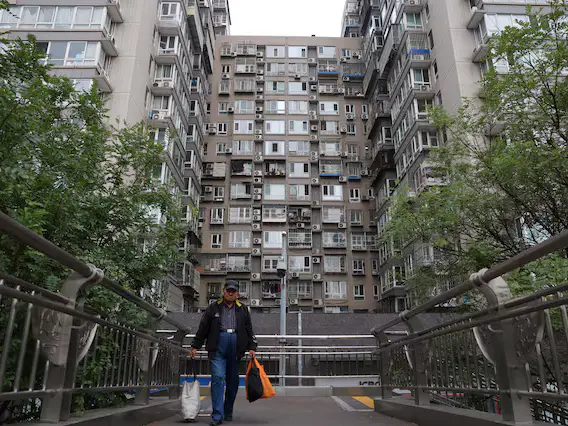
China’s real estate market is showing signs of prolonged weakness, as new home prices in June fell at their fastest monthly pace in eight months, according to official data released on July 15. Despite multiple rounds of policy interventions aimed at boosting the sector, the housing downturn continues to exert pressure on the country’s economy, dampening consumer confidence and raising concerns among policymakers about how to revive the market.
Official data from China’s National Bureau of Statistics revealed that new home prices in June fell by 0.3 per cent month-on-month. This came on the heels of a 0.2 per cent drop in May. Year-on-year, prices dropped 3.2 per cent, slightly improving from the 3.5 per cent decrease recorded in May. The sluggish housing market is a major drag on the country’s overall economic recovery, which is being challenged by factors such as geopolitical tensions, a sluggish consumer spending environment, and deflation in the factory sector.
Despite aggressive stimulus measures, including reductions in mortgage rates, easing of homebuying curbs, and efforts to boost construction, the property market’s downward trajectory remains concerning. This is especially critical given the sector’s importance to the Chinese economy. Real estate and related industries have long accounted for about a quarter of China’s GDP. As home prices continue to fall, there are mounting fears that the property sector’s struggles will further dampen consumer demand and hinder broader economic growth.
Policy efforts and limited impact
The Chinese government has implemented several measures to address the ongoing real estate slump. In addition to reducing mortgage rates and down payment requirements, local governments have eased restrictions on homebuying and launched urban redevelopment projects. The government has also made efforts to relieve debt-laden developers by allowing them to sell housing inventories and undeveloped land to local authorities. Despite these efforts, the sector remains in decline, and the government’s ability to counteract the negative effects on the economy is being tested.
Analysts are predicting that more policy support could be announced in the coming months, with some speculating that additional stimulus measures will be rolled out during the July Politburo meeting. The market has shown signs of weakening, prompting concerns about further intervention. However, some economists argue that the Chinese government may choose to hold off on major support measures, in part to preserve policy flexibility amid escalating tensions with the US and the expiration of a temporary trade deal in mid-August.
Trending Stories
&imwidth=180&imheight=135&format=webp&quality=medium)
Shreyas Iyer blames dew for West Indies' record run chase in 2nd T20I in Ranchi
&imwidth=180&imheight=135&format=webp&quality=medium)
100,000 strikes in 3 years: How October 7 redefined Israel's war
&im=FitAndFill=(700,400)&imwidth=180&imheight=135&format=webp&quality=medium)
Happy Birthday Rekha: Watch these 7 evergreen Bollywood hits on Netflix, Prime Video and more
&imwidth=180&imheight=135&format=webp&quality=medium)
'I am not going to be watching it': JD Vance on livestream of Nidal Hasan's firing squad execution
&imwidth=180&imheight=135&format=webp&quality=medium)
UK navy hit by espionage scandal: Sailor accused of spying for Russia | Gravitas
&imwidth=180&imheight=135&format=webp&quality=medium)
Katie Zacharia likely to succeed Karoline Leavitt as Trump's White House press secretary
&imwidth=180&imheight=135&format=webp&quality=medium)
Delhi on high alert for CJP protest: Delhi police to use body cams to 'prove whether we did anything’; Pink Force, RAF, 35,000 personnel deployed
&imwidth=180&imheight=135&format=webp&quality=medium)
‘Never-ending flow of cheap labour’: JD Vance hits back at Indian-origin Congresswoman over US green card curbs for major tech companies
&imwidth=180&imheight=135&format=webp&quality=medium)
Panama president declares ‘major disaster’ after powerful 7.7-magnitude earthquake; over 80 aftershocks recorded
&imwidth=180&imheight=135&format=webp&quality=medium)
‘250? Cool.’: Shai Hope takes swipe at Shubman Gill’s Instagram caption after Ranchi T20I masterclass
&imwidth=180&imheight=135&format=webp&quality=medium)
'Jantar Mantar not the story of India': BJP's Sambit Patra claims 'anarchists' tried to hold Delhi captive
&imwidth=180&imheight=135&format=webp&quality=medium)
BJP MP Ravi Shankar Prasad slams CJP protests, calls it 'shadow boxing for AAP'
&imwidth=180&imheight=135&format=webp&quality=medium)
'I ended 8 wars': Trump slams Nobel Peace prize decision, claims award was his due
&imwidth=180&imheight=135&format=webp&quality=medium)
Dhurandhar: The Revenge album submitted for Grammy consideration; But what does it mean?
&imwidth=180&imheight=135&format=webp&quality=medium)
J&K Government orders major police reshuffle, transfers 100 officers across UT
&imwidth=180&imheight=135&format=webp&quality=medium)
New York protests erupt as Trump administration defends ICE shooting
&imwidth=180&imheight=135&format=webp&quality=medium)
Delhi protest: Metro curbs, train cancellations, traffic diversions as protesters seek CEC Gyanesh Kumar’s resignation
&imwidth=180&imheight=135&format=webp&quality=medium)
'Spent Rs 2,000 cr to elect Trump': Elon Musk bought US President's loyalty by writing the biggest political cheque in human history
&imwidth=180&imheight=135&format=webp&quality=medium)
Powerful 7.7 magnitude earthquake strikes Panama, tsunami warning issued
&imwidth=180&imheight=135&format=webp&quality=medium)
Adéla gives KATSEYE’s Lara Raj and Megan Skendiel a shout-out at Fonda Theatre in LA
&imwidth=180&imheight=135&format=webp&quality=medium)
'Modi is a dictator': Abhijeet Dipke claims govt 'scared' of youth, slams stringent measures ahead of CJP Jantar Mantar protest
&im=FitAndFill=(700,400)&imwidth=180&imheight=135&format=webp&quality=medium)
New Friday OTT releases (October 9, 2026): Reporting Live, Animals, Take Charge of My Heart- 6 new titles coming on Netflix, JioHotstar and more
&imwidth=180&imheight=135&format=webp&quality=medium)
Two-thirds of competitive GOP candidates split with trump ahead of November midterms
&imwidth=180&imheight=135&format=webp&quality=medium)
'Ouch!!! That must hurt': Kangana Ranaut hails Kamal Haasan's sharp reply to Elon Musk over Starlink row
&imwidth=180&imheight=135&format=webp&quality=medium)
‘Right to protest must be protected, but...’: Delhi Police reveals why it denied CJP permission for October 10 Jantar Mantar protest
&imwidth=180&imheight=135&format=webp&quality=medium)
Trump announces Russian diesel deal as Zelensky criticises move
&imwidth=180&imheight=135&format=webp&quality=medium)
Pakistan denies reports of PAF jets being used in attacks against Iran-backed Houthis in Yemen
&imwidth=180&imheight=135&format=webp&quality=medium)
All 22 Indian seafarers safe in attack on Panama-flagged tanker off UAE coast
&imwidth=180&imheight=135&format=webp&quality=medium)
Ryan Reynolds’ private messages reveal his blunt views on Justin Baldoni from Blake Lively’s legal case
&im=FitAndFill=(700,400)&imwidth=180&imheight=135&format=webp&quality=medium)
Rakul Preet Singh birthday special: 7 times the Ramayana actress served glamorous looks

Kamal Haasan slams Elon Musk over Starlink delay row: 'Indian people, will decide our own future - not Western'
&im=FitAndFill=(700,400)&imwidth=180&imheight=135&format=webp&quality=medium)
Food shortages, suicide attempts and more: USS Abraham Lincoln returns to US after 321 day deployment — What happened aboard the US carrier?
&imwidth=180&imheight=135&format=webp&quality=medium)
Thai queen becomes first reigning monarch to fly jet solothailand #queen #wion
&imwidth=180&imheight=135&format=webp&quality=medium)
SC questions closure of 57 Delhi Metro stations, asks Centre to resume services in regulated manner
&imwidth=180&imheight=135&format=webp&quality=medium)
Rahul Gandhi calls Modi, Shah ‘cowards’ amid CJP protest crackdown in Delhi
&imwidth=180&imheight=135&format=webp&quality=medium)
Flydubai co-pilot developed extremist views while studying in Australia: UAE prosecutors
&imwidth=180&imheight=135&format=webp&quality=medium)
Why was CJP founder Abhijeet Dipke detained? What Delhi Police said
&imwidth=180&imheight=135&format=webp&quality=medium)
Trump honours Microsoft CEO Satya Nadella with top technology honour amid immigration scrutiny
Real estate slump affects broader economy
The prolonged downturn in the housing market is contributing to a wider slowdown in China’s economy. Falling real estate prices are a significant contributor to the “negative wealth effect,” whereby homeowners see the value of their assets diminish, leading to reduced consumer spending. Real estate wealth accounts for up to 70 per cent of household wealth in China, and as home prices fall, so does consumer confidence.
The impact of the property slump on consumption has been palpable, with retail sales expected to slow in June after a better-than-expected 6.4 per cent growth in May. This growth, however, was largely driven by one-off sales promotions and government subsidies. Meanwhile, policies encouraging a culture of frugality, including bans on alcohol at government meals and stricter rules on work-related travel expenses, have further dampened consumer sentiment. This is adding to concerns that consumption, a crucial pillar of economic growth, may struggle to regain momentum.
The housing market’s struggles are also putting a strain on local governments, which rely heavily on land sales to fund their operations. As property values fall, these land sales have dwindled, creating a fiscal shortfall that has forced local authorities to seek alternative sources of revenue. Many are now looking to tax businesses more aggressively, further squeezing the economy.
Limited bright spots amidst a slump
While the overall market is in decline, there have been a few pockets of growth. Some high-end residential developments in major cities like Beijing, Shanghai, and Hangzhou have seen positive momentum, driven by demand from wealthier buyers looking to upgrade to more prestigious locations. Developers like China Jinmao Holdings have seen their sales rise, capitalising on this niche demand. However, such developments remain limited and cater mainly to high-income buyers, leaving the broader housing market still in a state of stagnation.
The decline in home prices has also driven a sharp drop in the demand for second-hand homes, with values falling by 0.61 per cent in June, marking the steepest drop since September. This suggests that the property sector’s woes are not limited to new homes alone but extend across the market.
Meanwhile, several developers are struggling to complete construction projects, which has exacerbated the issue for homebuyers who purchased properties years ago but have yet to see them delivered. The rise of high-profile defaults by major developers, including Evergrande, has added to the uncertainty in the market and further eroded consumer confidence.
Long road to recovery
Looking ahead, experts predict that the Chinese property market will likely continue to face challenges. Despite efforts to stabilise the market, many analysts believe that prices could fall further, potentially by 20-30 per cent, before the market reaches a bottom. Policymakers will have to remain patient and may need to focus on demand-side measures, such as encouraging public housing projects, to generate some level of stability in the market.
While the government is expected to continue offering some form of stimulus, the scope of any new measures remains uncertain. For now, the real estate slump is one of the most significant challenges facing China’s economy, impacting not just the housing market but also broader consumption, fiscal health, and economic growth.
(With inputs from agencies)