China’s copper output nears limit amid ore shortage and overcapacity crackdown

&imwidth=600&imheight=450&format=webp&quality=medium "China’s copper output nears limit amid ore shortage and overcapacity crackdown")
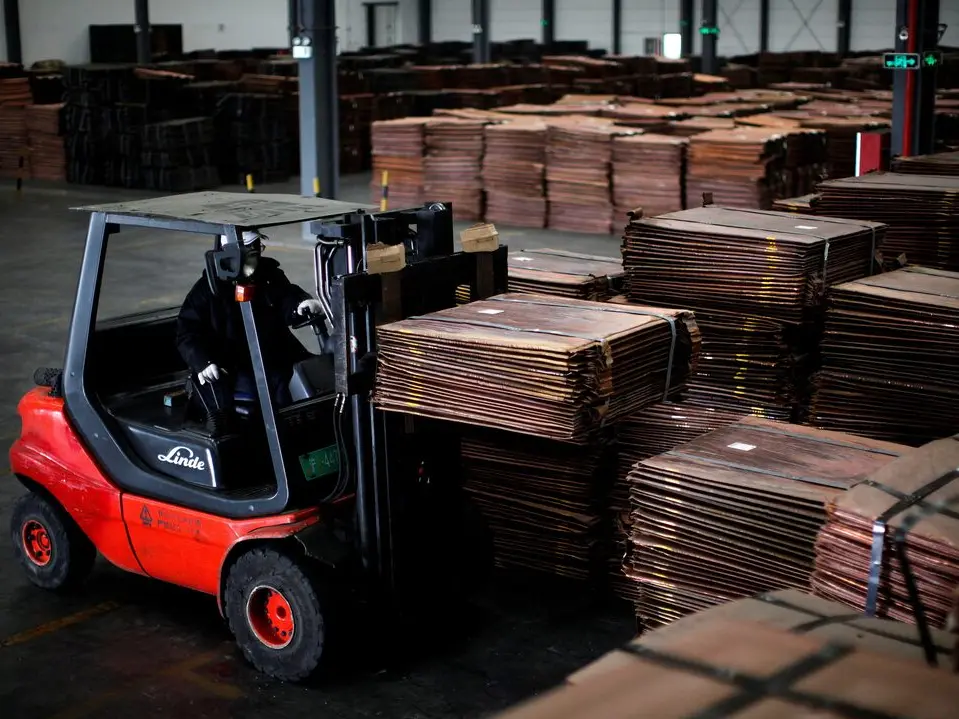
FA worker loads copper cathodes into a warehouse near Yangshan Deep Water Port, south of Shanghai, China, March 23, 2012. Photograph: (Reuters)
China, which accounts for over half of global refined copper production, has rapidly expanded smelting capacity in recent years, even as global copper ore supply growth slowed to a crawl. This imbalance has driven down processing fees and pushed some overseas competitors to suspend operations
China’s copper smelting sector, already the largest in the world, is showing signs of strain as ore shortages and mounting government pressure on industrial overcapacity begin to bite. After months of record production, output is projected to dip slightly in August and decline further in September, according to Shanghai Metals Market (SMM). SMM forecasts China’s refined copper production will reach 1.168 million tonnes in August, down 0.5 per cent from July’s record high. While modest, the dip signals a possible turning point for an industry that has defied global feedstock shortages and squeezed profitability to maintain output growth.
China, which accounts for over half of global refined copper production, has rapidly expanded smelting capacity in recent years, even as global copper ore supply growth slowed to a crawl. This imbalance has driven down processing fees and pushed some overseas competitors to suspend operations.
Tight ore markets and Beijing’s watchful eye
Despite soaring production, Chinese smelters are grappling with the lowest copper concentrate inventories this year, just over 560,000 tonnes at key ports, according to SMM. This tightness is forcing some facilities to reduce operations or schedule maintenance. Five major smelters with a combined capacity of 900,000 tonnes are expected to halt or slow output in September. The pressure comes as Beijing intensifies efforts to address overcapacity across industries.
While the copper sector, seen as vital for green energy and technology, has previously escaped restrictions, policymakers are now signalling a tougher stance on industrial excess that drives deflation and inefficient investment. Spot treatment and refining charges (TC/RCs), the fees paid to smelters for converting concentrate into refined copper, have shown slight recovery in recent weeks, an indication that supply and demand may be finding a new balance.
Booming output reshapes global market
Trending Stories
)
)
)
)
)
)
)
&im=FitAndFill=(700,400))
)
)
&im=FitAndFill=(700,400))
)
&im=FitAndFill=(700,400))
)
)
)
)
&im=FitAndFill=(700,400))
)
)
)
)
)
)
)
)
)
)
)
)
)
)
)
)
)
)
Still, China’s refined copper production is on track to rise between 7.5 per cent and 12 per cent in 2025, potentially topping last year’s record of 13.64 million tonnes, according to multiple analysts. That continued surge, fuelled by state-backed investments and strong byproduct revenues, is outpacing global ore supply and placing further strain on foreign rivals.
Consultancy Benchmark Mineral Intelligence (BMI) expects China’s share of global refined copper output to hit 57 per cent this year. As output rises, refined copper imports are projected to fall by 8 per cent in 2025, marking a shift in China’s trade strategy and underscoring its growing self-reliance in critical materials.
(With inputs from agencies)