

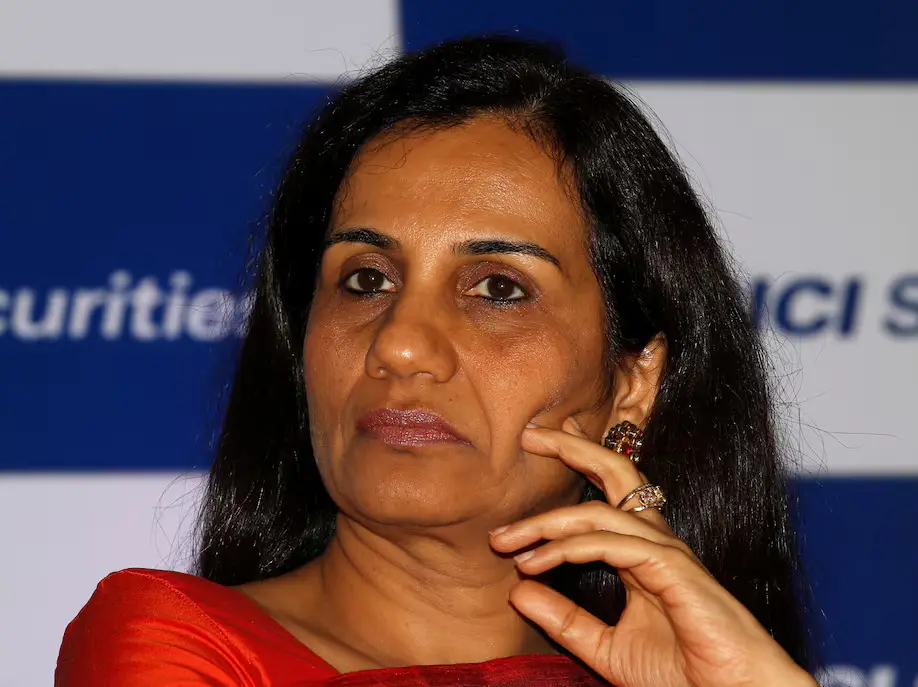
&imwidth=800&imheight=600&format=webp&quality=medium "Chanda Kochhar found guilty of receiving ₹64 crore bribe: All about ICICI–Videocon loan case")
In a major setback to former ICICI Bank CEO and Managing Director Chanda Kochhar, a tribunal in India has ruled that she accepted a bribe of nearly $7.7 million (₹64 crore) in exchange for sanctioning a $36 million (₹300 crore) loan to the Videocon Group in 2009. The ruling was issued by the Appellate Tribunal under the SAFEMA Act (Smugglers and Foreign Exchange Manipulators (Forfeiture of Property) Act).
The tribunal’s decision, dated July 3, 2025, overturns a 2020 ruling by an adjudicating authority that had released Kochhar’s assets. The new order states that the earlier decision was based on “irrelevant considerations” and had ignored “material facts.” According to PTI, the tribunal concluded that the loan granted to Videocon was directly linked to a quid pro quo deal benefitting Kochhar’s husband.
Who is Chanda Kochhar?
One of India’s most prominent bankers, Chanda Kochhar,was serving as the CEO and MD of ICICI Bank, the country’s second-largest private lender, from 2009 until 2018. Her rise in the Indian financial sector was once hailed as a symbol of women’s leadership in corporate India. But her career came under scrutiny in 2018 when whistleblower complaints flagged alleged conflicts of interest in loans sanctioned by the bank to the Videocon Group, a now-bankrupt conglomerate.
What was the ICICI-Videocon loan deal?
The case dates back to June 2009, when ICICI Bank, under Chanda Kochhar’s leadership, sanctioned a ₹300 crore loan to Videocon International Electronics Ltd, which was part of the Videocon Group led by Venugopal Dhoot. This loan was part of a larger ₹1,875 crore credit facility extended by ICICI Bank to various Videocon entities.
Trending Stories
&imwidth=180&imheight=135&format=webp&quality=medium)
Asian Games 2026: India face Afghanistan in quarterfinal on Sep 28; Pakistan clash with Hong Kong
&imwidth=180&imheight=135&format=webp&quality=medium)
Myanmar training camp case: US national, 6 Ukrainians allowed to meet their families abroad
&imwidth=180&imheight=135&format=webp&quality=medium)
Bigg Boss 20: Salman Khan schools Rhiti Tiwari over Qazi Touqeer clash, compares her to Dolly Bindra
&imwidth=180&imheight=135&format=webp&quality=medium)
Mushtaq Khan dies at 56: When Welcome actor opened up about his salary for iconic role Ballu
&imwidth=180&imheight=135&format=webp&quality=medium)
LPU students go on rampage, vandalise campus amid widespread protest: What's happening
&imwidth=180&imheight=135&format=webp&quality=medium)
'FIRST LOOK from inside Noah’s Ark': Researchers share video from inside mysterious mound in Turkey
&imwidth=180&imheight=135&format=webp&quality=medium)
‘Attack on Mecca a red line for Pakistan’: Shehbaz Sharif warns Houthis at UN
&imwidth=180&imheight=135&format=webp&quality=medium)
Pakistan deploys over 20,000 security personnel as PTI vows march for Imran Khan's release
&imwidth=180&imheight=135&format=webp&quality=medium)
OpenAI AI Agents hacked 4 websites before Hugging Face, researchers reveal
&imwidth=180&imheight=135&format=webp&quality=medium)
'A terrorist country is asking me that question?': Jaishankar hits back at Pakistani journalist at UN; flags attacks on commercial shipping
&imwidth=180&imheight=135&format=webp&quality=medium)
Trump-Xi summit wrap: Big pageantry, Iran talks, few major developments and more meetings planned
&imwidth=180&imheight=135&format=webp&quality=medium)
Did Hitler kill his niece Geli Raubal? Newly found records reopen a 95-year-old mystery
&imwidth=180&imheight=135&format=webp&quality=medium)
Hawaii braces for Hurricane Nolo: NOAA warns of flash flooding and mudslides
&imwidth=180&imheight=135&format=webp&quality=medium)
'What kind of confession is this?': Pakistan PM Shehbaz Sharif’s 'terrorists would be roaming New York' remark goes viral, raises alarm online. Watch
&imwidth=180&imheight=135&format=webp&quality=medium)
US-Iran war: Trump rejects Iran's Hormuz proposal, reports suggest talks expected next week
&imwidth=180&imheight=135&format=webp&quality=medium)
Bollywood x K-pop crossover! LE SSERAFIM’s Kazuha charms fans with Shah Rukh Khan’s ‘Chammak Challo’ steps
&imwidth=180&imheight=135&format=webp&quality=medium)
Gaza's war turned environmental damage into second crisis
&imwidth=180&imheight=135&format=webp&quality=medium)
‘Serial practitioner of terrorism’: Jaishankar calls out Pakistan’s ‘state-sponsored’ terror at UNGA
&imwidth=180&imheight=135&format=webp&quality=medium)
‘It is all possible’: Putin weighs next steps on Ukraine talks, rules out Europe conflict
&imwidth=180&imheight=135&format=webp&quality=medium)
Prince Harry offers rare glimpse into Archie and Lilibet’s life after UK move
&imwidth=180&imheight=135&format=webp&quality=medium)
Nigeria Navy moves to boost oil security, tackle crude theft and infrastructure threats
&imwidth=180&imheight=135&format=webp&quality=medium)
Donald Trump shares image of Xi's arrival in Washington, carries signs of AI
&imwidth=180&imheight=135&format=webp&quality=medium)
Pentagon quietly adds 37 wounded troops to Iran war tally without explaining when or how
&imwidth=180&imheight=135&format=webp&quality=medium)
US court backs Pentagon's decision to exclude Anthropic over Claude AI restrictions
&imwidth=180&imheight=135&format=webp&quality=medium)
US Supreme Court backs Trump administration's use of SAVE database to check voter citizenship
&imwidth=180&imheight=135&format=webp&quality=medium)
‘Could kill billions...’: Bill Gates backs calls to slow AI development amid fears of catastrophe
&imwidth=180&imheight=135&format=webp&quality=medium)
'Countries far from conflict are penalised': Jaishankar calls for Gulf peace, seafarer safety at UN
&imwidth=180&imheight=135&format=webp&quality=medium)
WATCH | As Shehbaz Sharif claims Pakistan’s ‘victory’ during 2025 conflict, Indian diplomat R Srinivas laughs at UN
&imwidth=180&imheight=135&format=webp&quality=medium)
Outrage erupts after 3-year-old is married to 60-year-old man in Pakistan, link to her sister's murder being probed
&im=FitAndFill=(700,400)&imwidth=180&imheight=135&format=webp&quality=medium)
New Friday OTT releases (September 25, 2026): Don’t Be Shy, Hunkkaar: The Roar, Mango Pachcha- 6 movies and TV shows on Netflix, Prime Video and more
&imwidth=180&imheight=135&format=webp&quality=medium)
Global community 'absent' in Gulf crisis: Saudi at UN calls for freedom of navigation, pre war status for Hormuz
&imwidth=180&imheight=135&format=webp&quality=medium)
Farhan, who went viral for AK47 celebration vs India in Asia Cup, hopes to lead Pakistan beyond Asian Games
&imwidth=180&imheight=135&format=webp&quality=medium)
‘I rejected it’: Trump confirms turning down Iran’s proposal to reopen Hormuz, claims Tehran is losing ‘badly’
&imwidth=180&imheight=135&format=webp&quality=medium)
Russia will achieve Ukraine war aims; Europe doing everything to block peace talks: Lavrov at UN
According to Reuters, just a day after the $36 million (₹300 crore) loan was disbursed, $7.7 million (₹64 crore) was transferred from Videocon Group to NuPower Renewables Pvt Ltd, a company owned and controlled by Kochhar’s husband, Deepak Kochhar. The money was routed through another firm, Supreme Energy Pvt Ltd, which had connections to Videocon. The tribunal said this transfer clearly established a quid pro quo, suggesting that Kochhar misused her official position at ICICI Bank for personal benefit.
What did the SAFEMA tribunal find?
In its July 3, 2025 order, the tribunal overruled a 2020 decision by the adjudicating authority under the Prevention of Money Laundering Act (PMLA), which had declined to confirm the ED’s attachment of properties owned by the Kochhars. According to ANI, the tribunal described the earlier decision as “flawed”, citing “irrelevant considerations” and a failure to assess critical evidence.
The tribunal accepted the Enforcement Directorate’s claim that the ₹64 crore was proceeds of crime and endorsed the ED’s provisional attachment of Kochhar’s assets, including a flat in Mumbai’s Churchgate area. As quoted by Bloomberg, the tribunal found no fault in the ED’s reasoning, instead criticising Chanda Kochhar’s attempt to distance herself from her husband’s business dealings. It also dismissed the argument that the loan sanction was a collective committee decision, holding that Kochhar was actively involved and bore responsibility as the MD and CEO.
How did the investigation unfold?
Whistleblower complaints first flagged the conflict of interest in 2016. Following that, the Central Bureau of Investigation (CBI) launched a preliminary enquiry in 2018. By January 2019, a formal FIR had been registered against Chanda Kochhar, Deepak Kochhar, and Videocon’s Venugopal Dhoot on charges of criminal conspiracy, cheating, and misuse of official position.
In December 2022, all three were arrested, as per PTI, though they were later released on bail. The Supreme Court of India is currently monitoring the ongoing proceedings.
What does this mean for ICICI Bank and corporate governance?
The tribunal’s ruling not only reopens the focus on one of India’s biggest corporate-bank fraud scandals but also underscores major gaps in corporate governance. According to Reuters, the order strengthens the Enforcement Directorate’s case and reinforces the idea that top-level executives must be held accountable when conflicts of interest are ignored.
ICICI Bank, which has long since distanced itself from Kochhar, has not yet issued a fresh statement post this ruling. Kochhar resigned from her post in October 2018, amid growing scrutiny and regulatory pressure.
What’s next?
The legal battle is far from over. While the tribunal has upheld the ED’s case, the matter may see further appeals. The ED and CBI continue to build their respective prosecutions, and the Supreme Court’s oversight suggests the case will remain under close judicial and public watch.
As the investigation progresses, the case stands as a landmark in India’s fight against high-level corruption and financial misconduct in the banking sector.
(With inputs from the agencies)