Boeing’s present troubles present an opportunity for Airbus to ascend. Here’s how

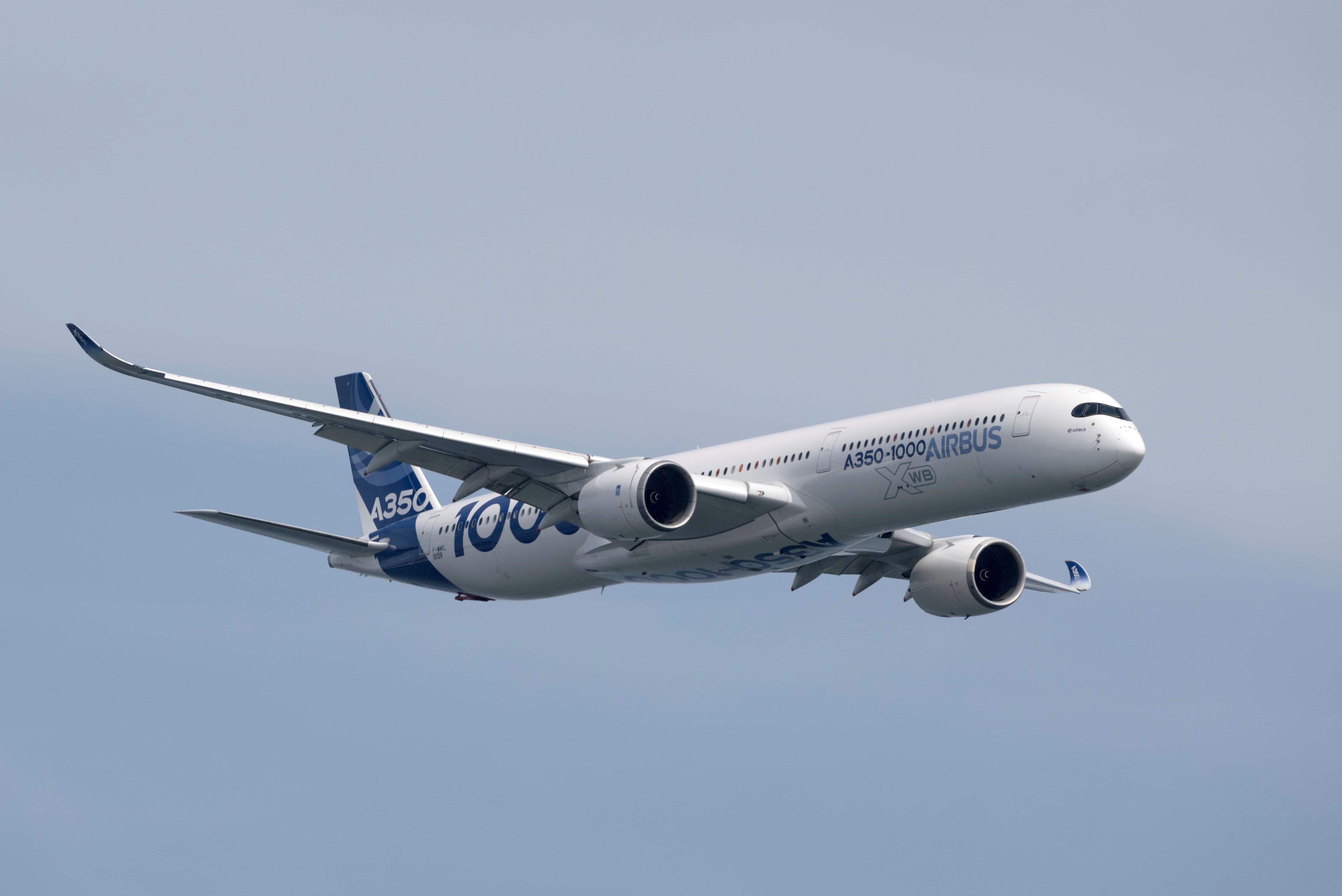
The Airbus A350-1000
Airbus, once the underdog, has soared to prominence, surpassing Boeing with its A320 series becoming the best-selling aircraft of all time in 2019.
The A320's success marked a turning point, solidifying the Airbus-Boeing duopoly that governs the global aircraft market.

As Boeing grapples with challenges, Airbus, under CEO Guillaume Faury, is presented with a unique opportunity to further assert its dominance and shape the future of the aviation industry.
According to Bloomberg, Boeing's recent troubles, including the mishap with the 737 Max, have given Airbus a huge advantage.
As Boeing focuses on rectifying its issues, Airbus, with superior financial resources, is gearing up to replace its lucrative A320 model.
&imwidth=180&imheight=135&format=webp&quality=medium)
Rahul Gandhi's plea against Election Commission delayed as Supreme Court registry flags 14 ‘defects’
&im=FitAndFill=(700,400)&imwidth=180&imheight=135&format=webp&quality=medium)
Navratri 2026: 9 days, 9 forms of Goddess Durga and 9 colours- Check the complete list
&imwidth=180&imheight=135&format=webp&quality=medium)
Korean peninsula tensions escalate as North Korea launches multiple ballistic missiles, PACOM says 'no threat to US personnel'
&imwidth=180&imheight=135&format=webp&quality=medium)
Trump weighs firing Kimberly Guilfoyle as US ambassador to Greece amid misconduct allegations: Report
&imwidth=180&imheight=135&format=webp&quality=medium)
Anti-SIR protest in Mumbai: Protestors wear black masks & ribbons in Mumbai
&imwidth=180&imheight=135&format=webp&quality=medium)
UK PM Andy Birnham renews claims of Russian meddling in Brexit vote
&imwidth=180&imheight=135&format=webp&quality=medium)
BCCI rejects venue shift reports, India vs Sri Lanka 1st ODI to remain in Delhi
&imwidth=180&imheight=135&format=webp&quality=medium)
'Absolutely disgusting': Australia slams US plan to livestream Nidal Hasan's execution; Mike Johnson raises concerns, warns of terrorist propaganda
&im=FitAndFill=(700,400)&imwidth=180&imheight=135&format=webp&quality=medium)
The world’s best places to live in 2026: Is your city on the list? Top 7 ranked
&imwidth=180&imheight=135&format=webp&quality=medium)
1,500 drones illuminate Mumbai sky as Cordelia Cruises unveils second ship, Cordelia Sky
&imwidth=180&imheight=135&format=webp&quality=medium)
‘Fortress breached, reclaimed’: CJP leaders enter Jantar Mantar a day after loss of protest venue status | WATCH
&imwidth=180&imheight=135&format=webp&quality=medium)
Houthis warns US of 'painful response' if Washington joins Saudi war in Yemen as airlines suspend flights to Saudi Arabia
&imwidth=180&imheight=135&format=webp&quality=medium)
Congress demands action against chief election commissioner
&imwidth=180&imheight=135&format=webp&quality=medium)
'Turn approver, resign, we'll forgive you': Rahul Gandhi claims receiving messages from CEC Gyanesh Kumar
&imwidth=180&imheight=135&format=webp&quality=medium)
'I will not be silenced': Ilhan Omar alleges political intimidation after federal officers search her Washington home
&imwidth=180&imheight=135&format=webp&quality=medium)
Robotic surgery, advanced treatment: What is coming to this small Gujarat town?
&imwidth=180&imheight=135&format=webp&quality=medium)
Pakistan's government blames PTI for rise of terrorism in Khyber Pakhtunkhwa
&imwidth=180&imheight=135&format=webp&quality=medium)
‘This is just the start’: Maaya Rajeshwaran on historic ITF title, confidence boost and future goals
&imwidth=180&imheight=135&format=webp&quality=medium)
I.N.D.I.A. Bloc lists 10 requests to Supreme Court
&im=FitAndFill=(700,400)&imwidth=180&imheight=135&format=webp&quality=medium)
How does a robot decide what to do next?
&imwidth=180&imheight=135&format=webp&quality=medium)
Trump says he 'may' meet North Korean leader Kim Jong Un during upcoming Asia trip
&imwidth=180&imheight=135&format=webp&quality=medium)
'Ouch!!! That must hurt': Kangana Ranaut hails Kamal Haasan's sharp reply to Elon Musk over Starlink row
&imwidth=180&imheight=135&format=webp&quality=medium)
Sidhu Moose Wala’s younger brother wins hearts by recreating late singer’s signature move at Toronto Hologram Show
&imwidth=180&imheight=135&format=webp&quality=medium)
Girl 'dead' for 8 hours wakes up at her own funeral, dad insists she wasn't breathing
&imwidth=180&imheight=135&format=webp&quality=medium)
UK school ditches technology, shifts from screen to pen and paper for learning
&imwidth=180&imheight=135&format=webp&quality=medium)
Opposition’s 10 demands in Supreme Court petition range from stay on SIR to audit of voter rolls
&imwidth=180&imheight=135&format=webp&quality=medium)
'I am thoroughly unamused': Judge slams Trump administration after 400 trees cut at Washington golf course
&im=FitAndFill=(700,400)&imwidth=180&imheight=135&format=webp&quality=medium)
New OTT releases this week (October 12-18, 2026): Sacrifice, Koffee with Karan S9, Roadies Rebirth- 6 titles coming on Netflix, JioHotstar and more
&imwidth=180&imheight=135&format=webp&quality=medium)
Delhi protest: CJI Surya Kant declines to meet India Bloc leaders
&imwidth=180&imheight=135&format=webp&quality=medium)
China’s gold rush puts billion in focus
&imwidth=180&imheight=135&format=webp&quality=medium)
India's Ajit Doval, Iran's Mohsen Rezaei hold talks amid escalating West Asia tensions, discuss 'issues of mutual interest'
&imwidth=180&imheight=135&format=webp&quality=medium)
New Cold War: Why is China buying more gold? Explained
&imwidth=180&imheight=135&format=webp&quality=medium)
'Almost certainly': UK Prime Minister Andy Burnham says Iran's IRGC behind RAF Fairford threat
&imwidth=180&imheight=135&format=webp&quality=medium)
Elon Musk pumps $276 million into Republican campaigns ahead of US midterm elections
Faury has hinted at a new A320 replacement, already in the conceptual stage, set to take flight in the latter half of the 2030s.
This places Airbus in a position of strength, allowing it to shape the future of the jetliner business while Boeing struggles to regain stability.
With a vision for a more sustainable future, Airbus is exploring radical changes in its new narrowbody designs.
The company aims to eliminate net carbon emissions by 2050, introducing features like longer, curved wings with folding tips, lightweight carbon composite skin, and open-rotor engines.
These innovations align with the industry's push to reduce environmental impact.
Airbus has already reaped benefits from Boeing's setbacks, securing a 61 per cent share of sales at UK aerospace supplier Senior Plc in 2023.
Boeing's troubles, particularly with the 737 Max, have led to a shift in market dynamics.
Bloomberg cited Senior Plc's CEO, David Squires, who said that Airbus accounted for 61 per cent of sales in 2023, a huge increase from about 30 per cent in 2015.
Airbus, especially with its A321 variant, has dominated the narrowbody jetliner market, securing a 60 per cent share.
However, there are limitations to further expansion due to production constraints, with deliveries scheduled as far ahead as 2028-29.
Despite incremental gains, Airbus remains cautious about the short-term opening created by Boeing's challenges.
As Airbus plans two new aircraft for the mid-2030s, the financial resources available for the European aircraft manufacturer stands in sharp contrast with Boeing's stretched balance sheet.
Airbus' net debt of negative €14 billion ($15.5 billion) provides an edge, with research and development spending 44 per cent higher than Boeing's.
Both aircraft manufacturers are at a crucial juncture, with the A320 and 737 vital for their sales and profits.
Airbus' advantage lies not just in financial strength but in sending a clear message to suppliers about its objectives towards innovation and sustainability.
As Airbus accelerates its initiatives, focusing on alternative aviation fuels and hydrogen-powered turboprops, the company aims to align with industry plans for sustainable flying.
Airbus is evaluating options and testing cutting-edge technologies.
The developments include a hydrogen-powered turboprop for smaller capacity needs and a future narrowbody that runs on alternative fuels.
Despite current challenges, industry analysts believe Boeing is not down for the count.
Boeing's struggles are seen as fixable, with efforts to streamline production, resolve quality issues, and rebuild customer confidence.
While Airbus enjoys a temporary advantage, allegiances in the aviation industry are resilient, giving Boeing an opportunity to recover and make a comeback.
Boeing's plans for a revolutionary narrowbody family, designated X-66A, could provide the company with a chance to regain its competitive edge.
Beyond the Airbus-Boeing rivalry, the rise of Commercial Aircraft Corp. of China (Comac) poses a potential threat, transforming the global competition into a triopoly.
Chinese carriers, major customers for both Airbus and Boeing, have huge orders with Comac.
The emergence of Comac and its C919 narrowbody could challenge the established duopoly, creating new dynamics in the aviation industry.
The speed at which Comac gains prominence will play a crucial role in the future landscape of aircraft manufacturing.
(With inputs from Bloomberg)