

&imwidth=800&imheight=600&format=webp&quality=medium "Australia cuts interest rates amid economic slowdown and inflation relief")
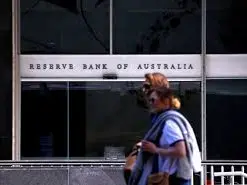
Australia’s central bank, the Reserve Bank of Australia (RBA), has announced a reduction in its benchmark interest rate by 25 basis points, bringing it to 3.6 per cent. This marks the third rate cut this year and reflects the ongoing challenges faced by the country’s economy. The move was made in response to weaker-than-expected economic growth and a continued decline in inflation, which the RBA is aiming to keep within its target range of 2-3 per cent. The central bank’s decision comes after inflation in Australia fell to 2.1 per cent in the second quarter, its lowest rate since March 2021. This drop has been attributed to tighter monetary policies and declining aggregate demand. The RBA governor, Michele Bullock, emphasised that inflation had “substantially” decreased from its peak in 2022, but the economy's overall growth has stalled, leading the RBA to adjust its economic forecasts.
Economic growth forecast downgraded amid sluggish performance
In addition to the interest rate cut, the RBA downgraded its growth forecast for the Australian economy to 1.7 per cent for the year, down from an earlier estimate of 2.1 per cent. This revision reflects weaker-than-expected public demand in early 2025, which is unlikely to be compensated by the rest of the year. The economy grew by just 1.3 per cent in the first quarter, falling short of the expected 1.5 per cent. On a quarterly basis, growth was even weaker, expanding by only 0.2 per cent, compared to the forecasted 0.4 per cent.
This stagnation in growth has been attributed to several factors, including reduced public spending, weakening consumer demand, and lower export performance. Despite these challenges, inflation continues to move toward the RBA's target range, and the labour market remains relatively stable, although unemployment rose to 4.3 per cent in June from 4.1 per cent in February.
Rate cuts expected to continue amid global economic uncertainty
While the Australian economy faces challenges, the outlook for future rate cuts remains a topic of speculation. Analysts from the Commonwealth Bank of Australia predict another rate cut by November, with potential for further easing in early 2026. Some experts expect rates to fall to 2.85 per cent by mid-2026, largely due to the RBA’s revised inflation forecasts.
Trending Stories
&imwidth=180&imheight=135&format=webp&quality=medium)
Pakistan denies reports of PAF jets being used in attacks against Iran-backed Houthis in Yemen
&imwidth=180&imheight=135&format=webp&quality=medium)
Prince Harry opens up about loss, depression, and recovery: 'I felt guilty being happy'
&im=FitAndFill=(700,400)&imwidth=180&imheight=135&format=webp&quality=medium)
Food shortages, suicide attempts and more: USS Abraham Lincoln returns to US after 321 day deployment supporting war on Iran — The whole row explained
&imwidth=180&imheight=135&format=webp&quality=medium)
Trump's naked 23-karat gold statue unveiled near European Parliament
&imwidth=180&imheight=135&format=webp&quality=medium)
Houthis continue direct hits on Saudi targets, Türkiye and Pakistan missing in action | Gravitas
&imwidth=180&imheight=135&format=webp&quality=medium)
IND vs WI: West Indies set record for highest successful run chase in T20Is against India
&imwidth=180&imheight=135&format=webp&quality=medium)
‘Real boss of India’: Elon Musk escalates attack over Starlink’s India entry
&imwidth=180&imheight=135&format=webp&quality=medium)
French students light European bonfire, protests erupt in Belgium, Italy & Greece | Gravitas
&imwidth=180&imheight=135&format=webp&quality=medium)
South Africa High Commissioner Anil Sooklal speaks to WION, calls Pillay an inspiration
&imwidth=180&imheight=135&format=webp&quality=medium)
JK Rowling announces two new 'Harry Potter' books
&imwidth=180&imheight=135&format=webp&quality=medium)
‘Never-ending flow of cheap labour’: JD Vance hits back at Indian-origin Congresswoman over US green card curbs for major tech companies
&imwidth=180&imheight=135&format=webp&quality=medium)
BTS agency HYBE announces first-ever Weverse Con Festival in India
&imwidth=180&imheight=135&format=webp&quality=medium)
New York ICE shooting sparks protests as Mamdani to call on Trump to halt ICE operations
&imwidth=180&imheight=135&format=webp&quality=medium)
‘We will end ICC’: US sanctions International court, threatens to cripple hours after Navi Pillay wins Nobel Peace Prize
&imwidth=180&imheight=135&format=webp&quality=medium)
BTS' RM urges Peru fans not to gather outside hotel: 'We can't sleep', It's becoming a nuisance'
&imwidth=180&imheight=135&format=webp&quality=medium)
Russia president Putin promises to 'do everything' to help settle Middle East conflict as US-Iran negotiations stall
&imwidth=180&imheight=135&format=webp&quality=medium)
'Deeply offensive': India hits back at US Vice-President JD Vance for 'indentured labour' remark
&im=FitAndFill=(700,400)&imwidth=180&imheight=135&format=webp&quality=medium)
New Friday OTT releases (October 9, 2026): Reporting Live, Animals, Take Charge of My Heart- 6 new titles coming on Netflix, JioHotstar and more
&imwidth=180&imheight=135&format=webp&quality=medium)
‘Ruh Roh’: Top US official mocks ‘Indian market collapse’ claim after Trump’s IT curbs. But did it? | FACT CHECK
&imwidth=180&imheight=135&format=webp&quality=medium)
SC asks Centre to frame mechanism against unethical pharma marketing practices
&imwidth=180&imheight=135&format=webp&quality=medium)
OpenAI shuts down Russian, Iranian influence operations using ChatGPT to spread propaganda
&im=FitAndFill=(700,400)&imwidth=180&imheight=135&format=webp&quality=medium)
435 House seats, 35 Senate races: The numbers behind US midterms 2026
&imwidth=180&imheight=135&format=webp&quality=medium)
Powerful 7.7 magnitude earthquake strikes Panama, tsunami warning issued
&imwidth=180&imheight=135&format=webp&quality=medium)
Sri Lankan Tamil worker gets death sentence in Saudi Arabia over blasphemy, calls for pardon intensify
&imwidth=180&imheight=135&format=webp&quality=medium)
Scientists find highly radioactive nuclear particles at Chernobyl 40 years after the disaster
&imwidth=180&imheight=135&format=webp&quality=medium)
Bangladesh named as Pakistan’s replacement for Asian Hockey Champions Trophy
&imwidth=180&imheight=135&format=webp&quality=medium)
Trump has a new 'enemy': Anyone who calls it 'artificial intelligence'. Here's what we wants instead
&im=FitAndFill=(700,400)&imwidth=180&imheight=135&format=webp&quality=medium)
Fastest-growing Asian economies in 2026: Who tops the chart? Where does India rank?
&im=FitAndFill=(700,400)&imwidth=180&imheight=135&format=webp&quality=medium)
What is the real meaning behind Pete Hegseth's tattoos?
&imwidth=180&imheight=135&format=webp&quality=medium)
Jewar airport in Noida to be renamed Narendra Modi International Airport: CM Yogi
&imwidth=180&imheight=135&format=webp&quality=medium)
Is Trump playing a double game with Iran?
&imwidth=180&imheight=135&format=webp&quality=medium)
Trump honours Microsoft CEO Satya Nadella with top technology honour amid immigration scrutiny
&imwidth=180&imheight=135&format=webp&quality=medium)
Fact check | Is Sydney Sweeney considering conversion to Judaism?
&imwidth=180&imheight=135&format=webp&quality=medium)
US midterm elections 2026: What a blue wave or blue tsunami could mean for Trump
&imwidth=180&imheight=135&format=webp&quality=medium)
SC questions closure of 57 Delhi Metro stations, asks Centre to resume services in regulated manner
&im=FitAndFill=(700,400)&imwidth=180&imheight=135&format=webp&quality=medium)
Meet top 5 Indian batters fastest to 7000 runs in ODIs
&imwidth=180&imheight=135&format=webp&quality=medium)
Nigeria govt rolls out 30-day NNPC petrol discount, insists it is not a subsidy
International factors, including US trade tariffs and global economic conditions, also play a significant role in Australia’s monetary policy decisions. The RBA noted that while the risks of a “very damaging” global trade war have diminished, uncertainties persist. The weakening of the Australian dollar, down 0.15 per cent to 0.6501 against the US dollar, reflects the global economic pressures, despite the RBA’s efforts to stabilise inflation.
(With inputs from agencies)