

&imwidth=800&imheight=600&format=webp&quality=medium "Asian markets edge higher, gold shines as investors await US policy clarity")
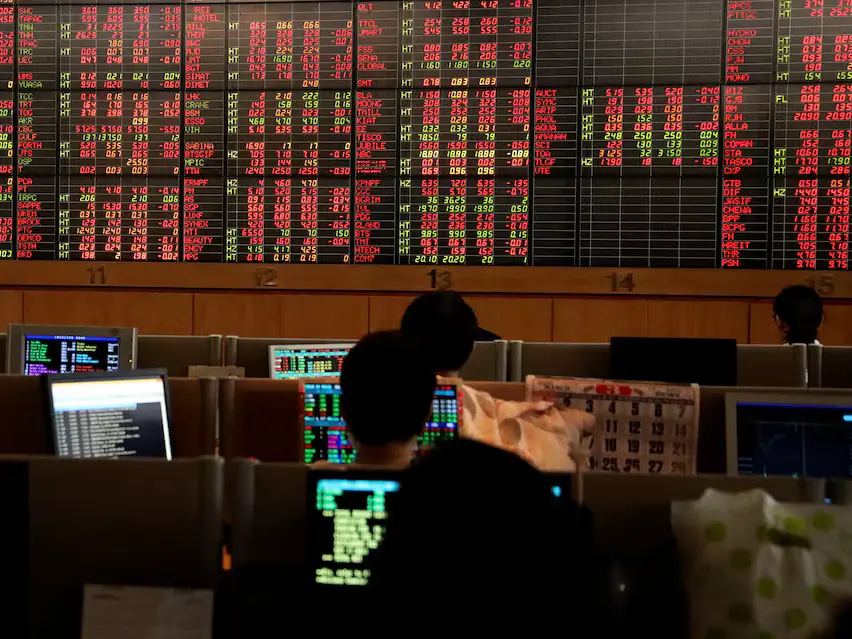
Asian equity markets moved cautiously higher on July 1, buoyed by record gains on Wall Street and optimism surrounding ongoing global trade negotiations, even as political and economic uncertainty in the United States kept investors on edge. A weaker dollar, falling oil prices, and renewed demand for safe-haven assets like gold reflected growing anxiety ahead of crucial US policy decisions, including a massive tax-and-spending bill and looming tariff deadlines.
MSCI’s broadest index of Asia-Pacific shares outside Japan rose 0.5 per cent, led by South Korea’s Kospi, which climbed 1.8 per cent. However, Japan’s Nikkei 225 fell 1.1 per cent as the yen strengthened, while broader indices such as Australia’s S&P/ASX 200 and India’s BSE Sensex traded flat. Hong Kong markets remained closed for a public holiday.
Investors remained fixated on the fate of President Donald Trump’s sweeping tax and spending package, estimated to add $3.3 trillion to the US debt pile. The bill, dubbed the “One Big Beautiful Bill” by the president, has sparked intense debate in the Senate, with Republicans and Democrats battling over a flurry of amendments. Trump has urged passage before the July 4 holiday.
Meanwhile, the 90-day reprieve on Trump’s reciprocal tariffs is set to expire on July 9, heightening tensions with trading partners. US Treasury Secretary Scott Bessent signalled progress with some nations but warned that tariffs could “spring back” to previously announced levels if negotiations stall. The uncertainty weighed on sentiment across Asian markets, where export-driven economies are especially vulnerable.
Gold climbs as safe-haven demand grows
Gold prices extended gains on July 1, supported by a falling US dollar and rising investor demand for safe-haven assets amid geopolitical concerns and policy ambiguity. Spot gold rose 0.6 per cent to $3,322.55 per ounce in early Asian trading, while US gold futures gained 0.8 per cent to $3,334.80. The US dollar index dropped 0.2 per cent, touching a 50-month low. A weaker dollar typically boosts gold demand by making it cheaper for holders of other currencies.
Trending Stories
&im=FitAndFill=(700,400)&imwidth=180&imheight=135&format=webp&quality=medium)
Navratri 2026: 9 days, 9 forms of Goddess Durga and 9 colours- Check the complete list
&imwidth=180&imheight=135&format=webp&quality=medium)
Russian woman and Bihar boy's love story goes viral after she reaches India to marry him
&imwidth=180&imheight=135&format=webp&quality=medium)
Arijit Singh 9-city India stadium tour to start from January: Check venue and ticket prices
&imwidth=180&imheight=135&format=webp&quality=medium)
‘Hernia, aneurysm, injuries’: Salman Khan reveals health struggles behind his changing physique on Koffee With Karan 9
&imwidth=180&imheight=135&format=webp&quality=medium)
F1 set to return to Africa for first time since 1993
&imwidth=180&imheight=135&format=webp&quality=medium)
'Don't ever mess with nature!': Trump’s tiger attack post triggers social media backlash as victim's family issues heartbreaking tribute
&imwidth=180&imheight=135&format=webp&quality=medium)
Trump's $100,000 H-1B fee: Why neither Republicans nor Democrats want to make it a 2026 US Midterm issue
&im=FitAndFill=(700,400)&imwidth=180&imheight=135&format=webp&quality=medium)
Which jobs are safest from humanoid robots?
&imwidth=180&imheight=135&format=webp&quality=medium)
US midterms: Trump rallies behind Husted as Brown mounts challenge in crucial Ohio race
&imwidth=180&imheight=135&format=webp&quality=medium)
‘Rise up, young patriots!’: American singer Mary Millben says US donors funding CJP, backs Modi govt
&imwidth=180&imheight=135&format=webp&quality=medium)
Nobel Peace Prize winner Navi Pillay calls on US to 'get back to' being defender of human rights
&imwidth=180&imheight=135&format=webp&quality=medium)
Iranian woman, 23, handed death sentence for ‘blasphemy’ in social media post; appeals for help
&imwidth=180&imheight=135&format=webp&quality=medium)
'Turn approver, resign, we'll forgive you': Rahul Gandhi claims receiving messages from CEC Gyanesh Kumar
&imwidth=180&imheight=135&format=webp&quality=medium)
Somaliland celebrates after Trump calls it 'a totally different country', raise hopes of US recognition
&imwidth=180&imheight=135&format=webp&quality=medium)
'Leakers should be shot': Trump rages over leak of US military plans to attack Iran, slams media
&imwidth=180&imheight=135&format=webp&quality=medium)
Afghan FM Muttaqi to CdA Yatin Patel: We attach importance to relations with India
&imwidth=180&imheight=135&format=webp&quality=medium)
'FWD Supreme' to use AI for flight and threat identification
&imwidth=180&imheight=135&format=webp&quality=medium)
‘My president, I mean my husband’: Trump's new press secretary Katie Zacharia's first briefing goes off the rails in 14 minutes
&imwidth=180&imheight=135&format=webp&quality=medium)
Mars is not for man: Human heart is too weak to survive the trip, study shows
&imwidth=180&imheight=135&format=webp&quality=medium)
‘600,000 people without electricity’: Zelensky calls for ‘strong’ US sanctions on Russia, accuses Moscow of violating Trump’s energy ceasefire
&imwidth=180&imheight=135&format=webp&quality=medium)
Sheikh Hasina warns of 'deep sense of insecurity' among Bangladesh's minorities in Durga Puja message
&imwidth=180&imheight=135&format=webp&quality=medium)
FBI refutes media report claiming Kash Patel is in Russia for talks, says he is in Virginia
&imwidth=180&imheight=135&format=webp&quality=medium)
US inflation hits 3.7% as rising fuel prices pose challenge for Trump ahead of midterms
&imwidth=180&imheight=135&format=webp&quality=medium)
IND vs WI 4th T20I: Shai Hope hundred and Keemo Paul's five-for level series for West Indies
&imwidth=180&imheight=135&format=webp&quality=medium)
Girl 'dead' for 8 hours wakes up at her own funeral, dad insists she wasn't breathing
&imwidth=180&imheight=135&format=webp&quality=medium)
Three Indians killed in suspected arson attack in Germany, Romanian resident arrested
&imwidth=180&imheight=135&format=webp&quality=medium)
'Totally unacceptable': MEA slams attacks on Saudi civilian infrastructure after Indian national's death
&im=FitAndFill=(700,400)&imwidth=180&imheight=135&format=webp&quality=medium)
New OTT releases this week (October 12-18, 2026): Sacrifice, Koffee with Karan S9, Roadies Rebirth- 6 titles coming on Netflix, JioHotstar and more
&imwidth=180&imheight=135&format=webp&quality=medium)
Did the US withhold missile warnings? Ukraine questions Washington's 'bad weather' explanation after Russian strikes kill six, cut power to 600,000
&imwidth=180&imheight=135&format=webp&quality=medium)
US Singer Mary Millben alleges foreign funding for CJP, warns against anti-Modi forces: All you need to know
&imwidth=180&imheight=135&format=webp&quality=medium)
Global energy crisis hits Indian economy
&imwidth=180&imheight=135&format=webp&quality=medium)
Durga Puja 2026: Power banks, water bottles and more, a foolproof guide to pandal hopping
&imwidth=180&imheight=135&format=webp&quality=medium)
Zelensky feels betrayed by Trump, urges Musk to restore Starlink in Ukraine; Musk responds
&imwidth=180&imheight=135&format=webp&quality=medium)
'Girls are uncomfortable': Salman Khan calls out paparazzi for bad angles, speaks on PR on Koffee With Karan
&imwidth=180&imheight=135&format=webp&quality=medium)
After flydubai co-pilot attack, Air France bans Pakistani, Muslim-majority crew on Israel flights
Indian domestic prices also mirrored global trends. 24-karat gold traded at ₹98,400 ($1,147) per 10 grams, while 22-karat stood at ₹90,200 ($1,052). Analysts expect an upward bias in gold prices to persist in the near term.
Market participants are now closely watching the upcoming US jobs report due on July 3, which could influence the Federal Reserve’s stance on interest rates. Any signs of economic softening may strengthen the case for rate cuts, potentially boosting gold further.
Oil slides as supply outlook weighs
Crude oil prices continued their downward trend, pressured by expectations of increased supply from OPEC+ and concerns over slowing demand due to trade tensions. Brent futures for September delivery fell 0.46 per cent to $66.43, while WTI August contracts dropped 0.49 per cent to $64.79 per barrel.
OPEC+ is expected to hike output by another 411,000 barrels per day in August, the fourth straight monthly increase. Analysts from ING Think noted that with recent supply additions, the global oil market could return to a surplus in Q4 2025, eroding the geopolitical risk premium that previously supported prices. Domestic oil futures followed suit. On the MCX, July crude contracts fell 0.48 per cent to ₹5,554 ($64.76), while August contracts slipped 0.42 per cent to ₹5,469 ($63.77).
Despite easing tensions between Israel and Iran, markets remain alert to potential disruptions. Trump’s latest criticism of Japan for refusing US rice imports, posted on Truth Social, underscores the fragile nature of ongoing trade talks. With critical US economic data and policy decisions looming, investors remain on guard, balancing cautious optimism with the risk of renewed volatility in global markets.