‘Smartphones lead exports’: What’s driving India’s electronics growth

&imwidth=600&imheight=450&format=webp&quality=medium "‘Smartphones lead exports’: What’s driving India’s electronics growth")
‘Smartphones lead exports’: What’s driving India’s electronics growth
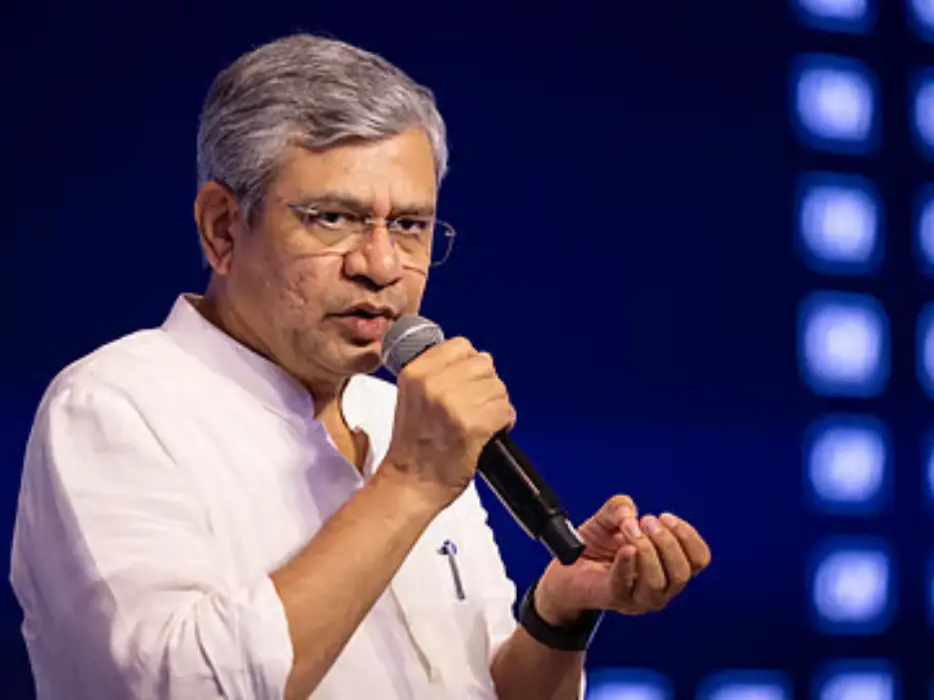
India’s electronics exports have emerged as one of the top three export categories, signalling a shift in the country’s trade pattern, according to Ashwini Vaishnaw. Speaking at the CII Annual Business Summit 2026.
India’s electronics exports have emerged as one of the top three export categories, signalling a shift in the country’s trade pattern, according to Ashwini Vaishnaw. Speaking at the CII Annual Business Summit 2026, the minister said that smartphones have now become the largest exported item from India, highlighting the growing role of electronics in the economy.
He noted that traditional export items such as diesel, gems and jewellery, textiles and engineering goods have long dominated India’s exports, but the situation is now changing. The rise of electronics exports reflects increased manufacturing capacity and integration with global supply chains.
Shift in India’s export landscape
According to the minister, India exported around Rs 30,000 crore worth of electronics components to neighbouring countries in the last financial year. This marks a notable change, as the country moves from being largely dependent on imports in this sector to becoming an exporter.
Vaishnaw said that electronics is now among the top three export categories and is expected to grow further in the coming years. This growth is linked to increasing investments and policy support aimed at strengthening domestic manufacturing.
Expansion of manufacturing capacity
Trending Stories
)
)
&im=FitAndFill=(700,400))
)
)
)
)
)
)
)
)
)
&im=FitAndFill=(700,400))
)
)
)
&im=FitAndFill=(700,400))
&im=FitAndFill=(700,400))
&im=FitAndFill=(700,400))
)
)
&im=FitAndFill=(700,400))
&im=FitAndFill=(700,400))
)
)
&im=FitAndFill=(700,400))
)
)
)
)
The minister highlighted that there are currently 71 manufacturing facilities for electronics components across India. Many of these units are in advanced stages of development and are expected to support both domestic demand and exports.
He added that several components will soon meet 100 per cent of domestic demand, while Indian companies are also expected to become part of global value chains. The focus, he said, is on improving quality standards through methods such as Six Sigma and lean manufacturing to ensure long-term competitiveness.
Progress in semiconductor and new technologies
On semiconductor manufacturing, Vaishnaw said that two factories are already in commercial production, while a third is expected to begin operations in July and a fourth later in the year.
He also pointed to opportunities in emerging technologies such as micro LED displays. According to him, India could begin production of micro LED screens within the next 22 months, positioning itself in a developing segment of the electronics industry.
Railways infrastructure sees major growth
The minister also spoke about developments in railway infrastructure. Capital expenditure in the sector has increased from about Rs 66,000 crore a few years ago to nearly Rs 2,72,000 crore in the last financial year.
He said that around 49,000 kilometres of railway tracks have been electrified and 36,000 kilometres of new tracks have been added. These improvements are expected to reduce travel time significantly across major routes.
Impact on travel patterns
With faster trains, the minister said that passengers may increasingly prefer rail travel over air travel on certain routes. For example, travel time between Bengaluru and Chennai is expected to reduce to about 78 minutes, while Delhi to Varanasi could take around 3 hours and 50 minutes.
He added that such improvements could change travel patterns, with railways becoming a more preferred option for short and medium distances.
What this means for India
The rise of electronics exports alongside improvements in infrastructure reflects broader economic changes. Increased manufacturing, better connectivity and new technologies are contributing to this shift.
As India continues to expand its capabilities in electronics and transportation, these developments may play an important role in shaping long-term economic growth and global competitiveness.
