Opponents of California's EV targets take their case to Supreme Court

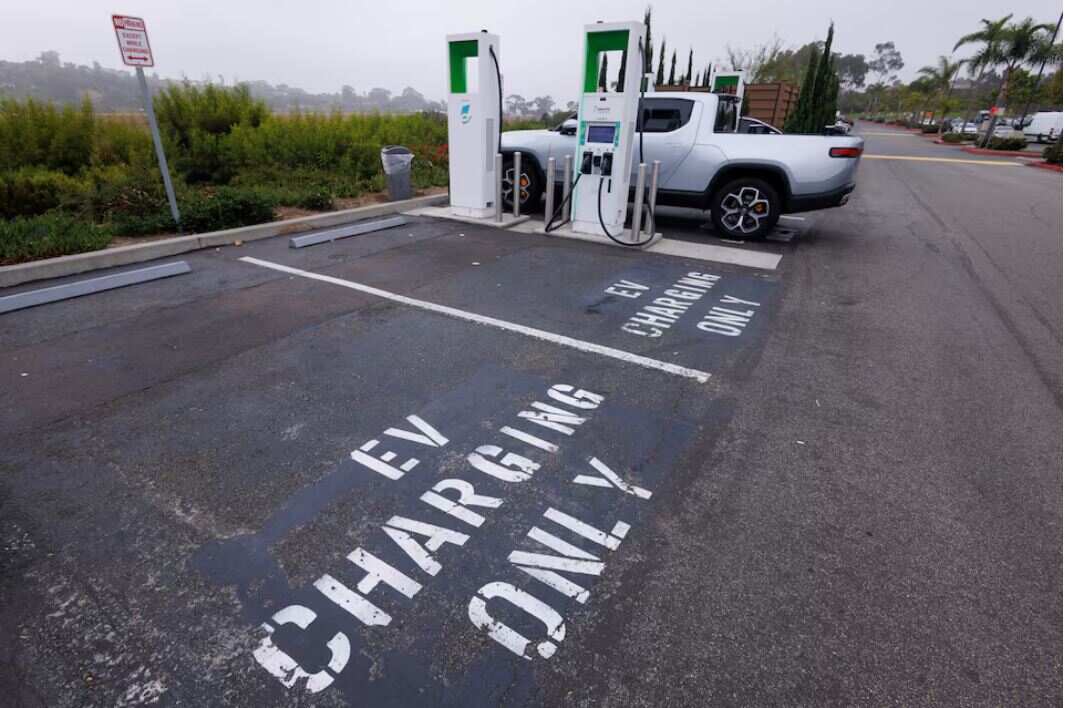
Opponents of California's EV targets take their case to Supreme Court
Opponents of California's ambitious goals to increase electric car adoption for reducing greenhouse gas emissions have brought their argument to the US Supreme Court this week, marking the latest challenge against the state's efforts to combat climate change. Energy companies, corn growers, and industry associations have historically resisted stringent environmental regulations in California. For decades, California has been the sole state authorised to seek waivers from the Environmental Protection Agency (EPA) to establish vehicle emissions standards stricter than federal norms.
The EPA granted this exception due to California's unique circumstances, including its geography and high vehicle density, which exacerbate smog issues beyond those faced by other states. Other states have the option to adopt California's more rigorous emission standards, prompting automakers to generally comply nationwide rather than produce different vehicles for different regions.
In their petition filed on Tuesday, including Valero Energy Corp's Diamond Alternative Energy and others, the plaintiffs argued that the EPA's waiver for California's Advanced Clean Car program from 2015 to 2025 effectively allows the state to act as a quasi-federal regulator on global climate change issues.

Also Read:Fisker seeks bankruptcy for bulk sale of Ocean EVs at a steep discount
Citing the Supreme Court's 2022 decision in West Virginia v. EPA, the plaintiffs invoked the "major questions" doctrine, asserting that significant regulatory actions impacting the economy and society require explicit congressional authorisation. They contended that California's initiative lacks the necessary "compelling and extraordinary" justification required for an EPA waiver under current legal standards.
California Governor Gavin Newsom has positioned the state as a leader in climate action, targeting transportation as a major source of emissions, although a spokesperson for the governor declined immediate comment on the matter. Critics of the plan by the Californian authorities to set stringent milestones in the electrification of the transport sector to mitigate green house gas emissions have taken the matter to the US Supreme Court this week signaling the latest salvo against measures taken in the fight against climate change.
&im=FitAndFill=(700,400))
National Handloom Day 2026: From Alia Bhatt to Samantha Ruth Prabhu; Actresses who celebrated India's textile heritage as brides
)
The Royals enter the Doctor Who universe: King Charles and Queen Camilla beam into Commonwealth Games in TARDIS
)
Unitree Robotics targets $9 billion valuation in landmark IPO backed by DeepSeek and Tencent
)
India names 27 sites in Arunachal Pradesh
)
Bharat Bhhagya Viddhaata OTT: When will Kangana Ranaut's film stream online?
&im=FitAndFill=(700,400))
How many soldiers operate one S-400 battery?
)
Shakib Al Hasan ready to return to Bangladesh—under one condition
)
‘Fake news’: MEA rejects report claiming India sought defence pact with Israel after Pakistan, Saudi Arabia, Turkey deal
)
Rockstar to unveil GTA 6 extended look ahead of November launch
)
Russia forms Ukrainian Volunteer Spetsnaz Brigade to fight Ukraine
)
Drug-resistant fungus that hides in hair and enters bloodstream reported in 23 US states
)
Technology transfer deal boosts India's defence manufacturing ambitions
)
Border row erupts in Europe after Ceuta crossings, Spain imposes border controls on Italy
)
Morale plummets on USS Abraham Lincoln: Are US sailors reaching a breaking point? | GRAVITAS
)
'Security can't be bought with Pakistan, Turkey deal': Iran tells Saudi Arabia
)
Baba Vanga's 2026 prophecy: 2 predictions 'already came true', 3 terrifying ones remain. Details inside
)
Colombia’s new president Abelardo de la Espriella vows to ‘defeat narco-terrorists’, signals hardline shift
&im=FitAndFill=(700,400))
New Friday OTT releases (August 7, 2026): Operation Safed Sagar, Vadhandhi, Main Vaapis Aaunga- 6 movies and TV shows on Netflix, Prime Video and more
)
Squadron Leader Bhawana Kanth scripts history as Indian Air Force gets its first woman ‘Top Gun’ pilot
)
RSS says Gen Z protests reflect genuine distress
)
Trump says Iranian school bombing photos could be AI-generated - 'I don’t think...'
)
IAF officer held for sharing sensitive information in 'honey trap' case, booked under Official Secrets Act
)
Stray Kids under scrutiny? Fans react to Grammy submission silence after BTS boycott
&im=FitAndFill=(700,400))
Why the Su-30MKI doesn't need external fuel tanks to fly vast distances
)
Jugal Hansraj reunites with Shekhar Kapur after 40 years for Masoom: The Next Generation
)
New speed limits, automatic challans: Big traffic change coming to Delhi-Meerut Expressway. All you need to know
)
India officially names 27 places in Arunachal to counter China's renaming claims
)
Trump calls White House ballroom ruling a 'national disgrace' as court says Congress approval needed
)
US sanctions Iran’s crypto network after Strait of Hormuz attacks, offers $15m bounty for intel on IRGC finance
&im=FitAndFill=(700,400))
Why the Su-30MKI is one of the heaviest fighters ever built
)
Uttarakhand young innovator builds India's own flying vehicle, conducts first test flight: WATCH
)
Chilling video shows students take cover as teen opens fire at Thai school
)
Reese Witherspoon's father hospitalised after poolside incident in Nashville: Report
Some of the industries that have opposed rigorous environmental policies in California include energy firms, corn growers and industry associations. Until recently, it has been the only state allowed by the EPA to apply for exemptions to set stricter vehicle emissions standards than the federal ones for over three decades. The EPA allowed this exception based on certain conditions with regard to California’s specific topography and/or high level of vehicle emission that aggravates smog problems more than in the other states.
Other states may elect to adopt much higher emission standards as has been done in California and this is normally enough to ensure that automakers agree to follow the rules most of the time instead of producing one model for California and another for the rest of the country.
When filing its petition on Tuesday together with others such as Diamond Alternative Energy by Valero Energy Corp the plaintiffs’ major reasoning was that under the EPA waiver for California through the Advanced Clean Car program in the period 2015-2025, California practically becomes a quasi federal regulator on global climate change issues.
The ‘major questions’ doctrine: Using the Supreme Court’s 2022 decision West Virginia v EPA as a playbook, the plaintiffs argued that any federal actions with major effects on the economy and society must be expressly authorised by Congress. They argued that California’s initiative does not meet the ‘compelling and extraordinary’ needs standard that existing legal criteria hold as mandatory for the EPA waiver.
Last week, California Governor Gavin Newsom vowed to continue advancing climate policy, focusing on transportation as one of the key sources of the problem; Nonetheless, a spokesperson for Newsom did not respond to a request for comment on the matter.
This shift to drag the Supreme Court comes when oil companies, ethanol producers, and distributors, and trucking firms and business associations institute legal cases in state and federal courts. These groups do not want the Californian regulations to be implemented with a view of lowering greenhouse emission on different types of vehicles.
The Clean Air Act which EPA used in formulating of the vehicle emission standards does not specifically address emissions of greenhouse gasses from mobile sources such as automobiles. The plaintiffs pointed out that such attempts are redundant since climate change is a worldwide problem and California’s initiatives will not significantly alter global circumstances.
The plaintiffs underlined the importance of the question of whether the state of California may unilaterously regulate emission standards for itself and other states of the USA calling the specified authority a crucial factor that shapes the national policy in the mentioned field, may contribute to demand reduction for petroleum and marginally necessary bio-fuels.
Other plaintiffs in the filing are American Fuel & Petrochemical Manufacturers, Kansas Corn Growers Association, and the National Association of Convenience Stores.
