

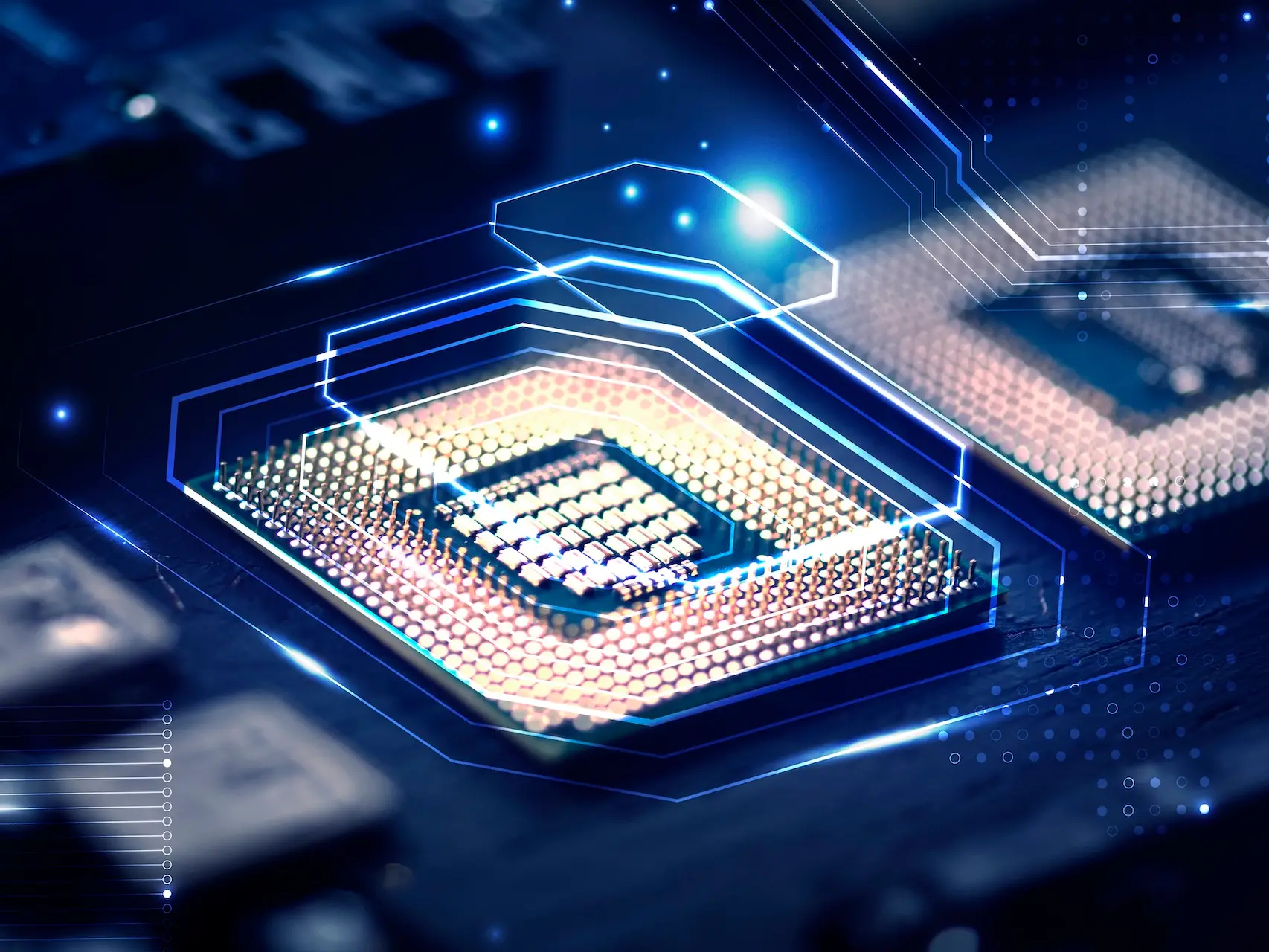
&imwidth=800&imheight=600&format=webp&quality=medium "Xiaomi has spent $3 billion designing its own chips! It still has to build them in Taiwan")
Xiaomi announced three of its own chips this week. The design work is Chinese. The manufacturing is not, and that is the whole story of China's semiconductor position in one product launch.
What Was Announced
The Xring O3, unveiled on August 24, is built on TSMC's N3P three-nanometre node — 24 billion transistors on a die of 133 square millimetres, with LPDDR6 memory support. Xiaomi says it has entered mass production.
Two more were confirmed alongside it. The Xring O100 is a six-nanometre neural processing unit intended to run MiMo, Xiaomi's own large language model, directly on consumer devices. The Xring D100 is a three-nanometre chip for autonomous driving. Both have completed development and are scheduled for deployment next year.
TSMC has been contracted to manufacture all three.
The Investment
Trending Stories
&imwidth=180&imheight=135&format=webp&quality=medium)
Shreyas Iyer blames dew for West Indies' record run chase in 2nd T20I in Ranchi
&im=FitAndFill=(700,400)&imwidth=180&imheight=135&format=webp&quality=medium)
Happy Birthday Rekha: Watch these 7 evergreen Bollywood hits on Netflix, Prime Video and more
&imwidth=180&imheight=135&format=webp&quality=medium)
'I am not going to be watching it': JD Vance on livestream of Nidal Hasan's firing squad execution
&imwidth=180&imheight=135&format=webp&quality=medium)
UK navy hit by espionage scandal: Sailor accused of spying for Russia | Gravitas
&imwidth=180&imheight=135&format=webp&quality=medium)
Katie Zacharia likely to succeed Karoline Leavitt as Trump's White House press secretary
&imwidth=180&imheight=135&format=webp&quality=medium)
Delhi on high alert for CJP protest: Delhi police to use body cams to 'prove whether we did anything’; Pink Force, RAF, 35,000 personnel deployed
&imwidth=180&imheight=135&format=webp&quality=medium)
‘Never-ending flow of cheap labour’: JD Vance hits back at Indian-origin Congresswoman over US green card curbs for major tech companies
&imwidth=180&imheight=135&format=webp&quality=medium)
Panama president declares ‘major disaster’ after powerful 7.7-magnitude earthquake; over 80 aftershocks recorded
&imwidth=180&imheight=135&format=webp&quality=medium)
‘250? Cool.’: Shai Hope takes swipe at Shubman Gill’s Instagram caption after Ranchi T20I masterclass
&imwidth=180&imheight=135&format=webp&quality=medium)
‘Ruh Roh’: Top US official mocks ‘Indian market collapse’ claim after Trump’s IT curbs. But did it? | FACT CHECK
&im=FitAndFill=(700,400)&imwidth=180&imheight=135&format=webp&quality=medium)
Fastest-growing Asian economies in 2026: Who tops the chart? Where does India rank?
&imwidth=180&imheight=135&format=webp&quality=medium)
'I ended 8 wars': Trump slams Nobel Peace prize decision, claims award was his due
&imwidth=180&imheight=135&format=webp&quality=medium)
Dhurandhar: The Revenge album submitted for Grammy consideration; But what does it mean?
&imwidth=180&imheight=135&format=webp&quality=medium)
J&K Government orders major police reshuffle, transfers 100 officers across UT
&imwidth=180&imheight=135&format=webp&quality=medium)
New York protests erupt as Trump administration defends ICE shooting
&imwidth=180&imheight=135&format=webp&quality=medium)
Delhi protest: Metro curbs, train cancellations, traffic diversions as protesters seek CEC Gyanesh Kumar’s resignation
&imwidth=180&imheight=135&format=webp&quality=medium)
Powerful 7.7 magnitude earthquake strikes Panama, tsunami warning issued
&imwidth=180&imheight=135&format=webp&quality=medium)
Hurricane Isaias makes landfall in Florida as Category 2 storm with winds of 105mph, threatens Gulf Coast with life-threatening surge
&imwidth=180&imheight=135&format=webp&quality=medium)
Trump has a new 'enemy': Anyone who calls it 'artificial intelligence'. Here's what we wants instead
&imwidth=180&imheight=135&format=webp&quality=medium)
Adéla gives KATSEYE’s Lara Raj and Megan Skendiel a shout-out at Fonda Theatre in LA
&imwidth=180&imheight=135&format=webp&quality=medium)
'Modi is a dictator': Abhijeet Dipke claims govt 'scared' of youth, slams stringent measures ahead of CJP Jantar Mantar protest
&im=FitAndFill=(700,400)&imwidth=180&imheight=135&format=webp&quality=medium)
New Friday OTT releases (October 9, 2026): Reporting Live, Animals, Take Charge of My Heart- 6 new titles coming on Netflix, JioHotstar and more
&imwidth=180&imheight=135&format=webp&quality=medium)
Trump announces Russian diesel deal as Zelensky criticises move
&imwidth=180&imheight=135&format=webp&quality=medium)
‘Right to protest must be protected, but...’: Delhi Police reveals why it denied CJP permission for October 10 Jantar Mantar protest
&imwidth=180&imheight=135&format=webp&quality=medium)
Pakistan denies reports of PAF jets being used in attacks against Iran-backed Houthis in Yemen
&imwidth=180&imheight=135&format=webp&quality=medium)
Ella Langley’s Oklahoma show abruptly cancelled over safety concerns after threat report
&imwidth=180&imheight=135&format=webp&quality=medium)
New York ICE shooting sparks protests as Mamdani to call on Trump to halt ICE operations
&imwidth=180&imheight=135&format=webp&quality=medium)
All 22 Indian seafarers safe in attack on Panama-flagged tanker off UAE coast
&imwidth=180&imheight=135&format=webp&quality=medium)
Ryan Reynolds’ private messages reveal his blunt views on Justin Baldoni from Blake Lively’s legal case
&im=FitAndFill=(700,400)&imwidth=180&imheight=135&format=webp&quality=medium)
Rakul Preet Singh birthday special: 7 times the Ramayana actress served glamorous looks

Kamal Haasan slams Elon Musk over Starlink delay row: 'Indian people, will decide our own future - not Western'
&im=FitAndFill=(700,400)&imwidth=180&imheight=135&format=webp&quality=medium)
Food shortages, suicide attempts and more: USS Abraham Lincoln returns to US after 321 day deployment — What happened aboard the US carrier?
&imwidth=180&imheight=135&format=webp&quality=medium)
OpenAI shuts down Russian, Iranian influence operations using ChatGPT to spread propaganda
&imwidth=180&imheight=135&format=webp&quality=medium)
SC questions closure of 57 Delhi Metro stations, asks Centre to resume services in regulated manner
&imwidth=180&imheight=135&format=webp&quality=medium)
'Even Indira Gandhi didn't do this': Abhijeet Dipke, Saurav Das and Ashutosh Ranka detained from inside their flight | Watch video
&imwidth=180&imheight=135&format=webp&quality=medium)
US midterm elections 2026: What a blue wave or blue tsunami could mean for Trump
&imwidth=180&imheight=135&format=webp&quality=medium)
Trump honours Microsoft CEO Satya Nadella with top technology honour amid immigration scrutiny
Xiaomi has now put more than 20 billion yuan — roughly $3 billion — into the Xring programme. Its semiconductor design unit has grown to more than 3,000 people, up from 2,500 a year ago.
That is a serious commitment by the standards of any phone maker. Only a handful of companies design their own flagship silicon at all: Apple, Samsung, Google to a degree, Huawei. Xiaomi has spent three years and $3 billion to join a very short list.
The Number That Complicates It
The O3 is aimed at an upcoming foldable phone, with production in the region of 200,000 to 300,000 units.
That is not a mass-market chip programme. Apple ships more iPhones in a morning. At those volumes the per-unit economics are dreadful, and the O3 cannot be understood as a commercial product in the ordinary sense.
It is better read as a capability demonstration — proof that Xiaomi can design a competitive flagship processor, aimed at reducing its dependence on Qualcomm over time and at competing with Huawei in the premium foldable segment where Chinese brands are fighting hardest.
Designing Is Not Making
The part that matters strategically is the one Xiaomi cannot solve with money.
A three-nanometre chip requires extreme ultraviolet lithography. Those machines are made by one company, ASML in the Netherlands, and export controls prevent their sale to Chinese foundries. SMIC, China's most advanced domestic manufacturer, has produced seven-nanometre parts using older equipment and multi-patterning, at yields and costs that make the approach difficult to scale.
So a Chinese company designing a leading-edge chip has one realistic route to production: TSMC, in Taiwan, using equipment China cannot buy.
Every Xring chip announced this week depends on that arrangement continuing.
The Exposure
This is worth stating plainly because it cuts against how these announcements are usually reported.
A Chinese national champion investing $3 billion to design its own silicon reads as a self-sufficiency story. It is closer to the opposite. Xiaomi has moved the dependency from buying finished chips from Qualcomm to buying manufacturing capacity from a Taiwanese firm operating under American export rules — a supply chain with more political exposure, not less, however much design capability sits behind it.
The same week made that exposure concrete elsewhere. Taiwanese prosecutors indicted nine people over restricted Nvidia server hardware allegedly routed to China through Indonesia and Japan, including employees at the Taiwan offices of the companies involved. And Nvidia's H200s, cleared for legal sale to approved Chinese buyers, are moving at around 13 per cent of licensed volume.
Every one of those stories runs through the same chokepoint.
What Would Actually Change It
Domestic fabrication at leading-edge nodes is the only thing that would, and nothing announced this week moves toward it.
China is investing enormously in that problem, and it is not obviously unsolvable — lithography is engineering rather than physics, and the country has closed harder gaps before. But it is a decade-scale undertaking, and the O3 shipping on TSMC N3P in 2026 is evidence of where the gap currently stands rather than of it narrowing.
The honest summary of Xiaomi's announcement is that China can now design chips as good as almost anyone's, and still cannot make them.
