Why Trump’s Abraham Accords push is a non-starter and what’s driving it?

&imwidth=600&imheight=450&format=webp&quality=medium "Why Trump’s Abraham Accords push is a non-starter and what’s driving it?")
A renewed push at a volatile moment Photograph: (AFP)
Pakistan has already rejected the proposal. None of the other countries has so far publicly reacted to Trump’s demand, and analysts say a positive response is unlikely given the prevailing public mistrust of Israel across several Muslim-majority states.
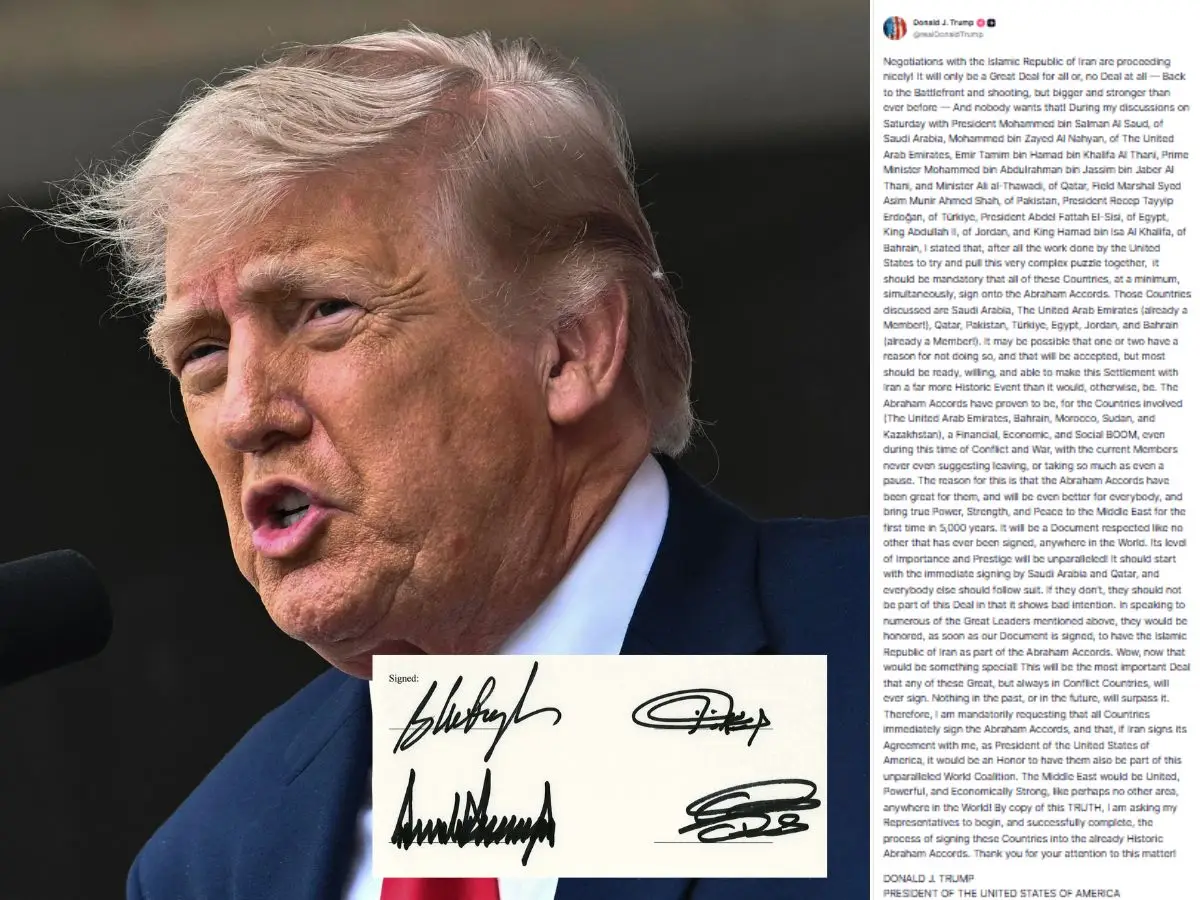
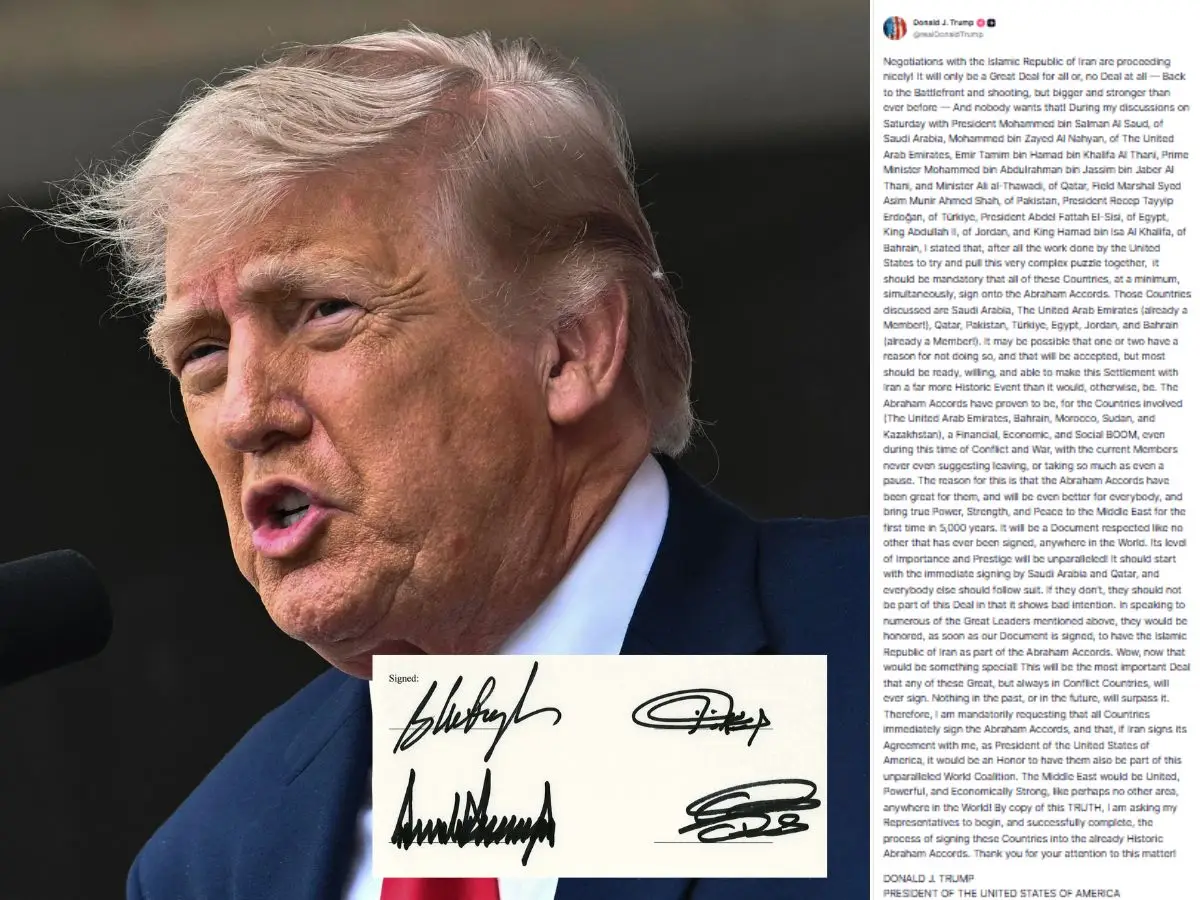
US President Donald Trump has urged several Muslim-majority countries to join the Abraham Accords as part of a broader attempt to reshape regional alignments alongside negotiations with Iran. The proposal, however, comes at a moment of heightened tensions in the Middle East, with analysts warning that the diplomatic opening is unlikely to succeed under current conditions. Trump named Saudi Arabia, Qatar, Pakistan, Turkey, Egypt and Jordan as potential entrants in a post on Truth Social following a conference call with leaders from Bahrain, Egypt, Jordan, Pakistan, Qatar, Saudi Arabia, Turkey and the UAE. Pakistan has already rejected the proposal. None of the other countries has so far publicly reacted to Trump’s demand, and analysts say a positive response is unlikely given the prevailing public mistrust of Israel across several Muslim-majority states, driven by anger over the scale of its military offensive in Gaza.
What the Abraham Accords established
The Abraham Accords were first brokered during Trump’s first term to normalise relations between Israel and Arab states. The United Arab Emirates, Bahrain and Morocco signed agreements establishing diplomatic, economic and security ties with Israel, while Sudan has not yet fully formalised relations. The initiative has since expanded cautiously, including Kazakhstan’s agreement last November, despite it already recognising Israel independently.
ALSO READ: What are Abraham Accords? The countries that joined, those that refused and why they matter today
)
A renewed push at a volatile moment Photograph: (AFP)
Why the expansion push is facing resistance
Experts say current regional conditions make further signatories unlikely. Arab public opinion towards Israel has hardened significantly during the Gaza conflict, where more than 70,000 Palestinians have been killed since the October 7, 2023 Hamas attacks, according to Gaza health authorities cited by AFP. HA Hellyer of the Royal United Services Institute told AFP that the political cost for states would be “prohibitive”, pointing to ongoing conflict dynamics including Gaza, West Bank tensions, and Israeli military presence in neighbouring territories. He added that regional governments face limited space to move toward normalisation. Trump’s statement reflected an attempt to use Iran ceasefire diplomacy for a wider push around the Abraham Accords, a Pakistani source familiar with the matter told Reuters. He also said the two issues were “not interlinked and cannot be made so", adding, “Pakistan is under no compulsion to adhere to any such demand.”
Saudi Arabia and key regional positions
Saudi Arabia, once engaged in tentative talks on normalisation, suspended discussions after the outbreak of war. It has since stated it will not recognise Israel without the establishment of a Palestinian state. Yossi Mekelberg of Chatham House told AFP the proposal is “no more than a sweetener for Israel” and questioned why states would ‘reward’ Israeli leadership amid ongoing regional devastation. Former US diplomat Barbara Leaf also said she does not expect any immediate movement toward normalisation among Arab or Muslim states involved in recent discussions.
Following his call with regional leaders, Trump wrote on Truth Social that all eight countries should join the accords, calling for ‘immediate signing’ and describing it as a document that would be “respected like no other that has ever been signed”.
Trending Stories
&imwidth=280&imheight=210&format=webp&quality=medium)
&im=FitAndFill=(700,400)&imwidth=280&imheight=210&format=webp&quality=medium)
&imwidth=280&imheight=210&format=webp&quality=medium)
&imwidth=280&imheight=210&format=webp&quality=medium)
&imwidth=280&imheight=210&format=webp&quality=medium)
&imwidth=280&imheight=210&format=webp&quality=medium)
&imwidth=280&imheight=210&format=webp&quality=medium)
&imwidth=280&imheight=210&format=webp&quality=medium)
&imwidth=280&imheight=210&format=webp&quality=medium)
&imwidth=280&imheight=210&format=webp&quality=medium)
&imwidth=280&imheight=210&format=webp&quality=medium)
&imwidth=280&imheight=210&format=webp&quality=medium)
&imwidth=280&imheight=210&format=webp&quality=medium)
&imwidth=280&imheight=210&format=webp&quality=medium)
&imwidth=280&imheight=210&format=webp&quality=medium)
&imwidth=280&imheight=210&format=webp&quality=medium)
&im=FitAndFill=(700,400)&imwidth=280&imheight=210&format=webp&quality=medium)
&imwidth=280&imheight=210&format=webp&quality=medium)
&imwidth=280&imheight=210&format=webp&quality=medium)
&imwidth=280&imheight=210&format=webp&quality=medium)
&imwidth=280&imheight=210&format=webp&quality=medium)
&imwidth=280&imheight=210&format=webp&quality=medium)
&imwidth=280&imheight=210&format=webp&quality=medium)
&imwidth=280&imheight=210&format=webp&quality=medium)
&im=FitAndFill=(700,400)&imwidth=280&imheight=210&format=webp&quality=medium)
&imwidth=280&imheight=210&format=webp&quality=medium)
&imwidth=280&imheight=210&format=webp&quality=medium)
&imwidth=280&imheight=210&format=webp&quality=medium)
&imwidth=280&imheight=210&format=webp&quality=medium)
&imwidth=280&imheight=210&format=webp&quality=medium)
&imwidth=280&imheight=210&format=webp&quality=medium)
“I am mandatorily requesting that all Countries immediately sign the Abraham Accords, and that, if Iran signs its Agreement with me, as President of the United States of America, it would be an Honor to have them also be part of this unparalleled World Coalition.”
What is driving the push
Analysts suggest the announcement may be aimed at strengthening support for Israel during parallel negotiations with Iran. Abdulla Banndar Al-Etaibi of Qatar University said it could be an attempt to show that “war, pressure, and escalation have produced political gains worth building upon”. Others argue it may serve a domestic political purpose by presenting a narrative of diplomatic progress. Hellyer added that the debate reflects a broader disconnect between Washington’s policy thinking and regional realities. Despite renewed attention, experts broadly agree that the conditions required for an expanded Abraham Accords framework do not currently exist, leaving the initiative politically visible but diplomatically stalled.