

&imwidth=800&imheight=600&format=webp&quality=medium "Why India should be concerned: Rising Israel-Iran tensions threaten energy security and trade, warns GTRI")
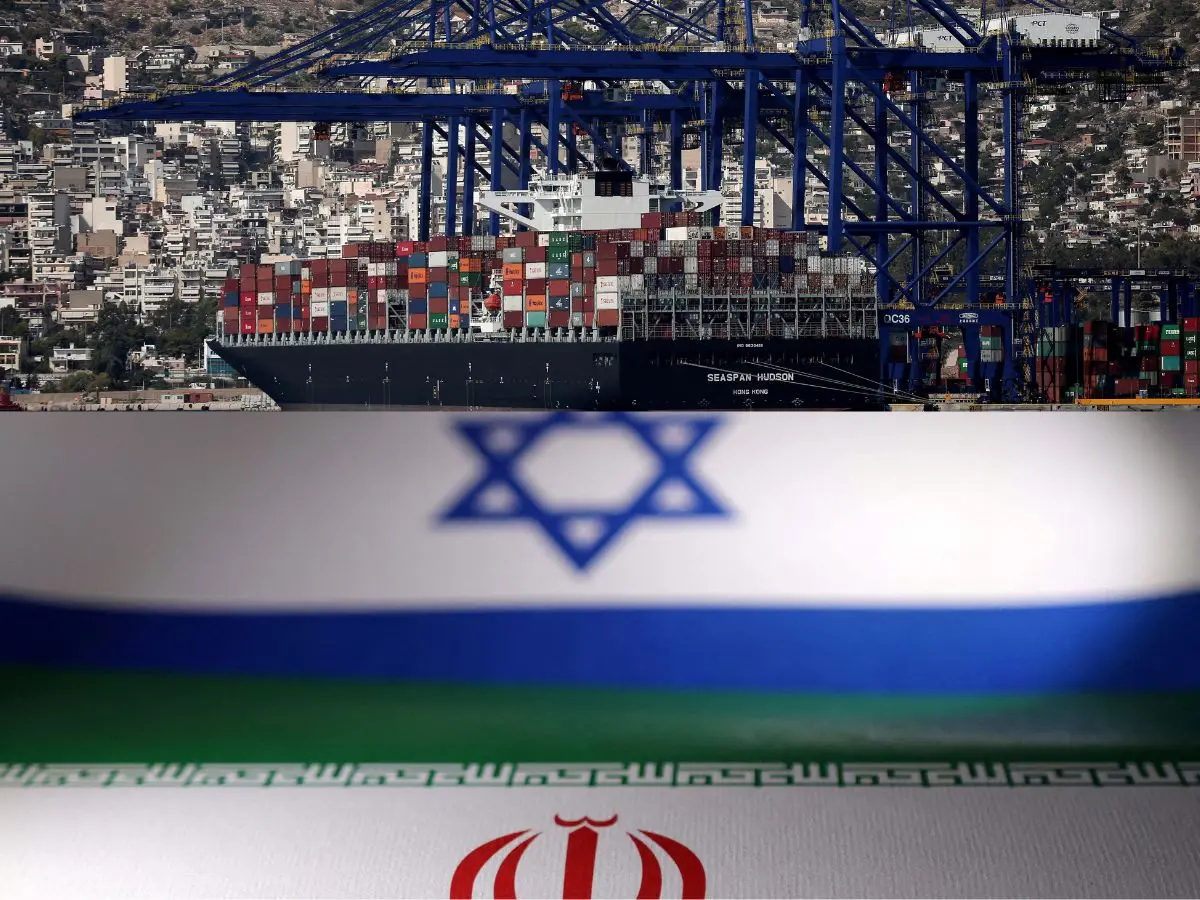
The Global Trade Research Initiative (GTRI), in a recent report, advised the Indian government to review its energy risk scenarios, diversify crude oil sourcing, and ensure adequate strategic oil reserves amid the escalating tensions between Israel and Iran.
Although India is not directly involved in the Israel-Iran conflict, the think tank has warned that the country cannot afford complacency given the country's high dependence on energy imports and West Asia trade routes. It has further urged the government to ensure the country has sufficient oil reserves, "India, though not a party to the conflict, cannot afford complacency. The government must urgently review energy risk scenarios, diversify crude sourcing, and ensure strategic reserves are sufficient", it stated.
India’s Energy Dependence
India imports over 80 per cent of its energy needs. Additionally, two-thirds of its crude oil and half of its liquefied natural gas (LNG) imports go through the Strait of Hormuz. This critical chokepoint, which has the width of only 21 miles at its narrowest, is responsible for nearly one-fifth of the world’s oil trade. With Iran now threatening to block the Strait, India's energy security is under serious threat.
GTRI has also highlighted that about 30 per cent of India’s westbound exports to Europe, North Africa, and the U.S. East Coast also pass through the Bab el-Mandeb Strait, which is now at risk following the ongoing conflict. Any disruption on this route, would result in ships rerouting around the Cape of Good Hope, adding at least two extra weeks to transit times and potentially increasing freight costs. This could also affect the exports of engineering goods, textiles, and chemicals, and raise costs of vital imports.
Economic Impacts: Inflation and Fiscal Strain
Trending Stories
&imwidth=180&imheight=135&format=webp&quality=medium)
Other Mommy leads North American box Office as Verity, Resident Evil round out top four
&im=FitAndFill=(700,400)&imwidth=180&imheight=135&format=webp&quality=medium)
Navratri 2026: 9 days, 9 forms of Goddess Durga and 9 colours- Check the complete list
&imwidth=180&imheight=135&format=webp&quality=medium)
Diljit Dosanjh’s Delhi concert gets a new date: When and where to catch the singer
&im=FitAndFill=(700,400)&imwidth=180&imheight=135&format=webp&quality=medium)
Is sending robots to Mars easier than sending humans?
&imwidth=180&imheight=135&format=webp&quality=medium)
A watchdog rated 'ChatGPT for Teens' an unacceptable risk and says keep under-18s off it
&imwidth=180&imheight=135&format=webp&quality=medium)
1,500 drones illuminate Mumbai sky as Cordelia Cruises unveils second ship, Cordelia Sky
&imwidth=180&imheight=135&format=webp&quality=medium)
'Just coincidence': Police mistakes protester as AISA chief Neha Bora, arrests her from site
&imwidth=180&imheight=135&format=webp&quality=medium)
Anthropic's AI invented a murder witness and sent the fake tip to Philadelphia police
&imwidth=180&imheight=135&format=webp&quality=medium)
Congress demands action against chief election commissioner
&imwidth=180&imheight=135&format=webp&quality=medium)
CJI Surya Kant declines INDIA bloc leaders’ request for meeting ahead of march to SC, asks them to file petition
&imwidth=180&imheight=135&format=webp&quality=medium)
Saif Ali Khan is finally on Instagram! Here's what he shared in his first post
&imwidth=180&imheight=135&format=webp&quality=medium)
'Turn approver, resign, we'll forgive you': Rahul Gandhi claims receiving messages from CEC Gyanesh Kumar
&imwidth=180&imheight=135&format=webp&quality=medium)
One Indian killed in Riyadh airport attack; 11 others injured : MEA
&imwidth=180&imheight=135&format=webp&quality=medium)
Top AI models flunked a test of inventing new AI research, so much for self-improving AI
&imwidth=180&imheight=135&format=webp&quality=medium)
Wasim Jaffer blames Ajit Agarkar-led selection panel for Virat Kohli’s Test retirement
&imwidth=180&imheight=135&format=webp&quality=medium)
'Ouch!!! That must hurt': Kangana Ranaut hails Kamal Haasan's sharp reply to Elon Musk over Starlink row
&imwidth=180&imheight=135&format=webp&quality=medium)
Sidhu Moose Wala’s younger brother wins hearts by recreating late singer’s signature move at Toronto Hologram Show
&imwidth=180&imheight=135&format=webp&quality=medium)
UK school ditches technology, shifts from screen to pen and paper for learning
&imwidth=180&imheight=135&format=webp&quality=medium)
Telangana ATM heist: Thieves in nighties arrive in ambulance, break into SBI ATM in Kamareddy - VIDEO
&imwidth=180&imheight=135&format=webp&quality=medium)
Houthis claim Riyadh airport attacks, Aramco strikes; issue fresh warning to airlines, travellers and workers
&imwidth=180&imheight=135&format=webp&quality=medium)
Portugal Federation confirms Cristiano Ronaldo’s return to national team despite suspension
&imwidth=180&imheight=135&format=webp&quality=medium)
Delhi protests: 'Court should not be dragged into political activity', says CJI Surya Kant
&im=FitAndFill=(700,400)&imwidth=180&imheight=135&format=webp&quality=medium)
New OTT releases this week (October 12-18, 2026): Sacrifice, Koffee with Karan S9, Roadies Rebirth- 6 titles coming on Netflix, JioHotstar and more
&imwidth=180&imheight=135&format=webp&quality=medium)
Microsoft's Nadella says treat every AI model as already hacked, and build an 'emergency brake'
&imwidth=180&imheight=135&format=webp&quality=medium)
Delhi protest: CJI Surya Kant declines to meet India Bloc leaders
&imwidth=180&imheight=135&format=webp&quality=medium)
Telangana man allegedly recruited into Russian military dies near Ukraine border
&imwidth=180&imheight=135&format=webp&quality=medium)
China imposes first-ever sanctions on ministers from Taiwan allies: What this means
&imwidth=180&imheight=135&format=webp&quality=medium)
McSweeney reveals how studying Virat Kohli’s YouTube clips helped Australia A conquer India
&imwidth=180&imheight=135&format=webp&quality=medium)
Maharashtra appoints FDA commissioner Tukaram Mundhe as secretary of committee for MPSC overhaul amid stir
&imwidth=180&imheight=135&format=webp&quality=medium)
Iran: US accepted some conditions, Clarity needed on others
&imwidth=180&imheight=135&format=webp&quality=medium)
Nana Patekar's cause of death confirmed; here's what his postmortem report says
&imwidth=180&imheight=135&format=webp&quality=medium)
iPhone Duo price index: Tracking Apple’s latest pricing trends
&imwidth=180&imheight=135&format=webp&quality=medium)
'Say no to Muse': Meta has no control over its own moderation AI while it forces a security nightmare on everyone
&imwidth=180&imheight=135&format=webp&quality=medium)
Delhi wakes up to heavy rain, thunderstorms; yellow alert in place; temperature drops
Disruptions in the oil supply routes could potentially result in a sharp rise in oil prices, insurance premiums, and shipping charges. GTRI warned that this rise may lead to fuel inflation, further weakening the rupee, and additionally putting straining on government’s financial planning.
The situation is concerning for India since it has significant trade links with both of the two nations. In FY25, India exported goods worth about $1.24 billion to Iran and imported $441.9 million. As far as trade with Israel is concerned, it included about $2.15 billion in exports and $1.61 billion in imports. While these figures are significant, the broader concern lies in India's reliance on West Asia for energy.
On June 13, Israel launched it's offensive 'Operation Rising Lion,' which involved over 200 aircraft and drones targeting the Iranian military and nuclear facilities. In retaliation, Iran fired more than 150 ballistic missiles and drones at Israeli cities, including capital Tel Aviv and Jerusalem. Diplomatic talks between the U.S. and Iran have since collapsed, putting additional pressure on the regional financial markets

