WHO, Africa CDC launch $518 mn emergency plan to fight vaccine-resistant Ebola outbreak

&imwidth=600&imheight=450&format=webp&quality=medium "WHO, Africa CDC launch $518 mn emergency plan to fight vaccine-resistant Ebola outbreak")
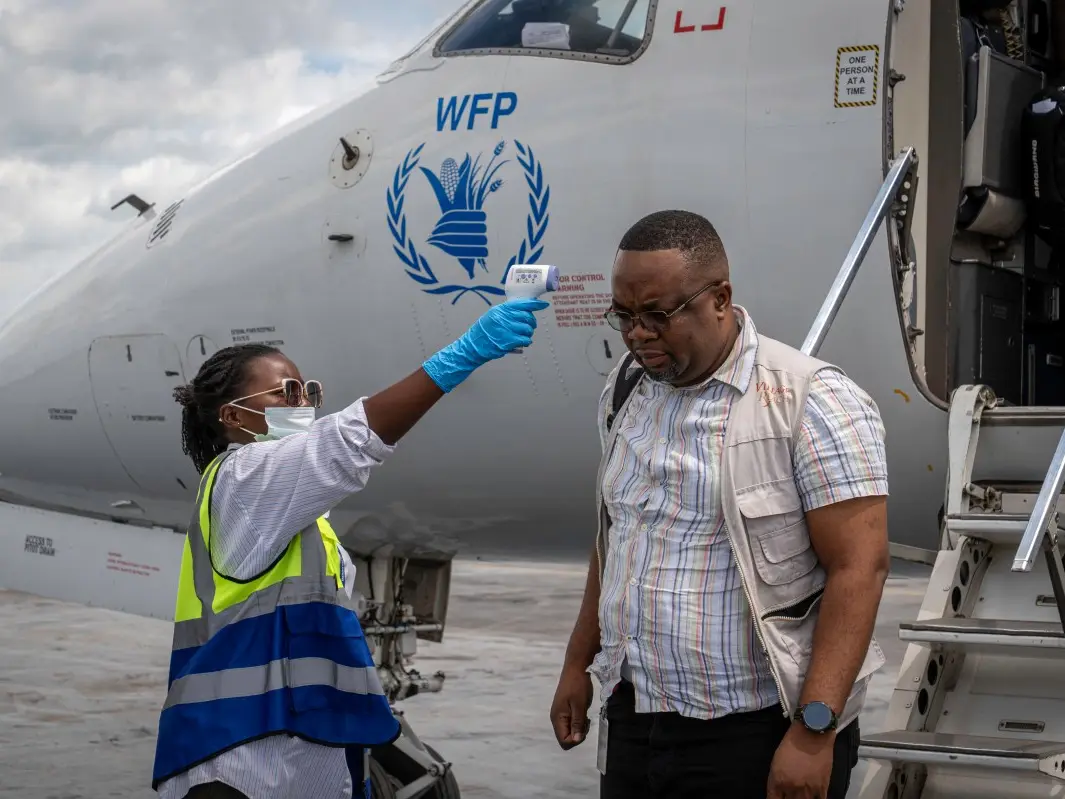
An official checks passengers' temperatures at Bunia Airport in DRC on June 3, 2026. Photograph: (Credit: AFP)
The WHO and Africa CDC have launched a 6-month, $518M plan to combat the rare Bundibugyo Ebola outbreak in the DRC and Uganda, which currently lacks a vaccine.
The World Health Organisation (WHO) and the African Union's public health agency, the Africa Centres for Disease Control and Prevention (Africa CDC), launched a $518-million joint plan on Friday (June 5). The time-bound, six-month plan will cover June to November, aiming to contain an alarming Ebola outbreak in the Democratic Republic of Congo (DRC) and its neighbours while reducing further spread.
The outbreak was officially declared on May 15 in northeastern DRC, though the rare Bundibugyo strain of the virus is believed to have been spreading unnoticed prior to the declaration. According to the latest figures from the WHO, there have been 381 confirmed cases and 64 deaths in the DRC.
The virus has impacted three provinces in the northeastern part of the country, with the epicentre located in Ituri. The Africa CDC reported that Ituri alone accounts for 90 per cent of the confirmed cases and 76 per cent of the deaths. The outbreak has also crossed the northeastern border into Uganda, where officials have recorded 16 confirmed cases, including one death.
Also read: Zinc-lined coffins, police-supervised cremations: India's new Ebola death protocol explained
Trending Stories
)
)
)
)
)
)
)
)
)
)
)
&im=FitAndFill=(700,400))
)
)
)
)
)
)
)
)
)
)
)
)
)
)
)
)
)
)
)
)
)
)
)
)
)
"The plan focuses on core areas: emergency coordination, surveillance, laboratory testing, infection prevention and control, clinical care, and community engagement," WHO chief Tedros Adhanom Ghebreyesus stated during a press conference. He described the joint initiative as a practical plan that outlines necessary, immediate actions to collectively manage the crisis.

