When you look at this star tonight, you are seeing light that left space in 1776

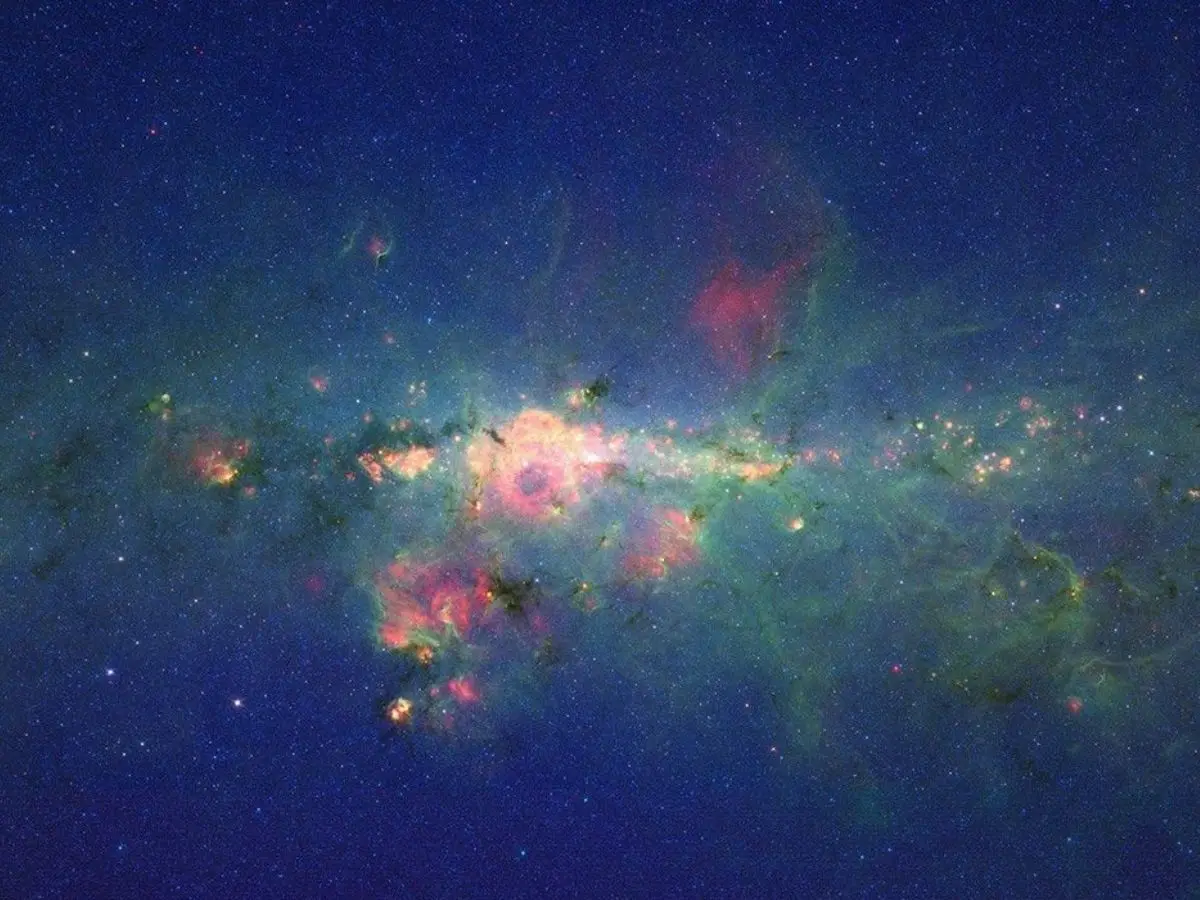&imwidth=600&imheight=450&format=webp&quality=medium "When you look at this star tonight, you are seeing light that left space in 1776")
When you look at this star tonight, you are seeing light that left space in 1776 Photograph: (NASA)
On July 4, 2026, America turns 250 years old. To mark the occasion, astronomers are pointing people to a star visible with the naked eye whose light left its surface around the same year the Declaration of Independence was signed. That star is Spica — the brightest point of light in the constellation Virgo — and the photons hitting your eye tonight have been travelling through space for exactly as long as the United States has existed.
Light travels at roughly 300,000 kilometres per second. At that speed, it still takes 250 years to cross 250 light-years of space. And that is precisely how far away Spica is — the brightest star in the constellation Virgo, visible as a brilliant blue-white point low in the southwestern sky on summer evenings. The light reaching your eye when you look at Spica tonight departed that star sometime around 1776 — the year thirteen American colonies declared independence from Britain and set in motion the events that would eventually produce the world's most influential democracy. In 2026, as the United States marks its 250th anniversary, that coincidence has taken on a kind of poetic weight.
What Spica Actually Is
Spica — formally designated Alpha Virginis — is not a single star. It is a binary system: two massive, blue-white stars locked in an extraordinarily tight mutual orbit, separated by only 0.12 astronomical units — about 12 percent of the average distance between the Earth and the Sun. They complete one orbit around each other every four days, so close that no telescope can resolve them as separate objects. The larger of the two is about 7.8 times the diameter of the Sun; the smaller is roughly 4 times as wide. Their surface temperatures reach around 22,000 degrees Celsius for the hotter component — compared to the Sun's 5,500 degrees. Together, the pair shines at over 12,100 times the luminosity of our Sun, making Spica the 16th brightest star in the entire night sky despite being a quarter of a millennium away.
The Arc To Arcturus, Then Speed On To Spica
Finding Spica without a telescope or star chart is easier than it sounds. Start by locating the Big Dipper — the familiar seven-star asterism in the northern sky. Follow the curve of its handle outward and you will quickly reach Arcturus, the brilliant orange-red star in the constellation Bootes. Keep following that same arc beyond Arcturus and you will arrive at Spica — a cooler blue-white point lower in the southwestern sky. Astronomers and star-gazers have long taught this route with a simple mnemonic: arc to Arcturus, speed on to Spica. At an apparent magnitude of 0.97, Spica is bright enough to see easily from most suburban locations, provided the sky is clear and you give your eyes a few minutes to adjust to the dark.
A Second Star From 1776 — But Not Tonight
Trending Stories
&imwidth=280&imheight=210&format=webp&quality=medium)
&imwidth=280&imheight=210&format=webp&quality=medium)
&imwidth=280&imheight=210&format=webp&quality=medium)
&imwidth=280&imheight=210&format=webp&quality=medium)
&imwidth=280&imheight=210&format=webp&quality=medium)
&imwidth=280&imheight=210&format=webp&quality=medium)
&imwidth=280&imheight=210&format=webp&quality=medium)
&imwidth=280&imheight=210&format=webp&quality=medium)
&imwidth=280&imheight=210&format=webp&quality=medium)
&imwidth=280&imheight=210&format=webp&quality=medium)
&imwidth=280&imheight=210&format=webp&quality=medium)
&imwidth=280&imheight=210&format=webp&quality=medium)
&imwidth=280&imheight=210&format=webp&quality=medium)
&imwidth=280&imheight=210&format=webp&quality=medium)
&imwidth=280&imheight=210&format=webp&quality=medium)
&imwidth=280&imheight=210&format=webp&quality=medium)
&imwidth=280&imheight=210&format=webp&quality=medium)
&imwidth=280&imheight=210&format=webp&quality=medium)
&imwidth=280&imheight=210&format=webp&quality=medium)
&imwidth=280&imheight=210&format=webp&quality=medium)
&imwidth=280&imheight=210&format=webp&quality=medium)
&imwidth=280&imheight=210&format=webp&quality=medium)
&imwidth=280&imheight=210&format=webp&quality=medium)
&imwidth=280&imheight=210&format=webp&quality=medium)
&imwidth=280&imheight=210&format=webp&quality=medium)
&imwidth=280&imheight=210&format=webp&quality=medium)
&imwidth=280&imheight=210&format=webp&quality=medium)
&imwidth=280&imheight=210&format=webp&quality=medium)
&imwidth=280&imheight=210&format=webp&quality=medium)
&imwidth=280&imheight=210&format=webp&quality=medium)
&imwidth=280&imheight=210&format=webp&quality=medium)
&imwidth=280&imheight=210&format=webp&quality=medium)
&imwidth=280&imheight=210&format=webp&quality=medium)
&imwidth=280&imheight=210&format=webp&quality=medium)
&im=FitAndFill=(700,400)&imwidth=280&imheight=210&format=webp&quality=medium)
&imwidth=280&imheight=210&format=webp&quality=medium)
&imwidth=280&imheight=210&format=webp&quality=medium)
&imwidth=280&imheight=210&format=webp&quality=medium)
&imwidth=280&imheight=210&format=webp&quality=medium)
Spica is not the only star sitting at roughly the 250-light-year mark. Bellatrix — the star at the left shoulder of the constellation Orion, the celestial hunter — is also located about 250 light-years from Earth, meaning its light carries an equally ancient timestamp. However, Orion is a winter constellation in the northern hemisphere and is lost in the glare of the Sun during summer months in 2026. For the July 4 celebrations, Spica is the star to look for. Bellatrix and Orion will return to the evening sky in late autumn.
What 250 Years Of Light Travel Means
The thought experiment at the heart of this story is worth sitting with for a moment. When the Continental Congress voted to approve the Declaration of Independence in Philadelphia on July 4, 1776, a pulse of light was leaving Spica at the speed of 300,000 kilometres per second. George Washington was 44 years old. The steam engine had not yet been invented. No one on Earth had any concept of electricity, antibiotics, flight, or nuclear power. That pulse of light has been crossing interstellar space ever since — through the Industrial Revolution, two World Wars, the Moon landing, and the invention of the internet — and it is arriving at Earth now, in 2026, just in time for the 250th anniversary of the nation it has been silently racing toward.
Why Astronomers Love This Kind Of Story
For astronomers, the connection between stellar distance and cosmic time is not a metaphor — it is physics. Every star you see in the night sky is showing you the past, not the present. The Sun's light takes about eight minutes to reach Earth; the nearest star beyond the Sun, Proxima Centauri, is 4.2 light-years away, meaning we see it as it was four years ago. Spica at 250 light-years shows us what was happening on the surface of that binary system when the quill was being put to parchment in Philadelphia. In a universe 13.8 billion years old, 250 years is a cosmic blink. But it is also the entire lifespan of the American democratic experiment — and on a clear summer night, you can see both of those 250-year journeys meet in the same moment, in the same beam of blue-white light.
