
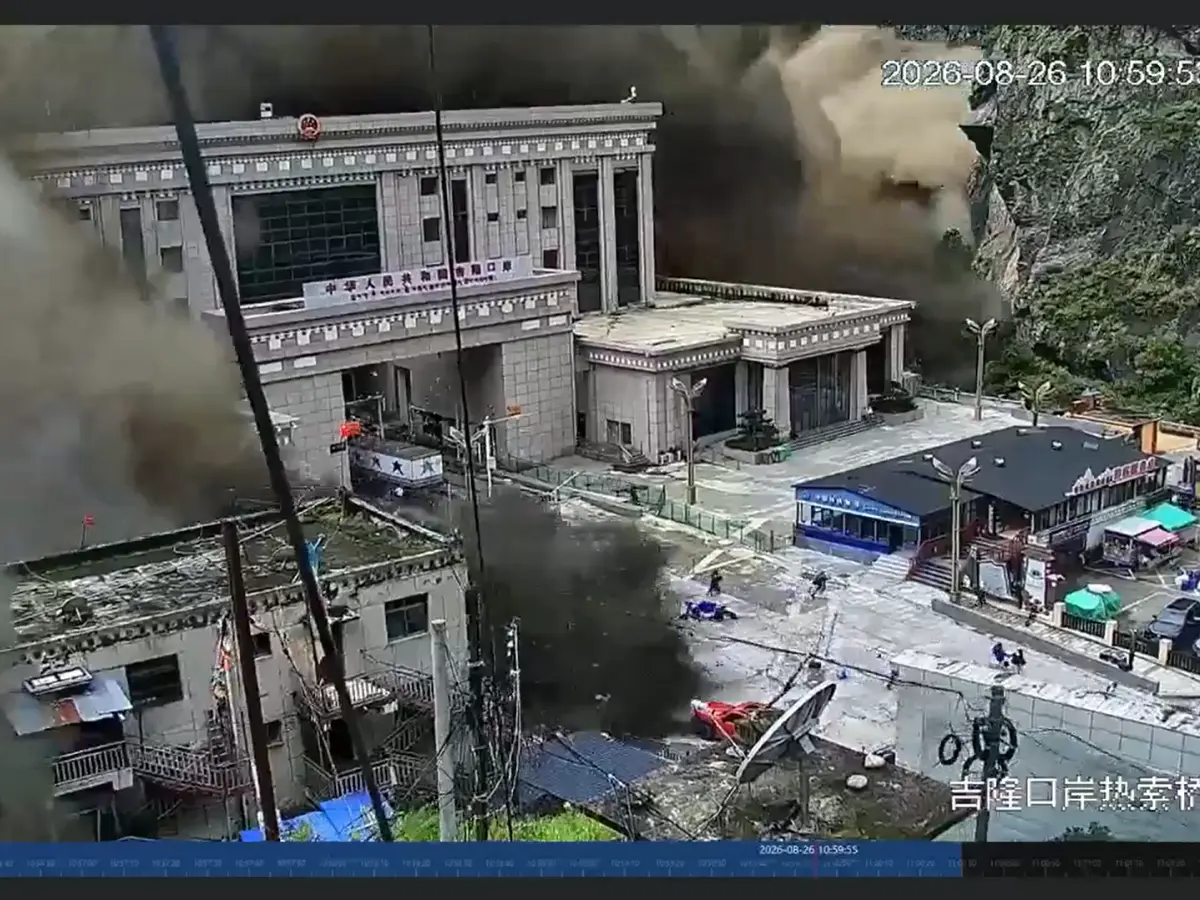
&imwidth=800&imheight=600&format=webp&quality=medium "Watch | Terrifying video shows floodwaters ripping through Tibet's Gyirong Port, yet footage remains missing from China's social media")
Days after the tragic Nepal floods thousands remain missing, with families awaiting news about their loved ones. While Nepal on Saturday upped the death toll to 626, China's Xinhua news agency early Saturday reported that across the border in Tibet only 7 deaths have been recorded, with 554 missing. The low number seems doubtful, especially given the scale of destruction the floods have left in their wake.
Now, a video from Gyirong Port, a vital land border crossing between Tibet, China, and Rasuwa, Nepal is further raising questions about Beijing's censorship.
The video in question is difficult to miss. It shows a wall of water and mud rushing through Gyirong Port as people run for safety and everything in its path is swept away.

The footage, captured by CCTV cameras has quickly spread across social media and television screens around the world.
In China, however, the same images have been far harder to find, reports BBC. Watch it here:
Trending Stories
China censoring visuals of Nepal-Tibet floods?
So far, China's state-run media has shown only a single still image from the flooding. According to the report by BBC's Laura Bicker, finding the shocking video on China's heavily controlled internet has proved difficult. So has finding detailed first-hand accounts of a disaster that has killed hundreds and left many more missing.
This is now drawing attention to the way Beijing manages information about Tibet, particularly during a major crisis.
China's response is visible, but tightly controlled
Beijing has mounted a large rescue operation in the affected region. Hundreds of emergency workers have been deployed, while President Xi Jinping chaired a meeting on the response.
Chinese state media has also reported on rescue teams working in dangerous conditions, including specialists scaling mountains and crossing swollen rivers. Officials have warned about a barrier lake formed by debris that could overflow and trigger further flooding.
But notably, beyond those official updates, there is little independent information available.
There are few accounts from survivors in Tibet, almost no user-generated footage showing the flooding as it happened and little information from families searching for missing relatives.
Foreign journalists, as per reports are facing trouble accessing Tibet. The access remains tightly controlled and requires government permission, making independent reporting during a fast-moving disaster particularly difficult.
Why Tibet is especially sensitive for Beijing
The information blackout is taking place against the backdrop of Tibet's complicated political history with Beijing.
China brought Tibet under Communist rule in the 1950s after years of resistance to Chinese control. Beijing has since faced criticism over its policies in the region, while Tibetan groups abroad have accused the government of restricting religious and cultural freedoms.
The Chinese government rejects those allegations and points instead to extensive investment in Tibet, including infrastructure and tourism development.
Yet the region remains politically sensitive, and that sensitivity becomes especially visible when a major disaster draws international attention.
Why is China censoring a natural disaster?
One explanation for the limited coverage could be Beijing's longstanding emphasis on maintaining social stability.
Local Communist Party officials moved quickly after the disaster, urging grassroots members to assist with relief work and provide emotional and psychological support to residents.
One particularly striking instruction, BBC reports told party members to "make every effort to maintain social order and ensure stability and public confidence in the disaster areas".
The directive also warned that officials who performed well would be rewarded, while those who failed would be held accountable.
Videos and accounts disappearing online
Advocacy group, International Campaign for Tibet has meanwhile praised emergency responders but said Chinese authorities were removing videos and first-hand accounts from social media.
The group called on Beijing to "disclose complete and verifiable information about the damage and casualties".

