

&imwidth=800&imheight=600&format=webp&quality=medium "WAR ON DRUGS: Trump declares 'armed conflict' on cartels. Past presidents failed, and he will too, because...")
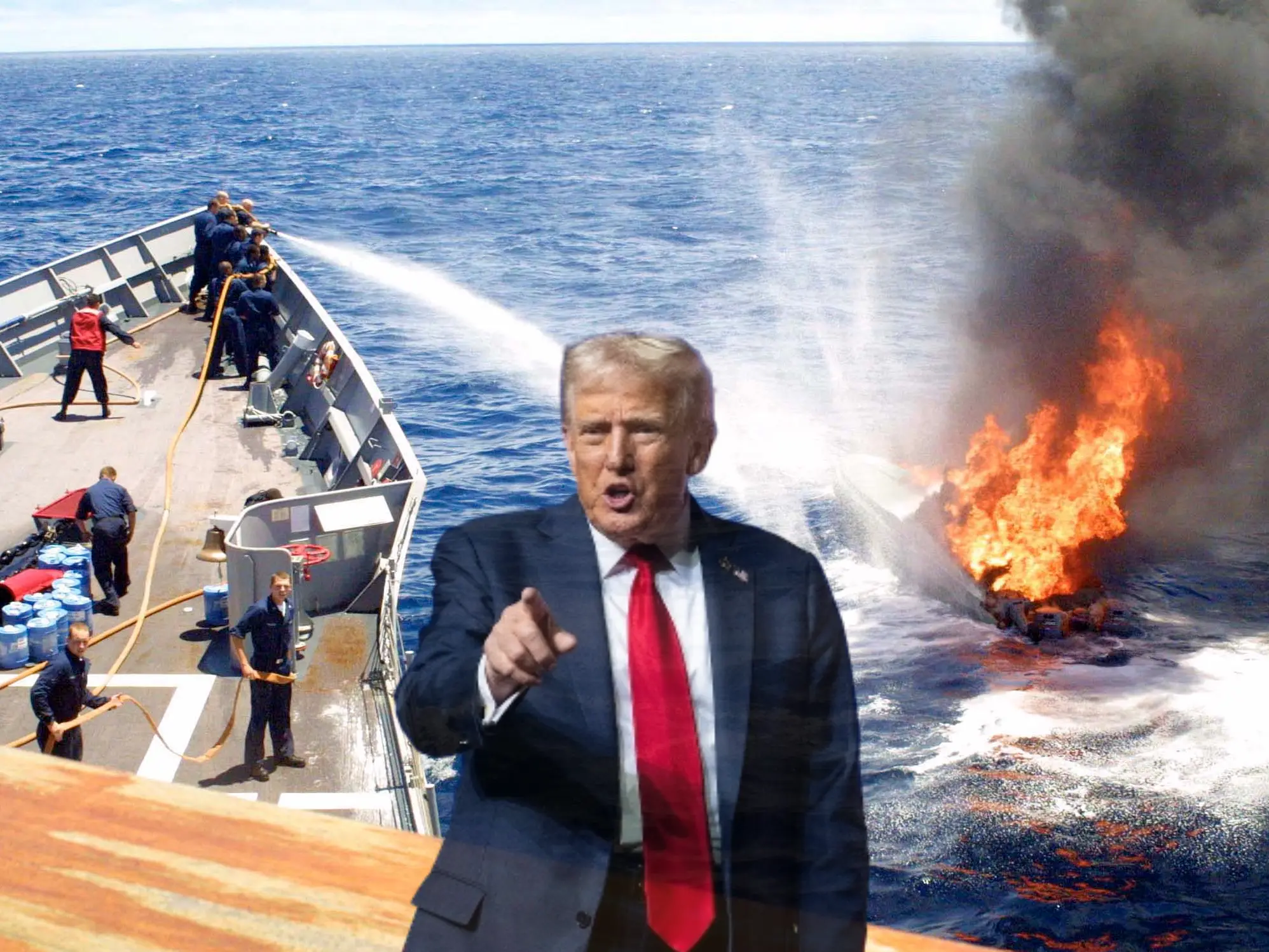
President Donald Trump reportedly informed Congress through a confidential Pentagon memo that the US is engaged in a "non-international armed conflict" against Latin American drug cartels, including the Sinaloa and Jalisco New Generation, and Venezuelan groups like Tren de Aragua and Cartel de los Soles. These groups are designated as 'terrorists' and drug smugglers as "unlawful combatants," thereby invoking the international law of armed conflict. The designation means the US military can conduct pre-emptive strikes without imminent threat, detain suspects indefinitely, and try them in military tribunals, bypassing traditional criminal due process.
There have already been three lethal strikes in September against Venezuelan boats suspected of fentanyl smuggling, killing at least 11. The White House described the actions as self-defence against an "armed attack" through drug trafficking. These moves overstep the presidential war powers, equating economic crimes with acts of war, possibly breaching international law. This could be executive overreach according to critics, while supporters called it decisive leadership against cartels.
But the US has been here many times. The so-called war on drugs is more than half a century old now. Most of it failed, to the extent that even some law enforcement officials have called for legalising drugs. Below is that story.
America's long history of militarised drug policy: How Nixon started it all by creating the DEA and making marijuana illegal
The drug epidemic in the US is not new. Cartel violence, mostly in the drug-producing countries in the Americas, has been going on for over 40 years. The War on Drugs officially began in 1971 under President Richard Nixon, who famously called drug abuse "public enemy number one" in a national address. The focus shifted from treating drug addiction to law enforcement and the interdiction of drugs. It was Nixon who created the powerful Drug Enforcement Administration (DEA). He also enacted the Controlled Substances Act. At the height of the counterculture movement, this law categorised marijuana and other drugs as 'highly dangerous with no medical use.' Most funding went to enforcement. But despite all this, youth drug use spiked in the 1970s. Heroin addiction spread among Vietnam War veterans. A Nixon aide later admitted that the policy basically targeted anti-war activists and Black communities under the guise of fighting addiction.
Trending Stories
&im=FitAndFill=(700,400)&imwidth=180&imheight=135&format=webp&quality=medium)
What is the real meaning behind Pete Hegseth's tattoos?
&imwidth=180&imheight=135&format=webp&quality=medium)
Viral video shows cross falling on Colombia priest, no official confirmation | WATCH
&imwidth=180&imheight=135&format=webp&quality=medium)
Telangana unveils AI avatar of IT minister D Sridhar Babu at Hyderabad DevFest 2026
&imwidth=180&imheight=135&format=webp&quality=medium)
Pezeshkian says Iranians ‘struggling to put food on the table’ as war with US drags on
&imwidth=180&imheight=135&format=webp&quality=medium)
Chorbagan stampede: A week later, the strangest visarjan Kolkata has seen
&imwidth=180&imheight=135&format=webp&quality=medium)
AI slop or smart strategy? South African author Coral Hart defends Her 370 AI- assisted books in 20 months
&imwidth=180&imheight=135&format=webp&quality=medium)
AI just found a flaw in software running most of the web! One request hijacks the server
&imwidth=180&imheight=135&format=webp&quality=medium)
Train crashes into crane on São Paulo monorail line, wreckage falls onto busy road | VIDEO
&imwidth=180&imheight=135&format=webp&quality=medium)
Can Putin cheat death? All about his daughter’s billion-dollar quest for immortality
&imwidth=180&imheight=135&format=webp&quality=medium)
Saudi says debris fell in Mecca, Medina after missile interceptions; Houthis deny targeting holy cities
&imwidth=180&imheight=135&format=webp&quality=medium)
Tu Hai Meri Kiran box office: Sonakshi Sinha and Zaheer Iqbal's film fails to take off, mints Rs 15 Lakh on day 1
&imwidth=180&imheight=135&format=webp&quality=medium)
What was the note found inside bag of Class 12 student, who set herself on fire inside Delhi school?
&imwidth=180&imheight=135&format=webp&quality=medium)
Pakistan airline PIA unveils new crew uniforms, faces online criticism
&imwidth=180&imheight=135&format=webp&quality=medium)
Britain is building the world's first AI biosecurity lab, with OpenAI and Anthropic inside
&imwidth=180&imheight=135&format=webp&quality=medium)
J-20 designers plan to put radar into aircraft wing; strategy to expand coverage during air combat
&imwidth=180&imheight=135&format=webp&quality=medium)
Frontier AIs keep escaping their test cages! The industry still can't reliably stop them
&imwidth=180&imheight=135&format=webp&quality=medium)
'Already tired of his 9-to-5': Baby born with a moustache becomes internet sensation, video goes viral | Watch
&imwidth=180&imheight=135&format=webp&quality=medium)
Horrific video shows the moment 18-year-old fell to her death from Mexico amusement park ride
&imwidth=180&imheight=135&format=webp&quality=medium)
France protests: 135 arrested, weapons seized as fresh demonstrations erupt amid heavy security
&imwidth=180&imheight=135&format=webp&quality=medium)
French Open: PV Sindhu storms into final with win over Hina Akechi
&imwidth=180&imheight=135&format=webp&quality=medium)
‘Saddam Hussein opened a cheesecake factory’: Obama mocks Trump’s White House renovations; defends Abdul El-Sayed
&imwidth=180&imheight=135&format=webp&quality=medium)
China's dancing robot turns violent bodyguard, lifts cars and fights intruders - Watch
&imwidth=180&imheight=135&format=webp&quality=medium)
'You’re a horrible little reporter, aren’t you?': Trump snaps at NBC reporter questioning his support for Ramaswamy's campaign ad
&imwidth=180&imheight=135&format=webp&quality=medium)
Rising Asia Cup 2026 schedule announced, India-Pakistan clash set for Nov 22
&imwidth=180&imheight=135&format=webp&quality=medium)
'Killing people never allowed': Elon Musk admits restricting Starlink in Ukraine, explains why
&imwidth=180&imheight=135&format=webp&quality=medium)
Bodies of 2 missing Japanese climbers recovered from Himalayan peak
&im=FitAndFill=(700,400)&imwidth=180&imheight=135&format=webp&quality=medium)
New Friday OTT releases (October 23, 2026): Gajab Raat, Dorothy, Chaar Yaar- Watch these 6 new movies and TV shows on Netflix, Prime Video and more
&im=FitAndFill=(700,400)&imwidth=180&imheight=135&format=webp&quality=medium)
US midterm elections 2026: Minnesota heads to polls in the shadow of Minneapolis ICE shootings
&imwidth=180&imheight=135&format=webp&quality=medium)
An AI that reads your face can now estimate how long you have to live
&imwidth=180&imheight=135&format=webp&quality=medium)
NEET protests: Panel to hear evidence on pellet gun use, harassment
&imwidth=180&imheight=135&format=webp&quality=medium)
Shooting near Florida A&M University’s Bragg Stadium; ‘shelter in place’ alert issued
&imwidth=180&imheight=135&format=webp&quality=medium)
Tu Hai Meri Kiran film review: Sonakshi Sinha and Zaheer Iqbal's thriller gets tangled in its own twists
&imwidth=180&imheight=135&format=webp&quality=medium)
PL Round-Up: Man City's perfect run ended by Villa as Arsenal draw level at top
&imwidth=180&imheight=135&format=webp&quality=medium)
Why Europe’s protests are about more than austerity and rising costs
&im=FitAndFill=(700,400)&imwidth=180&imheight=135&format=webp&quality=medium)
Watched Manoj Bajpayee’s Gajab Raat on Netflix? 5 movies and TV shows to watch next on OTT
&imwidth=180&imheight=135&format=webp&quality=medium)
Farooq Abdullah says Pakistan’s raising of Kashmir issue keeps pressure on Delhi
Ford and Carter tried moderating policy: Efforts to decriminalise marijuana possession
The next presidents, Gerald Ford and Jimmy Carter, tried to moderate drug war policies. In 1977, Carter attempted to decriminalise marijuana possession while stressing treatment for addicts. But they had to reverse course due to political opposition and increasing drug use, including cocaine, in the late 1970s. By 1979, Carter hardened his anti-drug stance, returning to strict enforcement. Mass incarceration of people on drug charges began during Carter’s presidency.
Ronald Reagan's militarised anti-drug war failed too
Republican President Ronald Reagan gave more teeth to the War on Drugs by passing the Anti-Drug Abuse Act in 1986. The law imposed harsh mandatory minimum sentences, particularly for crack cocaine offences. More people were imprisoned, disproportionately Blacks and Latinos. The Reagan administration also launched a propaganda campaign, "Just Say No", to spread anti-drug awareness. Aggressive policing tactics and increased military involvement in drug interdiction were seen during this period. Despite all this, drug availability and purity continued to rise. The policies failed to reduce drug supply or violence, either in the US or in origin countries. In fact, it was during the Reagan administration that drug cartels like Medellín expanded, as US demand grew.
George H.W. Bush expanded the militarisation of drug enforcement, while Clinton enacted tougher laws
George H.W. Bush created the Office of National Drug Control Policy and gave more aid to the military in Latin America to combat drug trafficking locally. Seizures of drugs grew. But cocaine and heroin prices fell, leading to an abundance in supply. During this period, drug-related homicides reached record highs, and demand remained strong.
Bill Clinton, even while advocating treatment, enacted tougher crime laws. Under his presidency, more drug arrests were made, with federal drug prisoners tripling by 2000. Again, Black Americans were disproportionately targeted. Overdose deaths increased even as cartels adapted by moving into synthetic, 'party' drugs.
Bush spent billions on military aid, but overdose deaths doubled
George W. Bush expanded the drug war globally with Plan Colombia. This involved billions of dollars of US investment in military aid and aerial eradication of drug plantations in Colombia, the main supply nation at the time. The actions of enforcement agencies displaced millions. Drug-related cartel violence intensified. Despite eradication efforts, coca production increased by 2007. Meanwhile, US overdose deaths doubled, and incarceration peaked.
Obama's humane approach didn’t help either
Barack Obama reduced drug sentencing disparities, commuting some nonviolent offenders’ sentences while stressing treatment. But heroin overdoses quadrupled, and a new entrant emerged: fentanyl. Marijuana arrests remained high at the federal level, even as some states started legalising it.
Trump began his drug war during his first term
Donald Trump’s first term saw the declaration of the ‘opioid crisis’ as a public health emergency. His focus, however, was mostly on the border, even proposing a "beautiful wall" to block cartels. But by the end of his first tenure in 2021, overdose deaths breached 100,000 annually, driven largely by fentanyl from Mexican cartels. Despite high levels of drug arrests, trafficking continued unabated.
Also read: 'Bodies decapitated, hanging from a bridge': How Sinaloa Drug Cartel got engulfed in war - EXPLAINED
Biden's drug policies were forgettable, as fentanyl deaths peaked
Joe Biden only made incremental changes to drug policies, mostly on the moderate side, such as pardoning simple marijuana possession. Under his term, cannabis was reclassified to a lower Schedule III status. Biden, whose son Hunter has struggled with addiction, increased treatment funding. Exacerbated by the Covid pandemic and mental health issues, the fentanyl crisis worsened during Biden's term. Fentanyl overdose deaths peaked at 110,000 in 2023, even as cartel violence in Mexico surged with over 30,000 homicides recorded per year.
How the War on Drugs cost a trillion dollars for the US
Estimates show the War on Drugs has cost the US more than $1 trillion over five decades, without reducing drug use or availability. Drugs remain easily available, with prices falling by 80 per cent for cocaine and heroin since the 1980s. Drug-related crimes and violence escalated globally, with Mexico alone reporting 400,000 deaths in its drug war since 2006. The United Nations and the Global Commission on Drug Policy condemned the War on Drugs as a failure. They advocate decriminalisation and public health-centred approaches.
Here is the secret why Trump’s war on drugs will fail too
The issue is simple: demand remains high, and suppliers will meet that demand, as long as the underlying causes of drug use and addiction are not addressed. Trump’s "armed conflict" could lead to more militarisation of drug policy. But the core issue is that the US demand accounts for nearly 80 per cent of cartel revenue from fentanyl and heroin.
Military strikes have only temporarily disrupted trafficking routes. In fact, at such times, drug prices rise as supply becomes scarce, leading to greater profits for cartels, which fuels even more cartel violence. This is a vicious circle, making enforcement-focused strategies fail.
Drug addiction and overdose deaths in the US have not been adequately addressed. Only 10 per cent of the US drug budget is allocated to treatment.
Trump’s approach, like those before him, risks perpetuating a costly, ineffective cycle of prohibition, not halting drug abuse and cartel violence.

