US Supreme Court backs Trump administration's use of SAVE database to check voter citizenship

&imwidth=600&imheight=450&format=webp&quality=medium "US Supreme Court backs Trump administration's use of SAVE database to check voter citizenship")
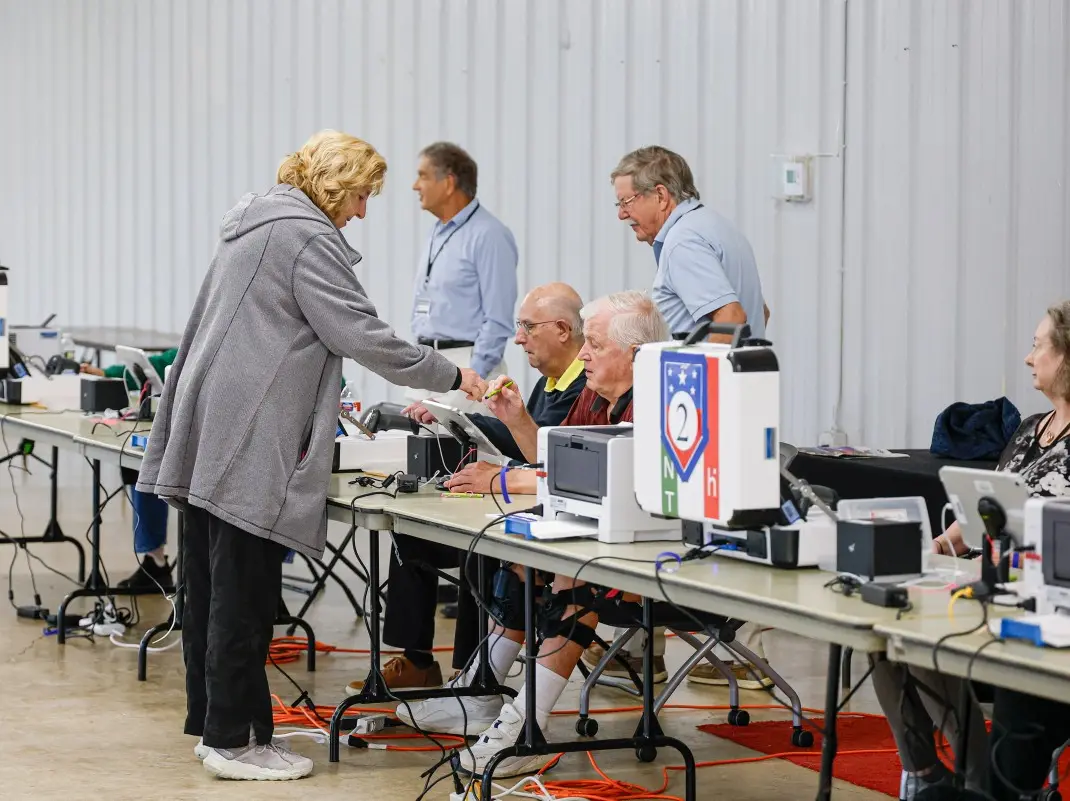
A woman checks in before voting on the second day of early voting ahead of the midterm elections Photograph: (AFP)
US Supreme Court allows Trump’s administration to use the SAVE database for voter citizenship checks, weeks before the 2026 midterm elections
The US Supreme Court on Friday allowed the Trump administration to resume using an expanded federal database to help states verify the citizenship status of people on voter rolls, temporarily lifting a lower-court restriction on the system. The emergency ruling concerns the Department of Homeland Security's Systematic Alien Verification for Entitlements, or SAVE, program. The administration expanded the system to allow state and local election officials to conduct citizenship checks on registered voters and people seeking registration.
The Supreme Court's unsigned order said the federal government has an obligation to respond to requests from state and local election officials seeking to verify voters' citizenship. It also indicated that the immediate effect of the ruling is constrained by federal restrictions on systematic voter removals close to an election. The three liberal justices, Sonia Sotomayor, Elena Kagan and Ketanji Brown Jackson, dissented. “The harm caused by burdening or disenfranchising even a few lawful voters outweighs the nonexistent harm that the government experiences when it is prevented from taking an action that it likely lacks the authority to take,” Justice Ketanji Brown Jackson wrote in a dissent joined by Justices Sonia Sotomayor and Elena Kagan.
What is the SAVE database?
SAVE was originally created to help federal, state and local agencies verify citizenship and immigration status for people seeking certain public benefits. The Trump administration expanded the system in 2025 following an executive order directing federal agencies to facilitate citizenship verification for registered voters and people registering to vote.
The revamped system incorporated additional records, including Social Security Administration information, and allowed state and local authorities to conduct searches involving multiple records at once. The changes triggered legal challenges from voting-rights organizations and privacy advocates, who argued that the expanded database could produce inaccurate matches and threaten the voting rights and privacy of eligible citizens.
Trending Stories
)
)
)
)
)
)
)
)
&im=FitAndFill=(700,400))
)
)
)
)
)
)
)
)
)
)
)
)
)
)
)
)
)
)
)
)
)
)
)
)
)
)
&im=FitAndFill=(700,400))
)
Supreme Court limits immediate impact
The Supreme Court's order did not resolve every legal question surrounding the expanded SAVE system. The justices referred to provisions of the National Voter Registration Act that restrict systematic voter removals within 90 days of an election. The Trump administration has separately argued that this restriction does not apply when officials are removing people identified as noncitizens. The Supreme Court noted that issue but said it ‘did not need to decide’ it in Friday's emergency ruling. As a result, the ruling allows the administration and participating states to use the database for now, while broader questions over how the information can be used to remove voters remain subject to further litigation.
Concerns over incorrect matches
The expanded SAVE system has faced criticism because database matches can incorrectly flag US citizens as potential noncitizens. The Supreme Court's case record notes that some individuals were wrongly identified through the modified system. A separate filing in the litigation cited concerns over errors and disputed the reliability of federal databases for determining voter eligibility. Voting-rights groups have argued that incorrect matches could lead to eligible voters being challenged or removed from registration lists. The administration, meanwhile, has maintained that states, rather than the federal government, are responsible for making the final determination about whether a voter should be removed, and that officials are encouraged to conduct additional verification.
Trump administration celebrates ruling
DHS's top lawyer, James Percival, welcomed the Supreme Court's decision on social media. “Yes, you read that right. We had to file an emergency petition in the Supreme Court just so we could use government data to help states stop noncitizens from illegally voting.”
Opponents of the administration criticized the decision, arguing that the expanded database could expose eligible voters to erroneous challenges. The administration has made identifying potential noncitizens on voter rolls a major part of its election-policy agenda. The Supreme Court's ruling allows the expanded SAVE system to remain available while the underlying legal dispute continues.

