US and UK launch massive strikes against Houthi rebels, 5 killed

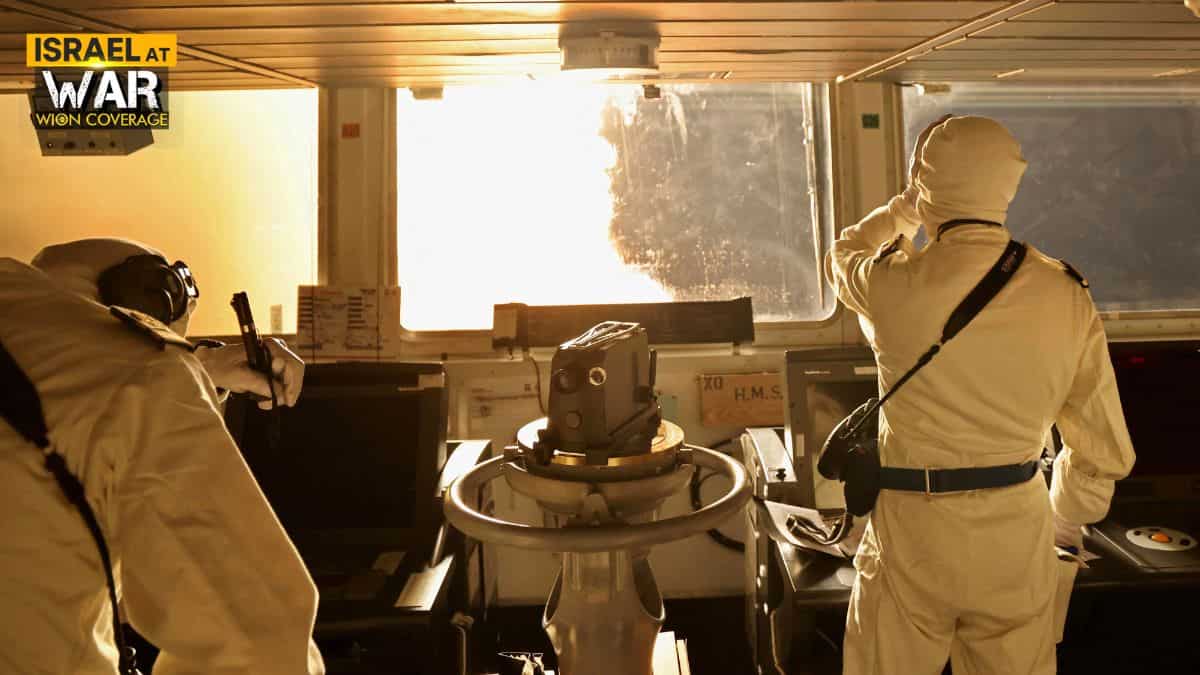
Israel-Hamas
President Joe Biden on Thursday (Jan 11) announced that a coalition led by the US and UK launched air strikes targeting Houthis in Yemen in a "defensive action", in the wake of escalating attacks by the Iran-backed rebels on vessels in the Red Sea.
Five people were killed and six others were wounded in the missile strikes carried out by the US and UK, said the Iran-backed Houthi forceson Friday (Jan 12). "The raids led to the death of five martyrs and the injury of six others from our armed forces," said Houthi military spokesman Yahya Saree, on X.
Biden warned he "will not hesitate" to give orders for further military action, if required. The air strikes were made on various cities in Yemen, where the Houthis are controlling a good amount of territory, reported news agency AFP.
Australia also provided personnel support to the strikes, whichinvolved various Tomahawk missiles and fighter jets, according to the reports.
"Today, at my direction, US military forces -- together with the United Kingdom and with support from Australia, Bahrain, Canada, and the Netherlands - successfully conducted strikes against several targets in Yemen used by Houthi rebels to endanger freedom of navigation in one of the world's most vital waterways," Biden said, using an alternate spelling of Huthi.
He said that the strikes are a "direct response" to "unprecedented" attacks launched by the Houthis, "including the use of anti-ship ballistic missiles for the first time in history".

"These attacks have endangered US personnel, civilian mariners, and our partners, jeopardised trade, and threatened freedom of navigation," Biden said, emphasising that Washington and its allies "will not tolerate attacks on our personnel or allow hostile actors to imperil freedom of navigation."
"I will not hesitate to direct further measures to protect our people and the free flow of international commerce as necessary,” asserted the US president.
Biden further said that the Houthi rebels on January 9 had "launched their largest attack to date - directly targeting American ships."
)
Did India risk its US trade deal despite softer stance at BRICS?
)
Pakistan puts Pak Rs 70 lakh bounty on UN terrorist Masood Azhar; move draws skepticism in Delhi
)
First naval drone battle? Ukraine says Sargan 3000 sank Russian unmanned boat
)
Practical Magic 2 breaks Spidey spell over North American box office
)
'Huge destructive power': North Korea calls its latest missile launches 'live-fire drill' even as US dismisses 'immediate threat'
)
‘Let’s go’: Newly declassified videos show dramatic rescue of US Air Force officers downed in Iran
)
Ganesh Chaturthi 2026: Devotees throng the iconic Lalbaugcha Raja pandal in Mumbai
)
Delhi’s balancing act: BRICS serves as a stage for West Asia diplomacy
&im=FitAndFill=(700,400))
Why European Meteor missiles use ramjet engines compared to standard US solid rockets
)
Iran, India agree to deepen humanitarian and political ties, President Pezeshkian says
)
‘Want to reset ties with India, have engagement based on mutual interests,’ says Bangladesh minister
)
Trump says Canada eager to reach a deal, it could come ‘fairly soon’ if Ottawa treats US farmers better
)
Turkish Airlines plane flies through a storm three times, triggering severe turbulence
&im=FitAndFill=(700,400))
Why Chinese PL-15 air-to-air missiles use dual-pulse motors compared to European interceptors
)
Orlando Bloom addresses Pirates of the Caribbean comeback and reunion with Johnny Depp
)
China thinned Himalayan troop presence in 2025, India defence report says; terms border situation 'stable'
)
Russia proposes to build 360 kmph Ivolga FG trains in India: What happened on sidelines of BRICS
)
800 million years old - Scientists discover 'fingerprints' of supercontinent Gondwana in ancient rocks
)
Israeli minister calls to strip Gaza film directors of citizenship
)
'Nobody knows if it can be in control': ‘Godfather’ of AI, China spy chief back AI slowdown calls, flags political threat
)
China discovers vast gold and silver 'mine' in the Pacific with unheard-of deposits
)
Russian drone hits Warsaw-bound train near Polish border, Zelensky accuses Moscow of ‘deliberate’ targeting
)
War is making Russia stronger? How Ukraine is shaping Moscow’s next generation of weapons
)
Plane carrying prominent figure crashes at Libya’s Misrata airport: Report
)
Veteran Bollywood actress Nafisa Ali shares health update as Stage 4 cancer progresses, starts targeted therapy
)
NEET-UG to move to computer-based test soon, NTA DG says ‘CBT is the future’
)
Woman removes all her clothes on American Airlines flight, performs 'indecent acts'; arrested
)
Liam Neeson sparks romance rumours after holding hands with Stella Stocker at TIFF 2026
&im=FitAndFill=(700,400))
New OTT releases this week (September 14-20, 2026): Lust Stories 3, Waiting Hai, Irumudi- 5 new titles coming on Netflix, Prime Video and more
)
Indian importers urge Bangladesh to lift export ban on 'Hilsa' fish ahead of Durga Puja
)
Video of Pakistani lawmaker struggling to read English tribute to Jinnah goes viral - WATCH
)
Did China give Iran intel before US base strike that killed 3 troops? Trump says, 'You’re right...'
)
Women's Asia Cup 2026: India denied trophy once again despite winning the title
)
Humans may lose control of AI: Anthropic CEO calls for slowdown, Altman, Musk back him
Sunak says attacks on Houthis 'necessary and proportionate'
In a statement, UK Prime Minister Rishi Sunak said that the strikes carried out on Houthi rebels in Yemen were "necessary and proportionate".
"Despite the repeated warnings from the international community, the Houthis have continued to carry out attacks in the Red Sea. We have therefore taken limited, necessary and proportionate action in self-defence, alongside the United States... to degrade Houthi military capabilities and protect global shipping,” Sunak said.
US defence secretary warns Houthis to back down
Meanwhile, US Defence Secretary Lloyd Austin on Thursday said that the strikes were carried out to reduce the Houthi rebels' ability to target international shipping.
"Today's strikes targeted sites associated with the Houthis' unmanned aerial vehicle, ballistic and cruise missile, and coastal radar and air surveillance capabilities," said Austin, in a statement.
Watch:Red Sea conflict: UN Security Council demands Houthis to stop Red Sea shipping attacks
"This action is intended to disrupt and degrade the Huthis' capabilities to endanger mariners and threaten global trade in one of the world's most critical waterways. Today’s coalition action sends a clear message to the Huthis that they will bear further costs if they do not end their illegal attacks," Austin said.
Aim to 'restore stability in the Red Sea': US and allies
After launching strikes against Houthi rebels in Yemen, the United States and its allies said that stabilising crucial Red Sea shipping lanes is their main goal.
"Our aim remains to de-escalate tensions and restore stability in the Red Sea, but let our message be clear: we will not hesitate to defend lives and protect the free flow of commerce in one of the world's most critical waterways in the face of continued threats," said a joint statement, released by the governments of Australia, Bahrain, Canada, Denmark, Germany, Netherlands, New Zealand, South Korea, United Kingdom and the United States.
The Houthis have launched various attacks on some major international sea routes since the Israel-Hamas war erupted with the unprecedented attack by the Palestinian militant group on Tel Aviv on October 7.
Australia extended support to US and UK airstrikes on Houthis
Australia also supported the US and UK militaries when dozens of airstrikes were launched against the Iran-backed Houthis in Yemen.
Australian Defence Minister Richard Marles said that the decision to launch the strikes “was not taken lightly”.
“On 4 January Australia was part of [a group of] 14 countries which issued a statement warning the Houthi rebels that if they continue to attack maritime activity in the Red Sea, there would be consequences,” Defence Minister Marles said.
“They have continued their attacks on maritime and naval assets. As a result, the attacks today have occurred,” he added.
Houthi-led Yemen's minister saysUS, UK will have to pay heavy price for attack
Deputy foreign minister of Houthi-led Yemen Hussein al-Ezzi said that the United States and the United Kingdom will have to pay a heavy price for the aggressive attack on Houthi rebels, as quoted by CNN.
"Our country was subjected to a massive aggressive attack by American and British ships, submarines, and warplanes, and America and Britain will undoubtedly have to prepare to pay a heavy price and bear all the dire consequences of this blatant aggression," said al-Ezzi.
Russia appeals for UNSC meeting after strike by US, Britain on Yemen
Russia appealed for the United Nations Security Council's urgent meeting on Friday (Jan 12) to discuss military strikes carried out by the United States and Britain on Yemen.
"Russia has requested an urgent meeting of the UN Security Council on January 12 in connection with the U.S. and UK strikes on Yemen," Russia's permanent mission to the United Nations said.
(With inputs from agencies)