

&imwidth=800&imheight=600&format=webp&quality=medium "Trump's Ukraine peace gambit: From Nobel dreams to strategic reality")
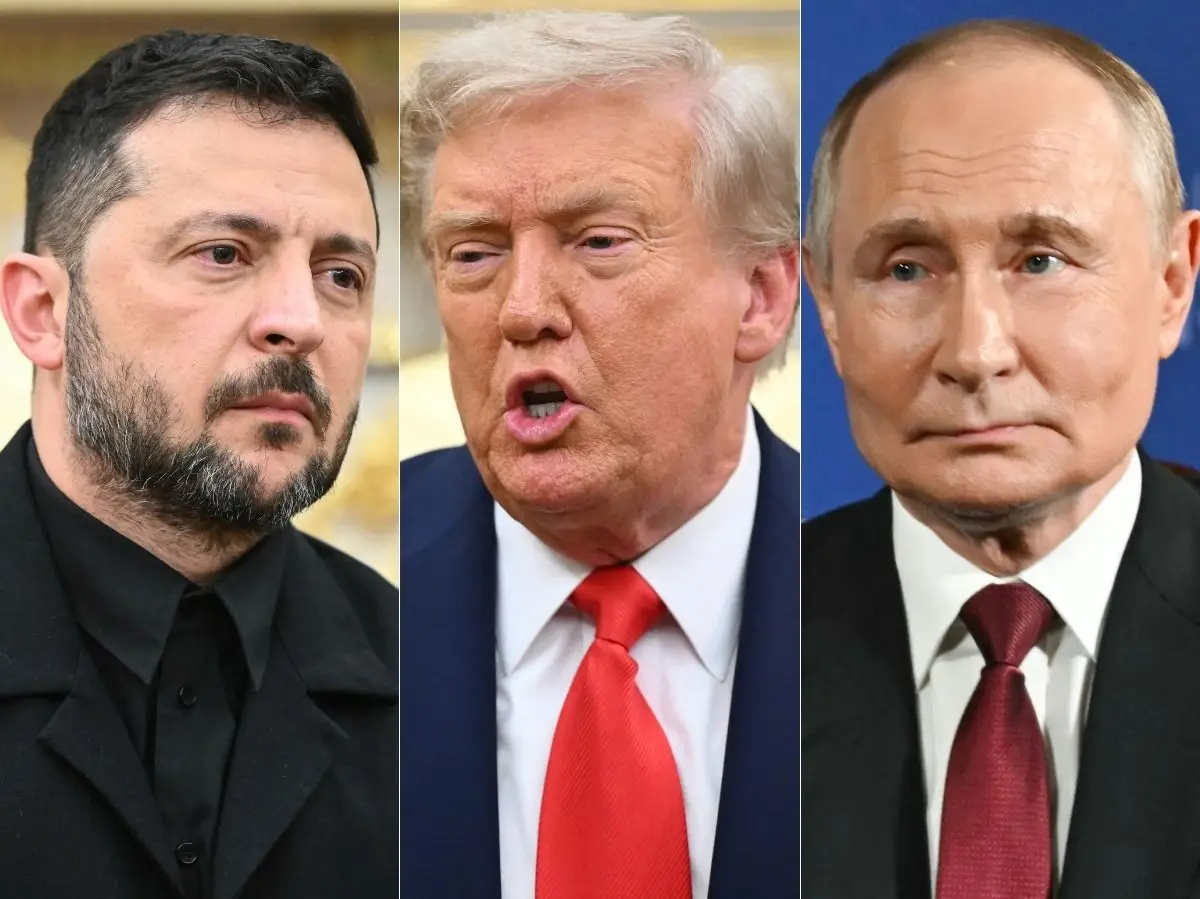
In the span of just four days, President Donald Trump has orchestrated a dramatic diplomatic pivot that has transformed the Ukraine peace process from a distant hope into an active negotiation. What began as Trump's reversal from demanding a ceasefire to Putin's preferred "peace agreement" approach has evolved into something far more sophisticated—and potentially more dangerous.
The Alaska awakening
Trump's August 15th summit with Vladimir Putin in Alaska marked the first direct negotiations at this level "for a long time," according to the Russian leader. But what emerged from those talks wasn't capitulation—it was calculation. After meeting with Ukrainian President Volodymyr Zelenskyy on Monday and an unprecedented gathering of European leaders at the White House, Trump announced plans for a direct Putin-Zelenskyy meeting, followed by trilateral talks.
This isn't the impulsive dealmaking critics feared. It's a methodical three-step strategy that leverages America's unique position as the only power capable of bringing both warring parties to the table.
The security guarantee revolution
The real breakthrough isn't territorial—it's defensive. Trump secured Putin's agreement that Russia would accept "robust security guarantees" for Ukraine, with European leaders describing this as "Article 5-like" protections similar to NATO's collective defense provision. Ukrainian officials expect these guarantees to be "formalized on paper within the next week to 10 days," including a massive Ukrainian purchase of American weapons worth approximately $90 billion.
Trending Stories
&imwidth=180&imheight=135&format=webp&quality=medium)
India moves to buy 10,000 more AI chips for a national compute pool open to startups
&imwidth=180&imheight=135&format=webp&quality=medium)
Cattle-feed bran in biscuits, detergent in milk: FSSAI acts against 3 companies
&imwidth=180&imheight=135&format=webp&quality=medium)
The Verdict | Trump, Putin and Xi: A superpower triangle that could reshape global diplomacy
&imwidth=180&imheight=135&format=webp&quality=medium)
France protests: 'Block everything' movement escalates as public fury over austerity grows; over 200 arrested. Here's all you to need to know
&imwidth=180&imheight=135&format=webp&quality=medium)
Over 100 US lawmakers urge FBI to probe foiled Hindu temple shooting as hate crime
&imwidth=180&imheight=135&format=webp&quality=medium)
Elon Musk will give away one SpaceX share to each American child. That comes to $10.5bn
&imwidth=180&imheight=135&format=webp&quality=medium)
'What's wrong with you? Are you a sick person?': Trump at it again as he snaps at reporters, faces backlash
&imwidth=180&imheight=135&format=webp&quality=medium)
After France unrest, Italy tightens security amid violent protests in Milan
&imwidth=180&imheight=135&format=webp&quality=medium)
'US will never part with niche technology' former IAF assistant chief on India's fighter jet ambitions
&imwidth=180&imheight=135&format=webp&quality=medium)
WATCH | Albania protesters set Supreme Court on fire as anti-Rama riots escalate
&imwidth=180&imheight=135&format=webp&quality=medium)
Iran rejects US talks until demands are met, rules out moving enriched uranium out of the country
&imwidth=180&imheight=135&format=webp&quality=medium)
What the Mecca Joint Defence Agreement says about withdrawal and military support. Read full text of the pact here
&imwidth=180&imheight=135&format=webp&quality=medium)
Pujara says 'Samson and Vaibhav cannot be in Playing XI' for India on NZ tour
&imwidth=180&imheight=135&format=webp&quality=medium)
Trump considers removing White House press corps to restore historic indoor swimming pool
&imwidth=180&imheight=135&format=webp&quality=medium)
US midterms 2026: With Republicans spending big, Bloomberg opens his wallet for Democrats. Here's how much he is pouring
&imwidth=180&imheight=135&format=webp&quality=medium)
Man marries off wife of 17 years to her lover in Uttar Pradesh
&imwidth=180&imheight=135&format=webp&quality=medium)
Trump says Ilhan Omar 'could go to jail' amid federal probe, calls Somalia a 's***house'
&imwidth=180&imheight=135&format=webp&quality=medium)
Boeing 737 MAX10 gets FAA certification, deliveries expected to begin in 2027
&im=FitAndFill=(700,400)&imwidth=180&imheight=135&format=webp&quality=medium)
What is the real meaning behind Pete Hegseth's tattoos?
&imwidth=180&imheight=135&format=webp&quality=medium)
Tiger Shroff firing incident: Four arrested in arms supply probe, two women allegedly sent weapons to Mumbai
&imwidth=180&imheight=135&format=webp&quality=medium)
Musk ordered Starlink restrictions that caught Ukraine off guard amid escalating tensions: Report
&imwidth=180&imheight=135&format=webp&quality=medium)
Ramayana advance booking: Ranbir Kapoor, Yash's film cross $500K ahead of Diwali release
&imwidth=180&imheight=135&format=webp&quality=medium)
PAK vs ENG: Arafat Minhas, Hasan Nawaz shine as Pakistan beat England by 87 runs
&imwidth=180&imheight=135&format=webp&quality=medium)
US midterms 2026: Red seats once deemed safe now appear shaky as Republicans spend big on ads
&imwidth=180&imheight=135&format=webp&quality=medium)
Trump calls Le Pen France’s ‘conservative voice’ after riots, but holds back on endorsement
&imwidth=180&imheight=135&format=webp&quality=medium)
'They are not even telling us' - Mysterious metallic object discovered in Minnesota field
&imwidth=180&imheight=135&format=webp&quality=medium)
Shastri backs Shami comeback; lauds Bhuvi and warns Bumrah on format workload ahead of World Cup
&imwidth=180&imheight=135&format=webp&quality=medium)
Trump says he wants Zelensky to 'make a deal' with Russia, asks Putin to release American prisoner Stephen Hubbard
&im=FitAndFill=(700,400)&imwidth=180&imheight=135&format=webp&quality=medium)
Priyanka Chopra to Shilpa Shetty: 6 Bollywood actresses and their fitness secrets
&imwidth=180&imheight=135&format=webp&quality=medium)
Punjab CM Bhagwant Mann allegedly detained for three hours at Delhi airport, fined ₹50,000: AAP
&imwidth=180&imheight=135&format=webp&quality=medium)
Gravitas | People who nap frequently have 48% higher risk of developing dementia: Study
&imwidth=180&imheight=135&format=webp&quality=medium)
Dandiya Nite ’26: Indian High Commissioner hails diaspora as bridge between India and Nigeria
&im=FitAndFill=(700,400)&imwidth=180&imheight=135&format=webp&quality=medium)
New OTT releases this week (October 19-25, 2026): Gajab Raat to Chaar Yaar-8 titles to watch during Dussehra week on Netflix, Prime Video and more
&imwidth=180&imheight=135&format=webp&quality=medium)
Feds obtain DNA evidence that could prove Ilhan Omar married her brother: Report
&imwidth=180&imheight=135&format=webp&quality=medium)
Far-left parties, global networks among 54 groups linked to France protests, only 16 are youth outfits: Report
This represents a fundamental shift from previous peace efforts. Unlike the failed Minsk agreements or the hollow Budapest Memorandum, Secretary of State Marco Rubio is now leading a working group with European allies to draft concrete security proposals. As NATO Secretary General Mark Rutte told Trump: "The fact that you have said that I'm willing to participate in the security guarantees is a big step. It's really a breakthrough."
Putin's calculated gamble
Critics who claim Trump was manipulated in Alaska misunderstand Putin's position. The Russian leader demanded maximalist territorial concessions, including all of the Donetsk region, and at one point "seemed so firm on his demand that Trump was ready to walk away". Putin's willingness to accept security guarantees suggests he recognises that military conquest has reached its limits.
With 20,000 Russian soldiers killed in July alone, Moscow faces an unsustainable attrition rate. Putin's agreement to eventual negotiations indicates he understands that Ukrainian officials are correct when they say "Russia will not take Donbas—not in months, not in years" due to Ukraine's heavily fortified defensive positions.
Europe's United Front
The unprecedented gathering of seven European leaders—including British Prime Minister Keir Starmer, French President Emmanuel Macron, and German Chancellor Friedrich Merz—at the White House demonstrated unprecedented unity. Starmer described "real progress" and "material outcomes on security guarantees," while Macron emphasised the significance of the US commitment to developing security plans.
This European solidarity provides crucial leverage. Trump ruled out U.S. ground troops but left the door open for other support, acknowledging that "European countries would form the first line of defense" while "we'll be involved".
The strategic imperative
As Trump administration officials emphasised on Sunday shows, "the only way to end this war is to get the Russians to agree—as well as the Ukrainians—but the Russians to agree to a peace deal". The reality is stark: "In order for there to be a peace deal... both sides are going to have to give up something in order to get to the table."
But this isn't appeasement—it's strategic realism backed by deterrent force. The proposed security framework would create the first credible guarantee against future Russian aggression since the Cold War ended.
The Nobel question reframed
Rather than pursuing peace for legacy purposes, Trump appears to be leveraging his unique relationship with Putin to achieve what his predecessors could not: a settlement that both sides can accept and the West can enforce. Trump's whispered comment to Macron—"I think [Putin] wants to make a deal for me, you understand that? As crazy as it sounds"—suggests he understands the personal dynamics at play.
The bottom line
Ukraine's offer to purchase $90 billion in U.S. weapons as part of security guarantees demonstrates this isn't about abandoning Kyiv—it's about creating a sustainable deterrent framework. As Zelenskyy noted after his White House meetings: "We had constructive, specific meeting… we are happy we have such big unity today."
Trump's approach carries enormous risks. Territorial concessions could reward aggression and encourage future conflicts. But the alternative—indefinite warfare with mounting casualties—offers no guarantee of better outcomes.
The next phase will determine whether Trump's diplomatic gambit produces the "lasting peace" he promises or becomes another chapter in the long history of failed negotiations with Moscow. With Putin-Zelenskyy talks now "underway" according to the White House, we'll know soon enough whether this represents genuine breakthrough or dangerous miscalculation.
The stakes couldn't be higher—for Ukraine, for Europe, and for Trump's presidency. History will judge whether this moment marks the beginning of sustainable peace or the prelude to an even more devastating conflict.
