

&imwidth=800&imheight=600&format=webp&quality=medium "EAM Jaishankar: Russia-Ukraine conflict is a war ‘without winners’")
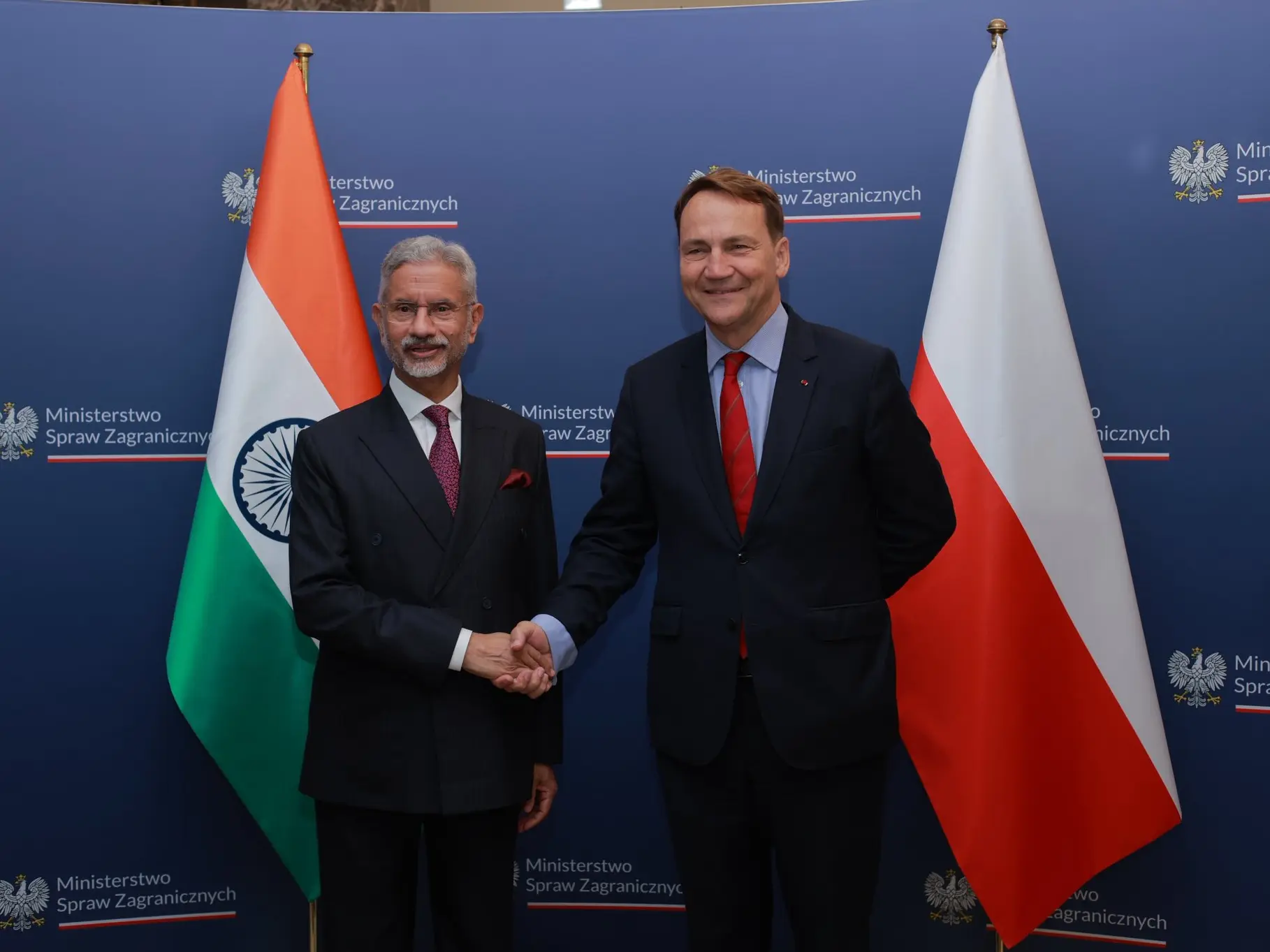
India’s External Affairs Minister S Jaishankar has said the Russia-Ukraine conflict is a "war without winners” and that its solution lies in negotiation rather than trade, as he wrapped up talks in Warsaw that also covered several areas and a deepening India-Poland partnership. The visit comes ahead of Poland PM Donald Tusk's India visit in October.
Speaking after meetings with Polish President Karol Nawrocki and Deputy Prime Minister and Foreign Minister Radosław Sikorski, Jaishankar recalled Prime Minister Narendra Modi’s remarks in Bishkek that “endless wars must give way to an end to war.”
The conflict, now in its fifth year, was producing “more deaths, more destruction” for the parties and higher costs for the rest of the world, he said.
Asked about India’s purchases of Russian energy, Jaishankar was clear: the solution to the war “is not in trade, the solution is in negotiation.” India has been importing Russian energy, which has been criticised in the Western world, but New Delhi has pointed to the needs of the billion people amid global energy security challenges.
India had remained in “continuous touch” with both Moscow and Kyiv and held “detailed discussions” so that “ideas, suggestions can be developed in some ways” to help bring about a “cessation of conflict,” India's foreign minister added. Sikorski said Warsaw’s view of Indian purchases of Russian oil was “well known,” but described Jaishankar’s explanation of New Delhi’s position as “eloquent.”
Indian foreign minister arrived in Warsaw after talks in Kyiv. He was earlier in Moscow, where he met Russian foreign minister Lavrov & Russian President Putin. The Warsaw stop followed India’s recent high-level contacts with both Russia and Ukraine and shows New Delhi’s bid to keep channels open while expanding its European footprint.
Trending Stories
&imwidth=180&imheight=135&format=webp&quality=medium)
Viral video shows cross falling on Colombia priest, no official confirmation | WATCH
&imwidth=180&imheight=135&format=webp&quality=medium)
Rafale Marine fighter begins flight trials in Goa ahead of Indian Navy induction
&imwidth=180&imheight=135&format=webp&quality=medium)
Ranbir Kapoor apologises for Dussehra speech slip, clarifies remark at Ramayana event
&imwidth=180&imheight=135&format=webp&quality=medium)
Meta slapped with $25 billion fine in New Mexico over Facebook data practices, company plans appeal
&imwidth=180&imheight=135&format=webp&quality=medium)
WATCH: Woman IPS officer fires several rounds of AK-47, ignites debate online
&imwidth=180&imheight=135&format=webp&quality=medium)
WATCH | Mysterious haze grips Ohio city as toxic chemical leak forces mass evacuation – What is happening?
&imwidth=180&imheight=135&format=webp&quality=medium)
EU probes Booking.com under Digital Services Act
&imwidth=180&imheight=135&format=webp&quality=medium)
Pakistan signs another defence pact even as Makkah Alliance shows no teeth. This time, it's with Qatar, Indonesia, Turkey
&imwidth=180&imheight=135&format=webp&quality=medium)
Ilhan Omar breaks silence over alleged marriage to her brother; Trump thinks it's 'really good answer'
&imwidth=180&imheight=135&format=webp&quality=medium)
US-Iran war: Bibi, Trump gamble on new Iran war to save themselves in polls
&imwidth=180&imheight=135&format=webp&quality=medium)
From Agni-V to Project Kusha: How are India’s indigenous missile systems and defence shield reshaping modern warfare
&imwidth=180&imheight=135&format=webp&quality=medium)
Will Rohit and Kohli play ODI World Cup 2027? BCCI president Manhas says board 'not in a position to comment'
&imwidth=180&imheight=135&format=webp&quality=medium)
Why websites around the world are suddenly going offline? What you need to know about PHP
&imwidth=180&imheight=135&format=webp&quality=medium)
US midterms 2026: What polls and prediction markets indicate about Congress
&imwidth=180&imheight=135&format=webp&quality=medium)
'You are a dummy, you are a stupid person': Trump loses temper with CNN, ABC reporters after questions about Russia sanctions
&imwidth=180&imheight=135&format=webp&quality=medium)
China's dancing robot turns violent bodyguard, lifts cars and fights intruders - Watch
&imwidth=180&imheight=135&format=webp&quality=medium)
16-foot doomsday fish in Chile triggers fears that the next earthquake is coming
&imwidth=180&imheight=135&format=webp&quality=medium)
Are the US and Israel preparing for another major attack on Iran? Here's what report claims
&imwidth=180&imheight=135&format=webp&quality=medium)
Priyanka Chopra celebrates Dussehra 2026 with Nick Jonas and daughter Malti Marie | See pics
&im=FitAndFill=(700,400)&imwidth=180&imheight=135&format=webp&quality=medium)
New OTT releases this week (October 19-25, 2026): Gajab Raat to Chaar Yaar-8 titles to watch during Dussehra week on Netflix, Prime Video and more
&imwidth=180&imheight=135&format=webp&quality=medium)
‘I caution the president...’: Trump’s ex-press secretary warns after Zacharia’s exit
&imwidth=180&imheight=135&format=webp&quality=medium)
'Father of all bombs' vs 'mother of all bombs': Iran threatens US with new weapon as Trump hints at MOAB strike
&imwidth=180&imheight=135&format=webp&quality=medium)
Diljit Dosanjh's Oct 30 Delhi show hits roadblock, Delhi Police denies permission
&imwidth=180&imheight=135&format=webp&quality=medium)
Australia police arrest former national 100m champ Jake Doran for alleged child abuse
&imwidth=180&imheight=135&format=webp&quality=medium)
'Gyanu must go': CJP's Saurav Das, Ashutosh Ranka after release, despite Jantar Mantar protest undertaking
&imwidth=180&imheight=135&format=webp&quality=medium)
Kolkata airport: CISF detects ₹1.13 crore in US dollars hidden in bags of 2 Bangkok-bound passengers
&imwidth=180&imheight=135&format=webp&quality=medium)
Feds obtain DNA evidence that could prove Ilhan Omar married her brother: Report
&imwidth=180&imheight=135&format=webp&quality=medium)
US midterms 2026: Trump's approval rating hits record low as Democrats gain ground
Jaishankar framed the war against a wider backdrop of strain on food, fuel and fertiliser supplies and fragile supply chains. As “political democracies, market economies and open societies,” India and Poland could help shape global debates, he said, including at the United Nations.
On bilateral ties, he pointed to an uptick in trade and defence cooperation and “new possibilities” in space, digital technology and artificial intelligence. Fresh agreements were being planned on critical minerals, cybersecurity, space and clean coal that would add “texture to ties.” Indology and Sanskrit programmes at Polish universities were doing well, he noted.
India’s relationship with the European Union had “deepened visibly,” with the proposed India-EU free trade agreement as the “centrepiece” that would “open economic opportunities.” Poland, he said, “stands to gain.” India regarded the EU as an important pole in a changing world order.
Pressed on irregular Indian migrants in Poland, Jaishankar said New Delhi “strongly, firmly support[s] legalised mobility of people.” Europe faced demand for Indian talent in semiconductors, automobiles, medicine and nursing. A globalised economy, he argued, was “not just for capital [and] goods” but also for “talent and skills.”
