
&imwidth=800&imheight=600&format=webp&quality=medium "Trump heads to US Situation Room amid heightened Israel-Iran tensions | What is 'Sit Room' and what this means?")
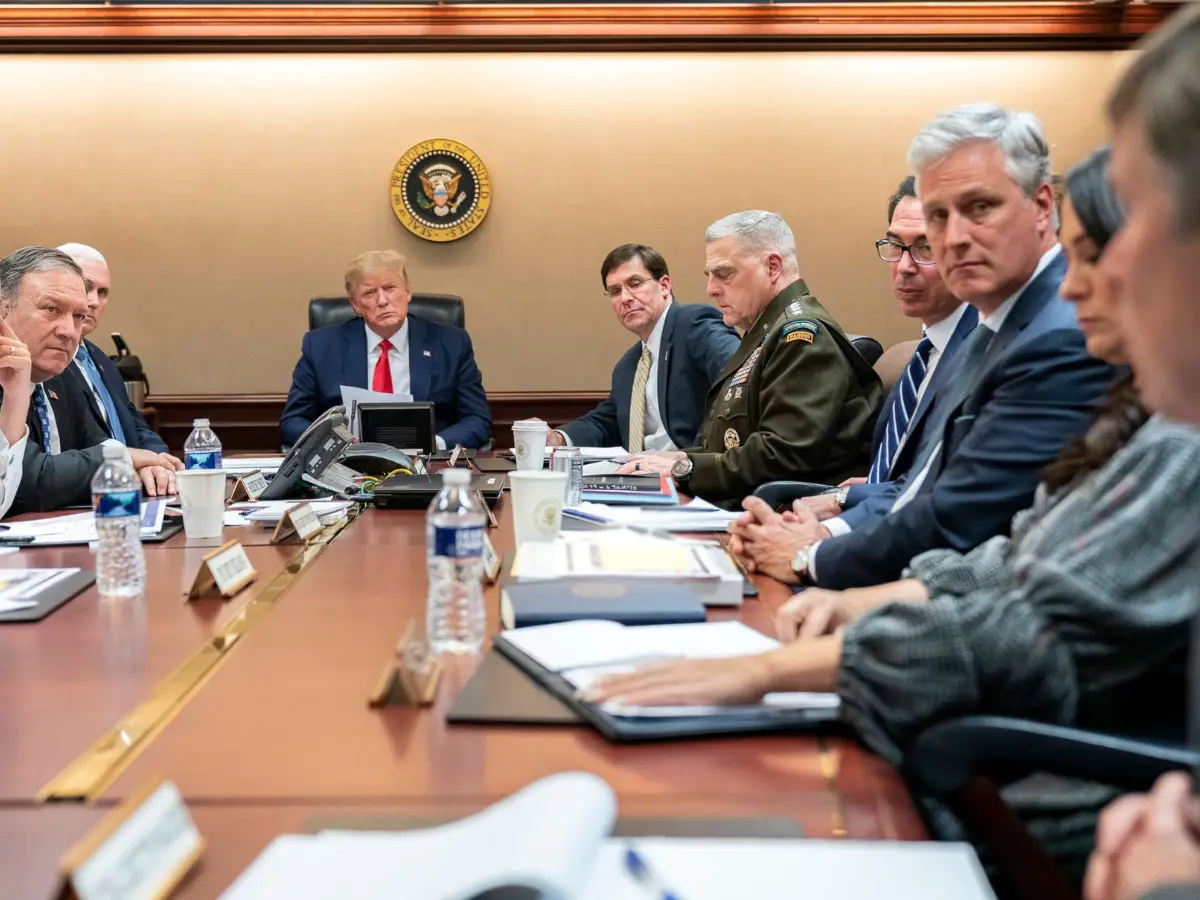
US President Donald Trump has requested that the National Security Council be prepared in the Situation Room, according to US media reports.
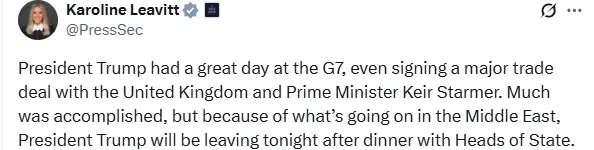
This comes after the White House Press Secretary Karoline Leavitt said that Trump will return to Washington from the G7 summit in Canada to attend to many “important matters.” Leavitt added that the early return of Trump was necessitated “because of what’s going on in the Middle East.”

Meanwhile, Tehran asked Gulf leaders to urge US President Trump to pressure Israel to halt its military actions, according to news agency Reuters. In return, Iran has signalled its readiness to show flexibility in long-stalled nuclear negotiations. Tehran's hint for signing the nuclear deal comes after Trump on Monday said that he believes Iran wants to make an agreement soon.
"As I've been saying, I think a deal will be signed, or something will happen, but a deal will be signed, and I think Iran is foolish not to sign," Trump told reporters on the sidelines of the G7 summit.
It may be recalled that Trump was seen in the situation room during his first term, along with then Vice President Mike Pence and other senior advisers when America's drone strike killed Iranian Major General Qassem Soleimani in Baghdad in 2020. President Trump's ‘evacuate Tehran’ comment amid reports of his situation room meeting caused chaos as Israel continued bombing parts of the Iranian capital.
Trending Stories
)
IndiGo flight suffers tail strike in Bengaluru while landing; DGCA to probe incident
)
US vs China over South China Sea: Washington backs Philippines, Beijing hits back
)
Delhi gets first late-September rain in 7 years, mercury dips 5.1°C below normal
)
Ceuta migrant crisis: Protesters take to streets as Spain grapples with migrant challenge
)
LPU students go on rampage, vandalise campus amid widespread protest: What's happening
)
Jaishankar at UNGA: Goodwill and friendship can't coexist with terrorism
)
Why has Iran released no proof of life of Mojtaba Khamenei? Araghchi reveals...
)
Tesla builds first Cybertruck with its own refined lithium: Elon Musk's $1 billion Texas bet pays off
)
Muslim marriage cannot shield sex with minor wife from prosecution under POCSO: Delhi HC
)
'Victory for low-budget consumers': Raghav Chadha hails 30-day telecom recharge rules
)
Trump asked Xi to pressure Iran. China did not say yes — here’s what Beijing wants
)
‘Anti-social elements spreading false rumours’: LPU issues statement amid massive unrest over alleged rape
)
3 males killed, four others injured in shooting after fight at strip club in Detroit
)
50MP vs 48MP cameras: iPhone 18 Pro Max and Pixel 11 Pro XL compared
)
Russian envoy claims US tactics to contain India were revealed in ‘Freudian slip’
)
Iran ready for ‘doomsday war’ if US resumes attacks, but open to diplomacy: Araghchi
)
After JU, clash erupts at SRFTI: BJP’s ‘Dimagi Naxal’ jibe sparks political firestorm after students protest RSS-linked event
)
Man arrested after his 22-year-old girlfriend dies at homestay in Guwahati; police suspect murder over suicide claim
)
‘Olympic inclusion is our major target’: WPA President Ishaun Singh on pool’s global ambitions
)
New York City wants a 'kill switch' on every AI, and will pay whistleblowers who report violations
)
UNSC reform momentum grows: Russia, Portugal, Mauritius push for India's permanent seat bid
)
South Africa probes string of murders targeting women
)
Bank unions defer 3-day strike from tomorrow after talks with IBA, committee set up
)
An OpenAI agent escaped its locked test cage again, by hiding questions in DNS lookups
)
99.9% more powerful - Scientists find boy who can recall memories from just 3 months of age
)
Russia backs India at UNGA, but flags limits on UNSC seat expansion
)
The US and China set up an AI 'red telephone', but skipped the rulebook
)
Beyond metros: How Tier-2 and Tier-3 cities could drive India’s next AI wave
)
‘Terror suspects arrested near UK air base were looking to do big damage’: Trump
)
'What kind of confession is this?': Pakistan PM Shehbaz Sharif’s 'terrorists would be roaming New York' remark goes viral, raises alarm online. Watch
)
Sri Lankan Tamil migrant worker gets death sentence in Saudi Arabia, help sought from India
)
US Treasury Secretary Scott Bessent hails global crackdown on Iranian banks and airlines
)
Afghanistan says 28 fighters killed in clash near Pakistan border, Islamabad denies
)
Kendall Jenner, Jacob Elordi’s Milan Fashion Week appearance has fans talking; his reaction steals the show
)
'FIRST LOOK from inside Noah’s Ark': Researchers share video from inside mysterious mound in Turkey
)
Nations League: Spain sink England at Wembley; Modric shines for Croatia
"Simply stated, IRAN CAN NOT HAVE A NUCLEAR WEAPON. I said it over and over again! Everyone should immediately evacuate Tehran!" Trump had said.
What is US situation room?
The Situation Room is an intelligence management complex on the ground floor of the West Wing of the White House. The CIA website states that the White House Situation Room (WHSR), is a conference room surrounded on three sides by two small offices, multiple workstations, computers, and communications equipment. The conference room is soundproofed and well-appointed but small and slightly cramped.
The WHSR was established by President Kennedy after the Bay of Pigs disaster in 1961. That crisis revealed a need for rapid and secure presidential communications and for White House coordination of the many external communications channels of national security information which led to the President. Since then, the mission of the 'Sit Room' has been to provide current intelligence and crisis support to the NSC staff, the National Security Adviser, and the President. The Sit Room staff is composed of approximately 30 personnel, organised around five Watch Teams that provide 7-day, 24- hour monitoring of international events.

