

&imwidth=800&imheight=600&format=webp&quality=medium "Why Modi will not compromise on trade deal with Trump. These sectors are crucial for Indian economy (and politics)")
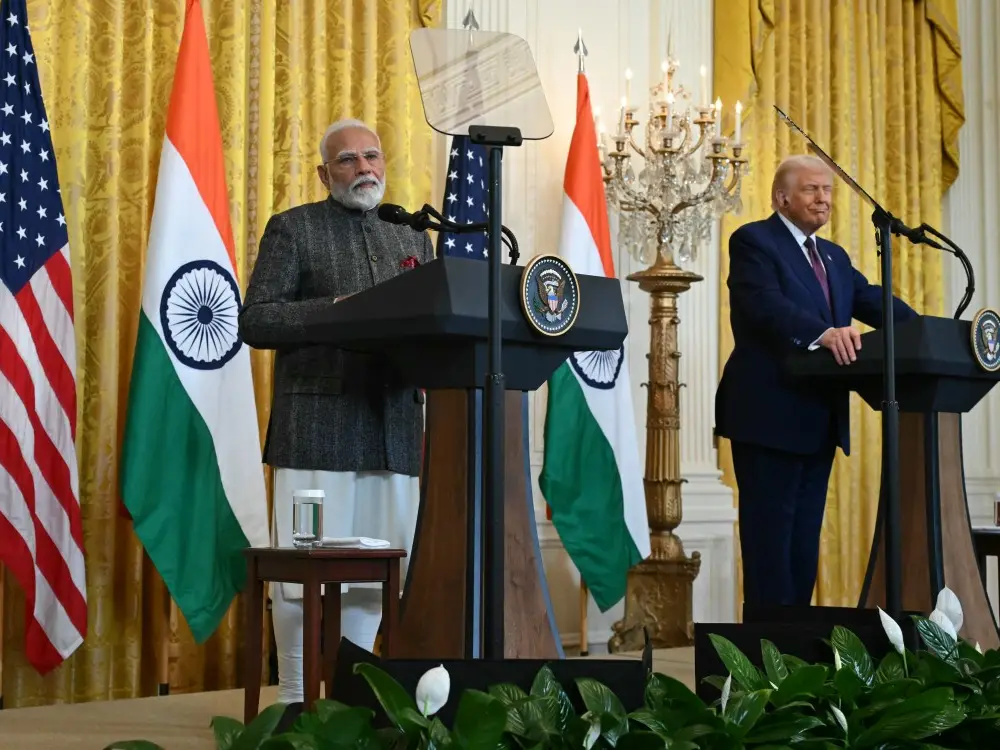
India has stood firm in its trade negotiations with the US, prioritising its national interests and protecting domestic industries. This is probably what's frustrating President Donald Trump, who announced 25 per cent tariffs and additional penalties on India, citing trade gap, high tariffs as well as non-tariff barriers, and trade in arms and energy with Russia. An Indian team has been negotiating with the US counterparts for a trade deal - reportedy to be worth nearly $118 billion - to avert the tariffs, but the Trump deadline of August 1 is unlikely to be met. There are some crucial sectors of Indian economy on which Prime Minister Narendra Modi's government will not compromise. This is both to protect domestic industries, and to prevent political fallout and possible criticism of selling out to the US.
India won't rush into a trade deal with US
Addressing parliament on Thursday (July 31), Trade Minister Piyush Goyal said the government "will protect the interests of our farmers, small industries and entrepreneurs."
He said India will not rush into an agreement just to meet Trump's deadlines and will only accept a deal that aligns with its national interests.
Protecting the Indian farmer: Agricultural sector safeguards are important for both Indian economy and politics
India is keen to safeguard its farming sector, where the US has been seeking greater market access for products like maize, soybean and corn. Another issue of contention is genetically modified (GM) crops, which India has been resisting. More about it later. Allowing such imports in large amounts will hit domestic farmers as well as food security. In trade deals with other countries also, India has consistently avoided tariff concessions on major agricultural products. The thrust has always been on protecting millions of Indian small farmers in order to ensure food security.
Trending Stories
&imwidth=180&imheight=135&format=webp&quality=medium)
'My name has always been Ilhan Omar': Congresswoman hits back at Trump, calls him a 'creep'
&imwidth=180&imheight=135&format=webp&quality=medium)
Gravitas | US attack could trigger WW III: Russian planes in Tehran, Israeli jets, US warships in action
&imwidth=180&imheight=135&format=webp&quality=medium)
Viral video shows cross falling on Colombia priest, no official confirmation | WATCH
&imwidth=180&imheight=135&format=webp&quality=medium)
US Navy, Marine Corps boards defy Trump's transgender military ban, vote to retain troops
&imwidth=180&imheight=135&format=webp&quality=medium)
Will the US attack Iran this weekend? Trump's envoy says, 'absolutely'
&imwidth=180&imheight=135&format=webp&quality=medium)
Fauzi teaser out: Prabhas takes on the British Empire in patriotic avatar | Watch
&imwidth=180&imheight=135&format=webp&quality=medium)
India-China face-off continues near Arunachal’s Taksing, reveals ITBP chief in first official confirmation of tensions
&imwidth=180&imheight=135&format=webp&quality=medium)
Nairobi building collapse: Several feared trapped after 16-storey structure crumbles; rescue operation underway
&imwidth=180&imheight=135&format=webp&quality=medium)
Pakistan airline PIA unveils new crew uniforms, faces online criticism
&imwidth=180&imheight=135&format=webp&quality=medium)
Did Neha Bora call for Bangladesh-like GenZ protest, 'anarchy' in India? WION Fact-checks viral claim
&imwidth=180&imheight=135&format=webp&quality=medium)
Scientists make digital nose that can sniff and send scents over the internet
&imwidth=180&imheight=135&format=webp&quality=medium)
'Already tired of his 9-to-5': Baby born with a moustache becomes internet sensation, video goes viral | Watch
&imwidth=180&imheight=135&format=webp&quality=medium)
Horrific video shows the moment 18-year-old fell to her death from Mexico amusement park ride
&imwidth=180&imheight=135&format=webp&quality=medium)
IND-W vs ZIM-W, 1st ODI: Rawal, Charani star in India’s nine-wicket win over Zimbabwe
&imwidth=180&imheight=135&format=webp&quality=medium)
Massive 7.2 magnitude quake off Vanuatu triggers tsunami warning for coasts within 300 km
&imwidth=180&imheight=135&format=webp&quality=medium)
Microsoft AI diagnoses complex medical cases more than twice as accurately as doctors, study finds
&imwidth=180&imheight=135&format=webp&quality=medium)
Google Fitbit Air’s new health guardian feature tracks trends: How it works
&imwidth=180&imheight=135&format=webp&quality=medium)
US midterms 2026: Trump revises Canada tariffs as Susan Collins faces tight re-election race in Maine
&imwidth=180&imheight=135&format=webp&quality=medium)
US midterms 2026: Viral video claims Lindsey Graham paid underage men for sex; clip released weeks before his sister's Senate race
&imwidth=180&imheight=135&format=webp&quality=medium)
IND vs NZ 2nd T20I: Shreyas Iyer on brink of breaking Rohit Sharma’s record
&imwidth=180&imheight=135&format=webp&quality=medium)
AI deepfakes are spreading online: Why is removing them so difficult?
&imwidth=180&imheight=135&format=webp&quality=medium)
China's dancing robot turns violent bodyguard, lifts cars and fights intruders - Watch
&imwidth=180&imheight=135&format=webp&quality=medium)
Global cybersecurity alert: PHP flaws trigger website shutdowns as hack attempts surge into millions
&imwidth=180&imheight=135&format=webp&quality=medium)
'You’re a horrible little reporter, aren’t you?': Trump snaps at NBC reporter questioning his support for Ramaswamy's campaign ad
&imwidth=180&imheight=135&format=webp&quality=medium)
Chemical warehouse explosion in Mexico: Several injured in multiple blasts, 1,000 evacuated in León
&imwidth=180&imheight=135&format=webp&quality=medium)
US charges two former FBI officials with lying to Congress about Hunter Biden probes. 'Politically motivated' Trump grievance or something else?
&im=FitAndFill=(700,400)&imwidth=180&imheight=135&format=webp&quality=medium)
New Friday OTT releases (October 23, 2026): Gajab Raat, Dorothy, Chaar Yaar- Watch these 6 new movies and TV shows on Netflix, Prime Video and more
&imwidth=180&imheight=135&format=webp&quality=medium)
Anthropic security chief issues grim cyberattack warning: ‘It’s going to get a lot worse’
&imwidth=180&imheight=135&format=webp&quality=medium)
Tu Hai Meri Kiran film review: Sonakshi Sinha and Zaheer Iqbal's thriller gets tangled in its own twists
&imwidth=180&imheight=135&format=webp&quality=medium)
First Lady Melania Trump secures ceasefire between Russia, Ukraine in Oleshky: White House
&imwidth=180&imheight=135&format=webp&quality=medium)
Jenna Ortega plans TV break after Wednesday: ‘I want to leave time for new things’
&imwidth=180&imheight=135&format=webp&quality=medium)
Five killed, several injured after explosion in Bihar's Siwan as firecrackers catch fire
&imwidth=180&imheight=135&format=webp&quality=medium)
Iran targeting US diplomats? Intelligence warns of 'advanced' assassination plots: Report
&imwidth=180&imheight=135&format=webp&quality=medium)
Emmanuel Macron calls Paris suburb shooting a 'racist terrorist attack' after one killed, several injured
India has a red line on dairy sector
Diary products are another 'non-negotiable red line' for India. India has refused to allow imports of US dairy products, including so-called 'non-vegetarian milk' (possibly from animals fed with certain kinds of feeds or hormones). India wants to protect its dairy farmers and make the domestic market stable. Not just the US, but India has not given duty concessions for dairy products in any of its free trade agreements.
Genetically Modified (GM) Crops: A controversial territory
GM crops have been a controversial topic in India for decades. India has explicitly rejected American demands to allow imports of GM crops, such as soybean and corn. It could hit Indian agriculture, and affect people's health.
Non-Tariff Barriers and quality control orders
Quality Control Orders are part of the ‘self-reliant India’ initiative, aimed at curbing low-quality imports and promoting domestic manufacturing. The US has raised concerns about QCOs. The other sticking point is NTFs, which block market access to several US products. India, for which both NTBs and QCOs as crucial for protecting its domestic industries, is unlikely to relax them.
Energy Imports are about India's strategic autonomy
In meeting its energy demands, India has been importing from countries the West sees as enemies, particularly Russia and Iran. But India is very clear that national interest will guide its energy purchases. These imports, such as petroleum from Russia, are cheaper for India. India has tied its energy trade with its strategic autonomy. This is not an area India can compromise.
These positions align with India’s broader trade policy, which prioritises protecting domestic industries, ensuring food security, and maintaining a favourable trade balance.
India, meanwhile, remains open to offering concessions in other areas. This includes cuts in tariffs on automobiles and American whiskey, or duty concessions for textiles, leather, footwear, and auto parts.

