

&imwidth=800&imheight=600&format=webp&quality=medium "Trump administration reportedly wants US oil firms to re-enter Venezuela. But what happened the last time they were there?")
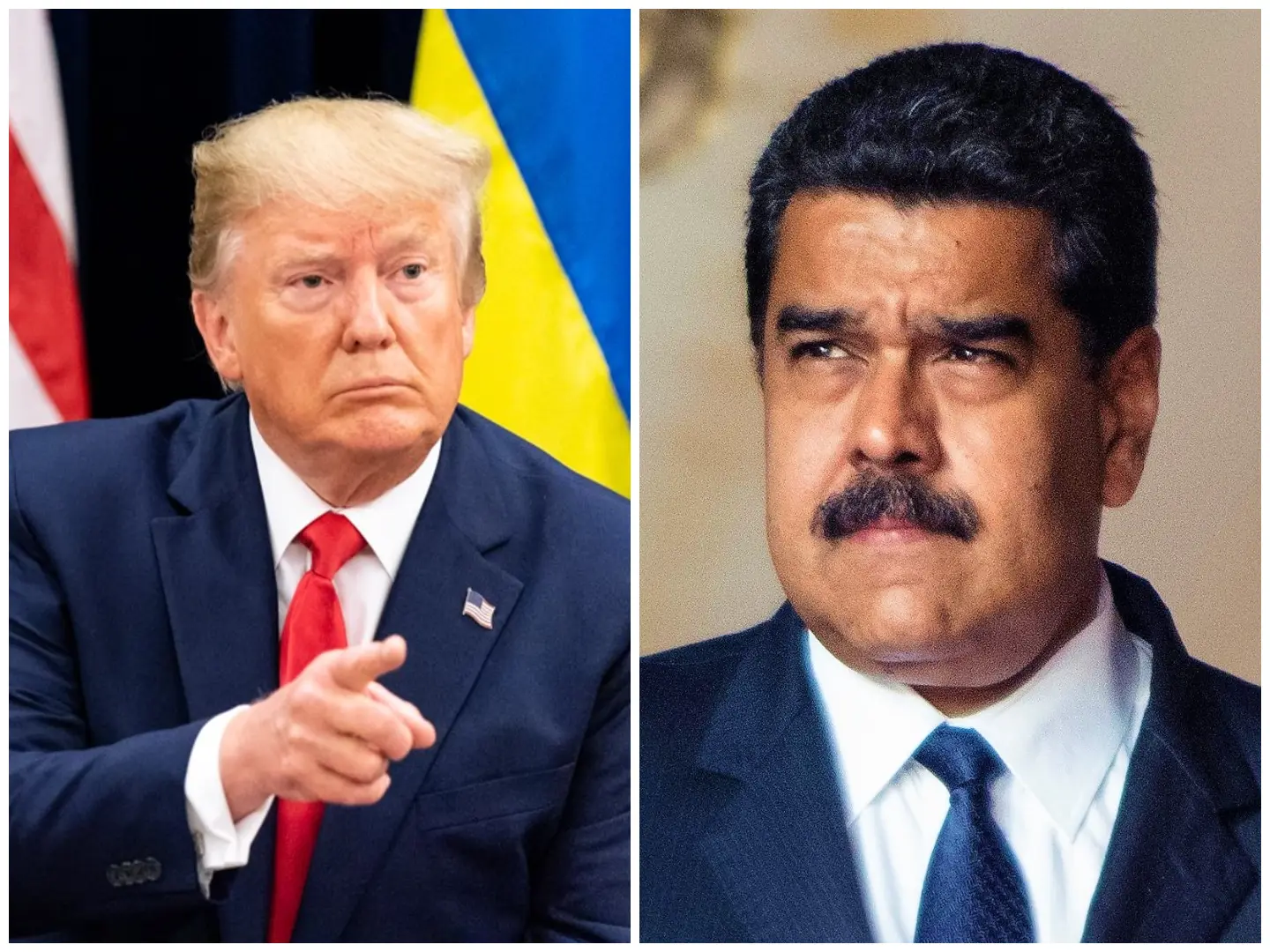
Amid the US blockade of sanctioned Venezuelan oil tankers, President Nicolás Maduro has ordered the Navy to escort the country’s oil tankers. This came as reports said President Donald Trump wants US oil firms to enter the Latin American country’s energy market. These developments, amid the escalating so-called anti-narcotics raids on Venezuelan ships, are leading to strong suspicions that the tensions are actually about oil, in order to force the entry of American oil giants. If that happens, it wouldn’t be the first time. American energy companies were in Venezuela a century ago, and stayed there for decades, before being thrown out after exploitative practices that drained the nation’s resources while the people did not benefit. Here is the story of American oil firms in Venezuela.
What the reports said about re-entry of American oil firms in Venezuela
Trump administration is clearly planning for a post-Maduro Venezuela, in which US oil companies might enter the nation's energy market. The Politico reported that the Trump administration has been asking US oil companies if they would consider returning to Venezuela if Maduro were no longer in power. It said the White House has reached out privately to US oil firms to gauge interest in returning to Venezuelan oil production if Maduro falls or flees. The firms have reportedly declined, citing political risk, low oil prices, and the deterioration of Venezuela’s oil infrastructure.
US oil firms were in Venezuela nearly a century ago
Oil was discovered in Venezuela more than a century ago, mainly starting from the Maracaibo Basin in 1914. Since then, Standard Oil - which later became ExxonMobil - Gulf Oil, and other major oil firms dominated Venezuela’s energy industry for decades. By the 1930s, mostly American and some British-Dutch oil firms controlled nearly 98 per cent of Venezuela’s production.
Trending Stories
&imwidth=180&imheight=135&format=webp&quality=medium)
Finance influencer dies by suicide in Chennai; father accuses tech CEO, who denies charge
&imwidth=180&imheight=135&format=webp&quality=medium)
450 villagers in UP rush to take anti-rabies shots after consuming 'charnamrit'
&im=FitAndFill=(700,400)&imwidth=180&imheight=135&format=webp&quality=medium)
New Friday OTT releases (October 23, 2026): Gajab Raat, Dorothy, Chaar Yaar- Watch these 6 new movies and TV shows on Netflix, Prime Video and more
&imwidth=180&imheight=135&format=webp&quality=medium)
Trump ordered to answer questions under oath in BBC defamation lawsuit by December 11
&imwidth=180&imheight=135&format=webp&quality=medium)
ENG vs SL: Harry Brook breaks Shubman Gill’s record for fastest ODI double century
&imwidth=180&imheight=135&format=webp&quality=medium)
US midterms 2026: US Supreme Court allows New Hampshire to restrict student IDs for voting
&imwidth=180&imheight=135&format=webp&quality=medium)
US to get 850 F-35 stealth fighter jets under 10-year Pentagon-Lockheed deal
&imwidth=180&imheight=135&format=webp&quality=medium)
Ilhan Omar breaks silence over alleged marriage to her brother; Trump thinks it's 'really good answer'
&imwidth=180&imheight=135&format=webp&quality=medium)
Did Neha Bora call for Bangladesh-like GenZ protest, 'anarchy' in India? WION Fact-checks viral claim
&imwidth=180&imheight=135&format=webp&quality=medium)
Netanyahu dials PM Modi, invites him and Capt Smit Machchhar to light torch on Israel’s Independence Day
&imwidth=180&imheight=135&format=webp&quality=medium)
What is the ‘heat ray’ weapon? Pete Hegseth reportedly authorises DHS to test it at US-Mexico border
&imwidth=180&imheight=135&format=webp&quality=medium)
Two BrahMos missiles on Tejas, triple the range and 100% indigenisation, says former BrahMos CEO
&imwidth=180&imheight=135&format=webp&quality=medium)
GRAVITAS | Putin fires nuclear-capable hypersonic missiles, Zelensky ready to surrender 25% territory
&imwidth=180&imheight=135&format=webp&quality=medium)
US midterms 2026: Elon Musk’s political spending hits $445 million as Republicans battle to retain Senate control
&imwidth=180&imheight=135&format=webp&quality=medium)
Horrific video shows the moment 18-year-old fell to her death from Mexico amusement park ride
&imwidth=180&imheight=135&format=webp&quality=medium)
Christa Pike's failed execution: Tennessee team struggled to insert IV lines, lawyer says
&imwidth=180&imheight=135&format=webp&quality=medium)
India-China face-off continues near Arunachal’s Taksing, reveals ITBP chief in first official confirmation of tensions
&im=FitAndFill=(700,400)&imwidth=180&imheight=135&format=webp&quality=medium)
Serbia elections: Nearly 150,000 people take to streets in massive rally against Aleksandar Vucic | In pics
&imwidth=180&imheight=135&format=webp&quality=medium)
AI slop or smart strategy? South African author Coral Hart defends Her 370 AI- assisted books in 20 months
&imwidth=180&imheight=135&format=webp&quality=medium)
Watch: India rejects ‘imprecise and unsupported’ references in UN migrant rights report
&imwidth=180&imheight=135&format=webp&quality=medium)
'This is despicable': Amy Acton hits back at Vivek Ramaswamy over Ohio campaign ad featuring her estranged mother
&imwidth=180&imheight=135&format=webp&quality=medium)
China's dancing robot turns violent bodyguard, lifts cars and fights intruders - Watch
&imwidth=180&imheight=135&format=webp&quality=medium)
From Agni-V to Project Kusha: How are India’s indigenous missile systems and defence shield reshaping modern warfare
&imwidth=180&imheight=135&format=webp&quality=medium)
One man, 8 months of work, and a river dirty again: Why Bittu Tabahi may quit
&imwidth=180&imheight=135&format=webp&quality=medium)
Saudi Arabia targeted yacht carrying 14 Indians in Red Sea, rescue underway, Houthis claim
&imwidth=180&imheight=135&format=webp&quality=medium)
SA vs AUS 2nd Test: Temba Bavuma reveals 'Tendulkar inspiration' behind career-best 179
&imwidth=180&imheight=135&format=webp&quality=medium)
France reports first human case of livestock virus Shamonda, patient dies; what we know so far
&imwidth=180&imheight=135&format=webp&quality=medium)
WATCH: Trump demands Ilhan Omar removal from Congress for 'using fake name to be sworn in'. So what is her real name?
&imwidth=180&imheight=135&format=webp&quality=medium)
ENG vs SL: Harry Brook’s 202 goes in vain as Sri Lanka pull off second-highest ODI chase
&imwidth=180&imheight=135&format=webp&quality=medium)
Viral video shows cross falling on Colombia priest, no official confirmation | WATCH
&imwidth=180&imheight=135&format=webp&quality=medium)
BCCI’s CoE cautious over Hardik Pandya’s fitness, sets expected comeback timeline
&imwidth=180&imheight=135&format=webp&quality=medium)
'Vivek should keep it up': Trump defends Ramaswamy's controversial campaign ad targeting Amy Acton
&imwidth=180&imheight=135&format=webp&quality=medium)
Putin says Russia is ready to resume Ukraine-US peace talks but rejects 'short ceasefire' amid deadly attacks
&imwidth=180&imheight=135&format=webp&quality=medium)
A secret code, a midnight escape and 300 deaths: The Russian officer who turned on Putin
&imwidth=180&imheight=135&format=webp&quality=medium)
Meghan Markle’s father Thomas under investigation over alleged child abuse images: Report
&imwidth=180&imheight=135&format=webp&quality=medium)
'It's a crime not to see this scene': Tehran puts Trump 'behind bars'
When American oil profits went to the US
When American companies operated in Venezuela, their profits were repatriated to the US, with almost no significant reinvestment in local development or infrastructure. It became clear to Venezuelans that the oil wealth was only benefiting foreign shareholders rather than local populations. Neither the local communities, nor the Venezuelan state receive much benefit, and the resentment led to nationalist sentiments.
Poor treatment of labour, environmental and social damage
The American and other oil firms in Venezuela had a poor track record on labour relations. The oil extraction was causing pollution, and water sources were contaminated. Local farming and fishing communities bore the brunt. In the 1920s and 1930s, several complaints were made about destroyed freshwater supplies and impacts on indigenous and rural populations.
Authoritarian rulers gave favourable concessions
Under dictator Juan Vicente Gómez (1908–1935), American companies received generous terms and conditions to operate, including low taxation and large land concessions. This was part of the larger corruption of the dictatorship, which was propped up by foreign powers as it submitted to their interests.
1940s reforms and nationalisation
In 1943, Venezuela introduced a Hydrocarbons Law. This made sure that the government got 50 per cent of the energy profits, in the first move towards greater government control.
In 1976, Venezuela moved for full nationalisation of oil under President Carlos Andrés Pérez and created PDVSA (Petróleos de Venezuela, S.A.). This effectively started the end of foreign energy dominance.
Under the socialist leader Hugo Chávez, the contracts with US companies, which they said was bringing investment and technology to Venezuela, were scrapped. The nationalisation was further strengthened during the 2007–2010 Chávez era, in which the government sought majority control in joint ventures with multinationals.
Venezuela viewed this as a sovereign right over its resources; while Chavez supporters saw it as correcting historical exploitation. These policies were continued by Maduro, who came to power after Chavez died of cancer.
The ouster and arbitration fights of American oil giants in Venezuela
Some US companies like Chevron agreed and stayed, but others, mainly ExxonMobil and ConocoPhillips, refused, and their assets were seized. This led to major arbitration disputes, with the companies alleging that there were expropriations without adequate compensation.
As Venezuela offered only limited payouts, the companies claimed billions of dollars in losses. After many years of disputes, international tribunals ruled in favour of the firms, with ExxonMobil winning some $1.6 billion in compensation in 2014, while ConocoPhillips won nearly $8.7 billion in 2019. But much of this compensation is yet to be paid.
Chevron is the only major US firm in Venezuela
Chevron continued to operate in Venezuela through joint ventures with PDVSA. There is criticism that this money helped the Maduro regime. US sanctions waivers in past years allowed limited operations of some American companies. Trump revoked some of the waivers and is essentially blockading the oil trade of Venezuela to pressure Maduro.
It is true that foreign companies built the oil industry of Venezuela. The US views nationalisations as theft of investments, but these investments often came at the expense of the welfare Venezeualans.

