
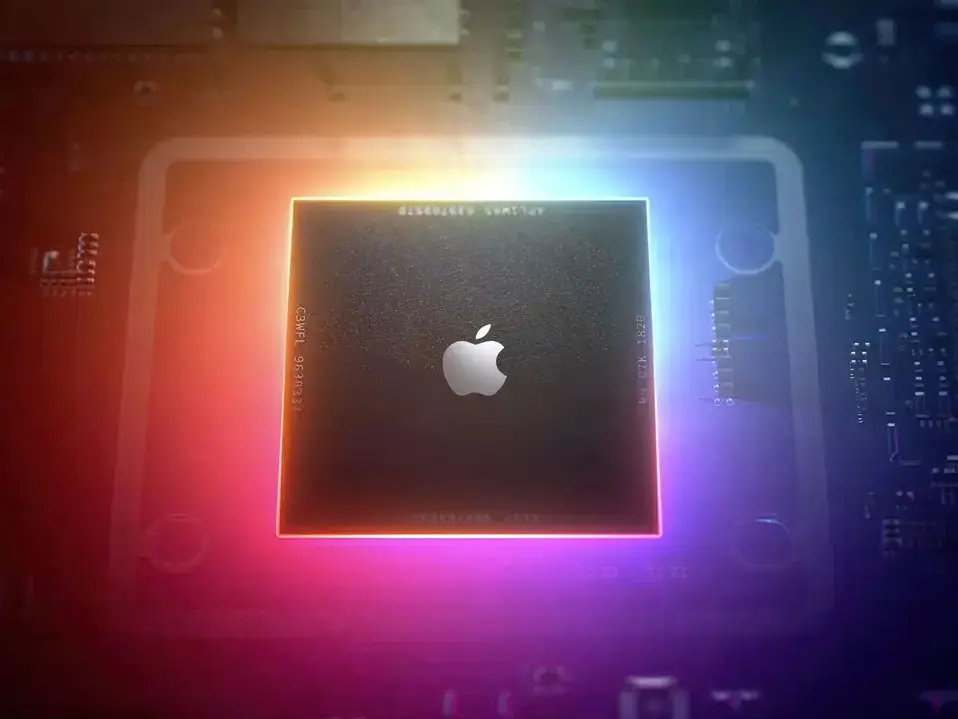
&imwidth=800&imheight=600&format=webp&quality=medium "The new Siri ships today, and its brain belongs to Google")
Apple is releasing iOS 27 today, and its most significant feature was not built by Apple.
The update brings a redesigned Siri powered by Google's Gemini models. Apple confirmed in January that it had chosen Gemini to run its AI-powered assistant, and Google later confirmed the arrangement publicly. The launch makes it real for hundreds of millions of iPhone users.
What Changes For Users

The new Siri is designed to hold natural conversations — reportedly supporting more than 20 consecutive exchanges — translate on the fly, and take context-aware actions across Apple's own apps, including Messages, Notes and Mail.
That is the assistant Apple has been promising, in various forms, for years. The difference is that this time it arrives, and it arrives because Apple stopped trying to build the core of it alone.
Why This Is Remarkable
Trending Stories
)
Did India risk its US trade deal despite softer stance at BRICS?
)
Pakistan puts Pak Rs 70 lakh bounty on UN terrorist Masood Azhar; move draws skepticism in Delhi
)
First naval drone battle? Ukraine says Sargan 3000 sank Russian unmanned boat
)
Practical Magic 2 breaks Spidey spell over North American box office
)
'Huge destructive power': North Korea calls its latest missile launches 'live-fire drill' even as US dismisses 'immediate threat'
&im=FitAndFill=(700,400))
Meet top 5 batters fastest to 3000 runs in T20Is
)
‘Let’s go’: Newly declassified videos show dramatic rescue of US Air Force officers downed in Iran
)
Delhi’s balancing act: BRICS serves as a stage for West Asia diplomacy
&im=FitAndFill=(700,400))
Why European Meteor missiles use ramjet engines compared to standard US solid rockets
)
Iran, India agree to deepen humanitarian and political ties, President Pezeshkian says
)
‘Want to reset ties with India, have engagement based on mutual interests,’ says Bangladesh minister
)
Trump says Canada eager to reach a deal, it could come ‘fairly soon’ if Ottawa treats US farmers better
)
Turkish Airlines plane flies through a storm three times, triggering severe turbulence
&im=FitAndFill=(700,400))
Why Chinese PL-15 air-to-air missiles use dual-pulse motors compared to European interceptors
)
China thinned Himalayan troop presence in 2025, India defence report says; terms border situation 'stable'
)
800 million years old - Scientists discover 'fingerprints' of supercontinent Gondwana in ancient rocks
)
Russia proposes to build 360 kmph Ivolga FG trains in India: What happened on sidelines of BRICS
)
Israeli minister calls to strip Gaza film directors of citizenship
)
China discovers vast gold and silver 'mine' in the Pacific with unheard-of deposits
)
Russian drone hits Warsaw-bound train near Polish border, Zelensky accuses Moscow of ‘deliberate’ targeting
)
War is making Russia stronger? How Ukraine is shaping Moscow’s next generation of weapons
)
Plane carrying prominent figure crashes at Libya’s Misrata airport: Report
)
NEET-UG to move to computer-based test soon, NTA DG says ‘CBT is the future’
)
Woman removes all her clothes on American Airlines flight, performs 'indecent acts'; arrested
)
Liam Neeson sparks romance rumours after holding hands with Stella Stocker at TIFF 2026
&im=FitAndFill=(700,400))
New OTT releases this week (September 14-20, 2026): Lust Stories 3, Waiting Hai, Irumudi- 5 new titles coming on Netflix, Prime Video and more
)
Indian importers urge Bangladesh to lift export ban on 'Hilsa' fish ahead of Durga Puja
)
Did China give Iran intel before US base strike that killed 3 troops? Trump says, 'You’re right...'
)
Meghan Markle shares first glimpse of family life with Prince Harry and children in UK
)
Crude oil prices jump more than $107 per barrel following Houthi attacks on Saudi
&im=FitAndFill=(700,400))
From Rinku Singh to Mayank Yadav, 5 players dropped from India’s squad for Afghanistan T20Is
)
PM Modi and China's Xi offered to help resolve Russia-Ukraine war: Kremlin
)
Women's Asia Cup 2026: India denied trophy once again despite winning the title
)
Humans may lose control of AI: Anthropic CEO calls for slowdown, Altman, Musk back him
Apple's brand is built on vertical integration. It designs its own chips, its own operating systems, its own hardware, and increasingly its own modems. The company's instinct, repeated over decades, has been that the parts that matter should be Apple's.
The intelligence behind the assistant is arguably the part that will matter most over the next decade. Apple has outsourced it — to Google, its principal rival in mobile.
That is not a small decision made lightly. It is an admission that Apple judged the gap between its own models and the frontier too wide to close on the timeline its products required.
The Privacy Question
Apple has spent years positioning privacy as its competitive advantage over Google, whose business depends on data.
Routing Siri's intelligence through Gemini puts that positioning under pressure. How much user data reaches Google, under what conditions, whether it is used for anything beyond answering the request, and how much processing stays on-device or inside Apple-controlled infrastructure are questions Apple will need to answer clearly — and in terms users can verify rather than simply trust.
Apple's reputation gives it latitude here. It does not give it an exemption.
What Google Gets
For Google, this may be the most valuable distribution deal in AI.
Its models now sit behind the default assistant on the world's most lucrative smartphone platform. Every Siri request becomes, at some level, a Gemini interaction. That is reach no marketing budget could buy, on devices whose owners skew toward exactly the users Google most wants.
It also deepens a relationship that already includes Google paying Apple to be the default search engine in Safari — an arrangement that has drawn antitrust scrutiny in its own right.
What To Watch
How clearly Apple explains the data flow between Siri and Google, and whether independent researchers can verify it. Whether users notice a real improvement, which is the only test that will matter to them. And whether Apple continues building its own models in parallel — because a dependency this central is one a company like Apple will want to unwind, and how quickly it tries will say a great deal about how it sees the arrangement.
