&imwidth=800&imheight=600&format=webp&quality=medium "Thailand - Cambodia border clash: How a centuries-old temple, colonial errors and nationalist politics are refueling an old grudge")
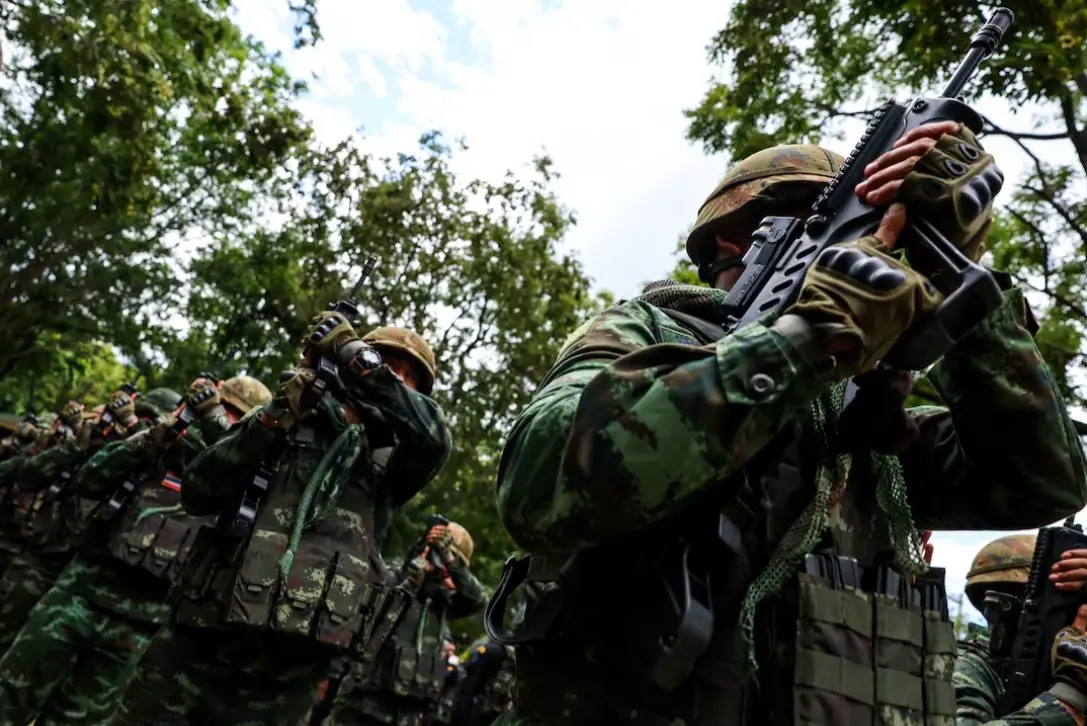
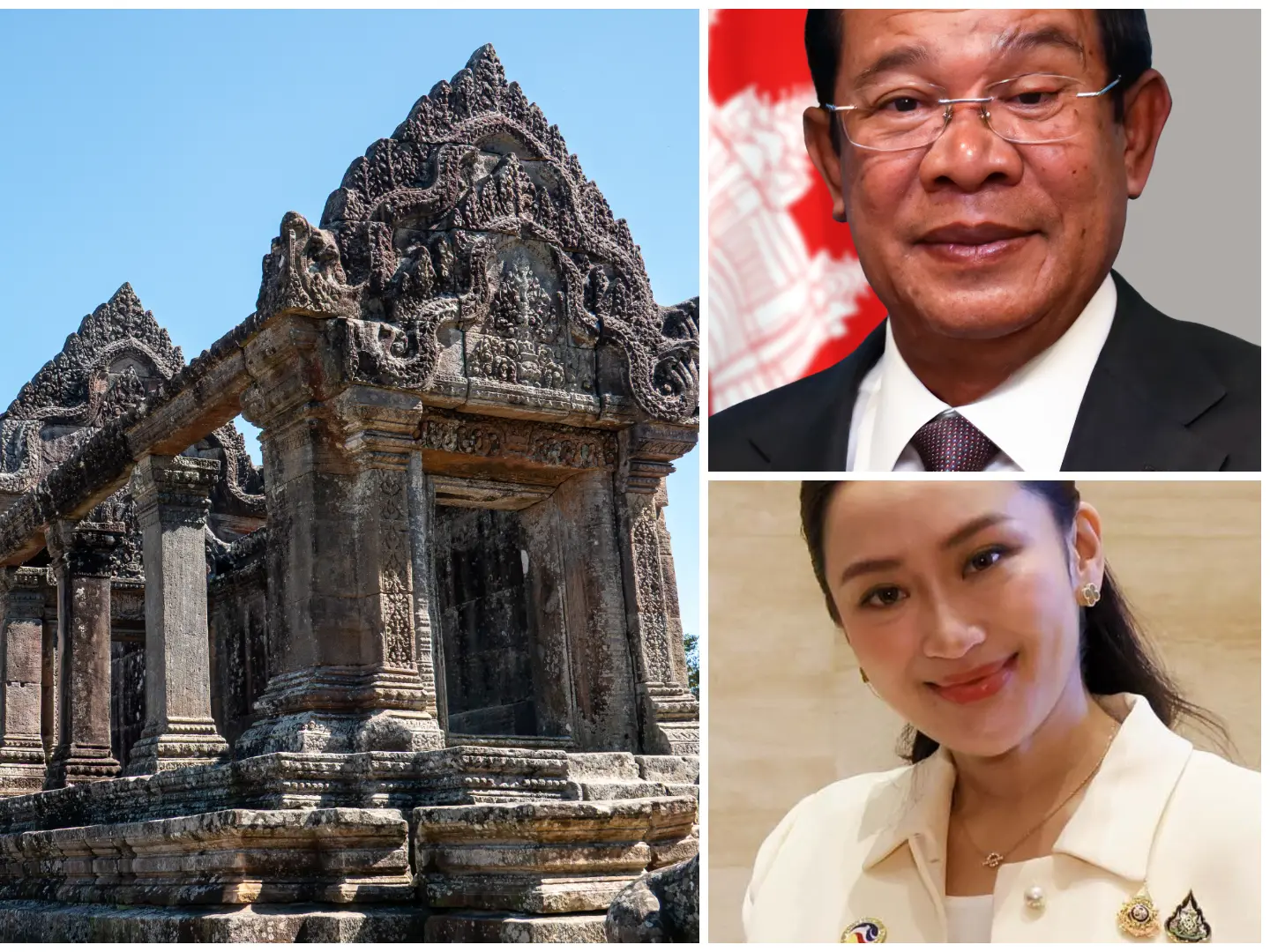
The current Thailand-Cambodia border clashes result from decades of disputes , primarily around a centuries-old temple, as well as the rousing of nationalist passions in both the Southeast Asian neighbours. It is a leftover of the colonial histories of the two nations, with claims over maps and cultural heritage complicated by contemporary political dynamics. Here is a timeline of the rivalry, which even led to the suspension of a prime minister, besides casualties on both sides.
Thailand, Cambodia clash: 11th-century Preah Vihear Temple and other disputed areas
The current tensions can be traced back to the 19th and 20th centuries, when the Khmer Empire in Cambodia declined and Siam, or modern-day Thailand, rose in the wake of French colonial era. The Preah Vihear Temple in the Dângrêk Mountains was built during the Khmer Empire of 9th to 12th centuries, which ruled much of mainland Southeast Asia, including parts of modern Thailand. The temple is a Hindu-Buddhist site, which both nations claim as the site of their culture. Cambodians view it as part of their Khmer heritage, while Thais associate it with their historical control over the region.

With its decline in the 19th century, the Khmer Empire came under pressure from Siam and Vietnam. Cambodia became a French protectorate in 1863 while Siam remained independent. Their borders were defined by the 1904 and 1907 Franco-Siamese treaties. A map was drawn by the French cartographers in 1907, putting Preah Vihear in Cambodia based on the natural watershed of the Dângrêk Mountains. The exact demarcation was left to a mixed commission, which never fully resolved ambiguities, leading to overlapping territorial claims in the subsequent years.
Thailand - Cambodia tensions flared up after the French left
Cambodia gained independence from France in 1953, but disputes with Siam over the temple and surrounding areas persisted. Thailand, which had controlled the temple during World War II with Japanese support, maintained that the 1907 map was not legally binding, while Cambodia said the temple was an integral part of its sovereignty and heritage.
International Court of Justice (ICJ) ruling on Preah Vihear temple didn't solve Thailand - Cambodia disputes
In 1959, Cambodia took the temple dispute to the International Court of Justice, which ruled in 1962 that Preah Vihear was on Cambodian territory. ICJ did not, however, address the claims on the 4.6 square kilometre territory around the temple, thus leaving it open to further interpretations and disputes. Though Thailand grudgingly accepted the ruling, many Thai nationalists resented it.
Thai- Cambodia disputes worsened by UNSESCO move
Nationalist politics on both countries contributed to the temple remaining a key issue in bilateral relations. Thai royalist-nationalist groups known as the ‘Yellow Shirts’ and the military in Thailand used the issue to criticise elected governments. Cambodian leader Hun Sen leveraged the temple dispute to assert Cambodia's sovereignty and rouse nationalist sentiment.
Tensions flared again in 2008, when Cambodia succeeded in getting UNESCO World Heritage status for Preah Vihear. Thais protested, and its military was deployed in the areas.
Border clashes since 2008 over temple
Trending Stories
)
Pakistan puts Pak Rs 70 lakh bounty on UN terrorist Masood Azhar; move draws skepticism in Delhi
)
Trump loses Supreme Court battle over mail ballots ahead of US midterms: What happened?
&im=FitAndFill=(700,400))
Emmys 2026 Red Carpet: Zendaya, Nicole Kidman and Julia Garner lead the glamour peak
)
Ecstasy tablets are rage in 'drug haven' Libya | Gravitas
)
UK man admits drugging, raping wife for 20 years in shocking abuse case
)
China discovers vast gold and silver 'mine' in the Pacific with unheard-of deposits
)
Iran, India agree to deepen humanitarian and political ties, President Pezeshkian says
)
Baba Vanga's first prophecy for 2027 is out, and straight out of science fiction
)
Russia proposes to build 360 kmph Ivolga FG trains in India: What happened on sidelines of BRICS
)
Delhi govt to roll out ₹13,820 crore development projects under Seva Sankalp Abhiyan: CM Rekha Gupta
)
Plane carrying prominent figure crashes at Libya’s Misrata airport: Report
)
Extreme warming in Indian Ocean added 695 billion tons of ice to Antarctica ice sheet
)
Trump downplays China's alleged 'help' to Iran in strike on Jordan base | Gravitas
)
'Huge destructive power': North Korea calls its latest missile launches 'live-fire drill' even as US dismisses 'immediate threat'
)
What is Hyrox, in news for athlete who soiled herself, but kept running and using common equipment?
)
‘US ensuring global energy supplies’: Trump demands reimbursement for securing Strait of Hormuz
)
Historic first: ‘Ganga aarti’ performed on River Thames in London
)
Photographs, LeT labels vanish from two 2008 Mumbai attack entries in Pakistan’s most wanted list
)
Sent home midway from UK tour, Pakistan's Salman Agha hits 300* in domestic return
)
Did India risk its US trade deal despite softer stance at BRICS?
)
‘Want to reset ties with India, have engagement based on mutual interests,’ says Bangladesh minister
&im=FitAndFill=(700,400))
Why Chinese PL-15 air-to-air missiles use dual-pulse motors compared to European interceptors
)
Emmy Awards 2026: Widow's Bay and The Pitt win in lead categories- check out the complete list of winners
)
Nigerian Navy seizes 10,000 litres of suspected illegal fuel in Rivers State crackdown
)
China thinned Himalayan troop presence in 2025, India defence report says; terms border situation 'stable'
)
Saudi Arabia discovers 110 million tonnes of Uranium-rich ore in Madinah region
)
3 Italians fly from Delhi to Munich without immigration clearance; Air India gets notice on major security lapse
&im=FitAndFill=(700,400))
New OTT releases this week (September 14-20, 2026): Lust Stories 3, Waiting Hai, Irumudi- 5 new titles coming on Netflix, Prime Video and more
)
800 million years old - Scientists discover 'fingerprints' of supercontinent Gondwana in ancient rocks
)
‘Let’s go’: Newly declassified videos show dramatic rescue of US Air Force officers downed in Iran
)
Who is Kalyan Bainsla, accused in the Gurugram hit-and-run case involving woman biker?
)
Turkish Airlines plane flies through a storm three times, triggering severe turbulence
&im=FitAndFill=(700,400))
Why European Meteor missiles use ramjet engines compared to standard US solid rockets
)
Emmys 2026: Matthew Rhys wins Best Actor twice, sets historic 78-year record
)
Dodgers beat Reds for playoff berth in bid for third consecutive World Series
)
'Now Trump is copying us': Shivakumar links US $5,000 plan to Congress guarantees
)
Video of Pakistani lawmaker struggling to read English tribute to Jinnah goes viral - WATCH
The UNESCO listing was seen as backing Cambodia’s claim on the territory. Clashes took place in nearby areas like Ta Moan and Ta Krabey.
In October 2008, Cambodian and Thai soldiers clashed near the temple, resulting in two Cambodian deaths and wounding of one Thai soldier, with both sides accusing each other of provocation.
Such clashes took place several times in subsequent years: In April 2009, fighting near Preah Vihear left three Thai and two Cambodian soldiers dead, with five Thai soldiers wounded. Next month, Thai artillery fire near Preah Vihear led to a blaze, causing the displacement of 312 Cambodian families. The two sides accused each other of laying landmines in the area. In November, Thailand downgraded diplomatic relations after Cambodia appointed former Thai Prime Minister Thaksin Shinawatra as an economic advisor.
In 2010, Cambodian and Thai forces exchanged fire in the border area. A month later, Cambodia filed a complaint with Google Maps for depicting the Preah Vihear border based on the natural watershed rather than the 1907 map.
Intense clashes took place in 2011 near Preah Vihear and Phu Makua Hill, resulting in 10 deaths, eight of which were on the Cambodian side.
Cambodia evacuated civilians and called for a buffer zone monitored by the United Nations. Cambodian leader Hun Sen declared the clashes a “real war” and insisted on third-party mediation, while Thailand insisted on bilateral talks.
Indonesian observers were sent to monitor a ceasefire after mediation by the regional grouping ASEAN
ICJ again sides with Cambodia in 2013
Upon Cambodia's fresh complaint, the ICJ in 2013 reaffirmed its 1962 verdict, ruling that the temple and its immediate vicinity are in Cambodian territory.
The surrounding 4.6 sq km territory continues to be disputed. Thailand was ordered to withdraw troops from the temple area.
Events of 2025 leading to the recent escalation between Cambodia and Thailand
This year saw the revival of the temple dispute, particularly since February, when Cambodian troops and families entered Ta Moan Thom temple, singing the national anthem. This led to a brief confrontation with Thai troops.
In May, a clash occurred in the Emerald Triangle (Chong Bok/Mom Bei) near Preah Vihear, killing one Cambodian soldier. Cambodia accused Thai forces of opening fire first. Thailand claimed that the Cambodian troops had violated a 2000 Memorandum of Understanding by digging trenches.
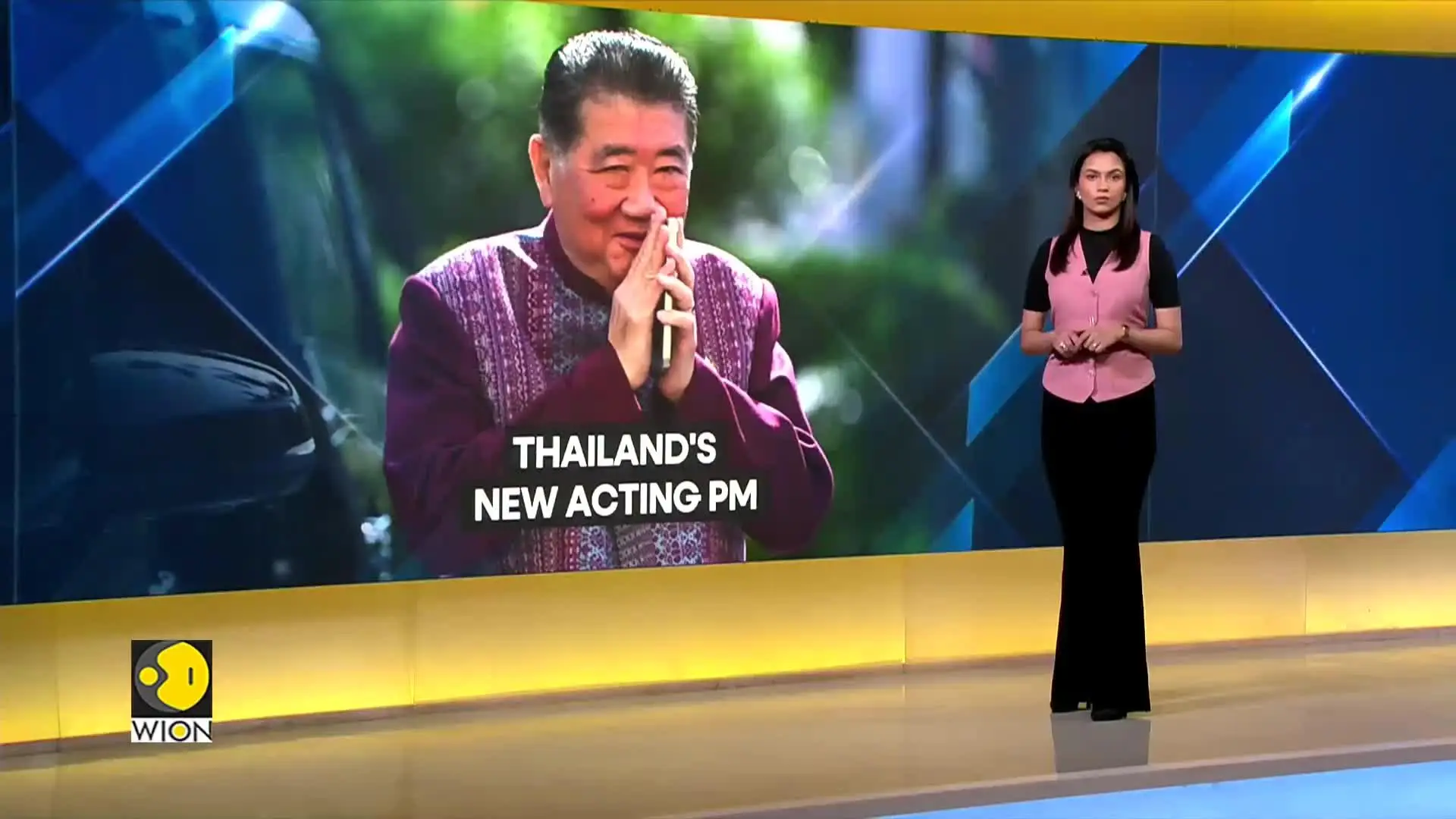
The two sides agreed to return to their prior positions after talks. Things escalated further on June 15 when Thai Prime Minister Paetongtarn Shinawatra was suspended after her phone call with Cambodian leader Hun Sen, discussing de-escalation, was leaked.