Youngest delegate? Sweden’s minister Romina Pourmokhtari brings baby to EU meeting on climate

&imwidth=600&imheight=450&format=webp&quality=medium "Youngest delegate? Sweden’s minister Romina Pourmokhtari brings baby to EU meeting on climate")
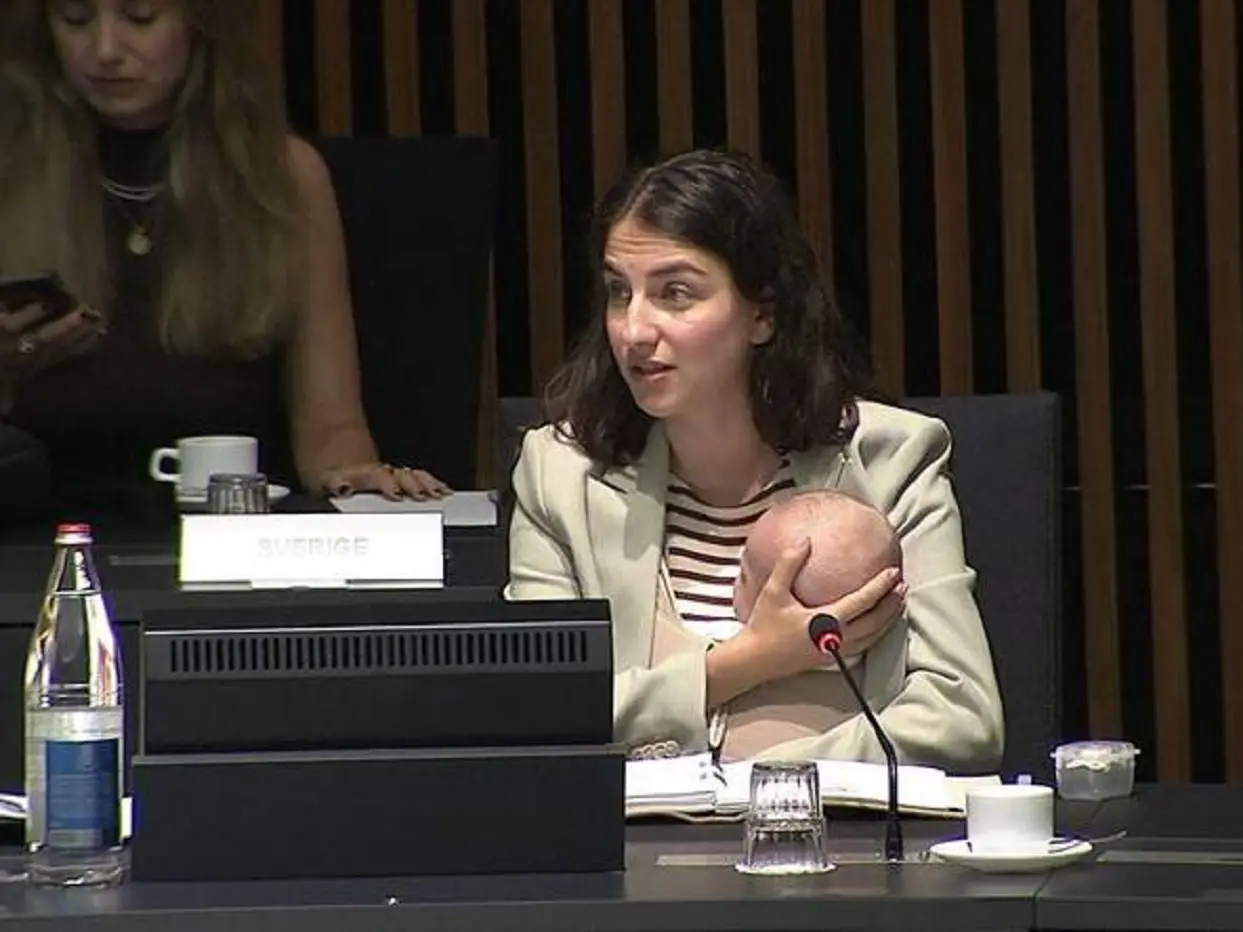
Swedish climate minister Romina Pourmokhtari brought her three-month-old son, Adam, to the EU council meeting. Photograph: (AFP)
Swedish parents get about 16 months of paid leave in total. Out of this leave, 90 days are reserved for each parent individually and cannot be transferred to the other. However, if a parent does not utilise their allotted number of leaves, they are forfeited.
Ministers of the European Union governments gathered for a discussion on climate change policies on Thursday and were surprisingly joined by a young participant at the negotiating table: a three-month-old baby.
Swedish climate minister Romina Pourmokhtari brought her son, Adam, to the EU council meeting in Luxembourg to highlight the benefits of parental leave policies which don’t force women to choose between work and family responsibilities.
“I wanted to showcase being an example of not having to make that choice. Which, of course, also requires having a partner that’s not a dinosaur, someone who’s quite modern and up for it to tag along,” said Pourmokhtari while speaking to the Reuters news agency.
An EU Council official later confirmed that it was the first time in the institution’s history that a baby had joined a meeting of the ministers.
Pourmokhtari, 30, was the youngest government minister in Sweden’s history when she took office in 2022. She has just returned from parental leave, while her husband is on leave until Sweden’s election in September and travelled with her to Luxembourg to care for Adam.
Trending Stories
&imwidth=280&imheight=210&format=webp&quality=medium)
&imwidth=280&imheight=210&format=webp&quality=medium)
&imwidth=280&imheight=210&format=webp&quality=medium)
&imwidth=280&imheight=210&format=webp&quality=medium)
&imwidth=280&imheight=210&format=webp&quality=medium)
&imwidth=280&imheight=210&format=webp&quality=medium)
&imwidth=280&imheight=210&format=webp&quality=medium)
&imwidth=280&imheight=210&format=webp&quality=medium)
&imwidth=280&imheight=210&format=webp&quality=medium)
&imwidth=280&imheight=210&format=webp&quality=medium)
&imwidth=280&imheight=210&format=webp&quality=medium)
&imwidth=280&imheight=210&format=webp&quality=medium)
&imwidth=280&imheight=210&format=webp&quality=medium)
&imwidth=280&imheight=210&format=webp&quality=medium)
&imwidth=280&imheight=210&format=webp&quality=medium)
&imwidth=280&imheight=210&format=webp&quality=medium)
&imwidth=280&imheight=210&format=webp&quality=medium)
&imwidth=280&imheight=210&format=webp&quality=medium)
&imwidth=280&imheight=210&format=webp&quality=medium)
&imwidth=280&imheight=210&format=webp&quality=medium)
&imwidth=280&imheight=210&format=webp&quality=medium)
&imwidth=280&imheight=210&format=webp&quality=medium)
&im=FitAndFill=(700,400)&imwidth=280&imheight=210&format=webp&quality=medium)
&imwidth=280&imheight=210&format=webp&quality=medium)
&imwidth=280&imheight=210&format=webp&quality=medium)
&imwidth=280&imheight=210&format=webp&quality=medium)
&imwidth=280&imheight=210&format=webp&quality=medium)
&imwidth=280&imheight=210&format=webp&quality=medium)
&imwidth=280&imheight=210&format=webp&quality=medium)
&imwidth=280&imheight=210&format=webp&quality=medium)
&imwidth=280&imheight=210&format=webp&quality=medium)
&imwidth=280&imheight=210&format=webp&quality=medium)
Sweden has one of the world’s most generous parental leave policies, funded by the country’s high taxes, which has become a political flashpoint in the election campaign.
Swedish parents get about 16 months of paid leave in total. Out of this leave, 90 days are reserved for each parent individually and cannot be transferred to the other. However, if a parent does not utilise their allotted number of leaves, they are forfeited.
These non-transferable periods, popularly known as “dad months”, were introduced to encourage fathers to spend more time with their little ones.
Pourmokhtari credits this policy and the support from her team with making it “much less controversial” for her husband to take care of Adam while she works.
She said supportive policies were not just a question of spending taxes on longer leave periods and urged governments to also consider more flexible rules on parents sharing leave and affordable childcare.
“It’s creating a lot of value that shouldn’t be underestimated. Value that might not always be economic, but in the end, might also be economic, in not having burnt-out workers,” she said, alluding to the burden on many parents struggling to juggle work and family.
Krzysztof Bolesta, Poland’s deputy climate minister, said it had been no trouble having a baby in a political meeting.
“I think it’s great. It’s not a handicap, it’s just a part of life,” he said.