Strait of Hormuz crisis: Japan's US-made constitution bars it from sending warship to help Trump. All about 1947 'pacifist constitution'

&imwidth=600&imheight=450&format=webp&quality=medium "Strait of Hormuz crisis: Japan's US-made constitution bars it from sending warship to help Trump. All about 1947 'pacifist constitution'")
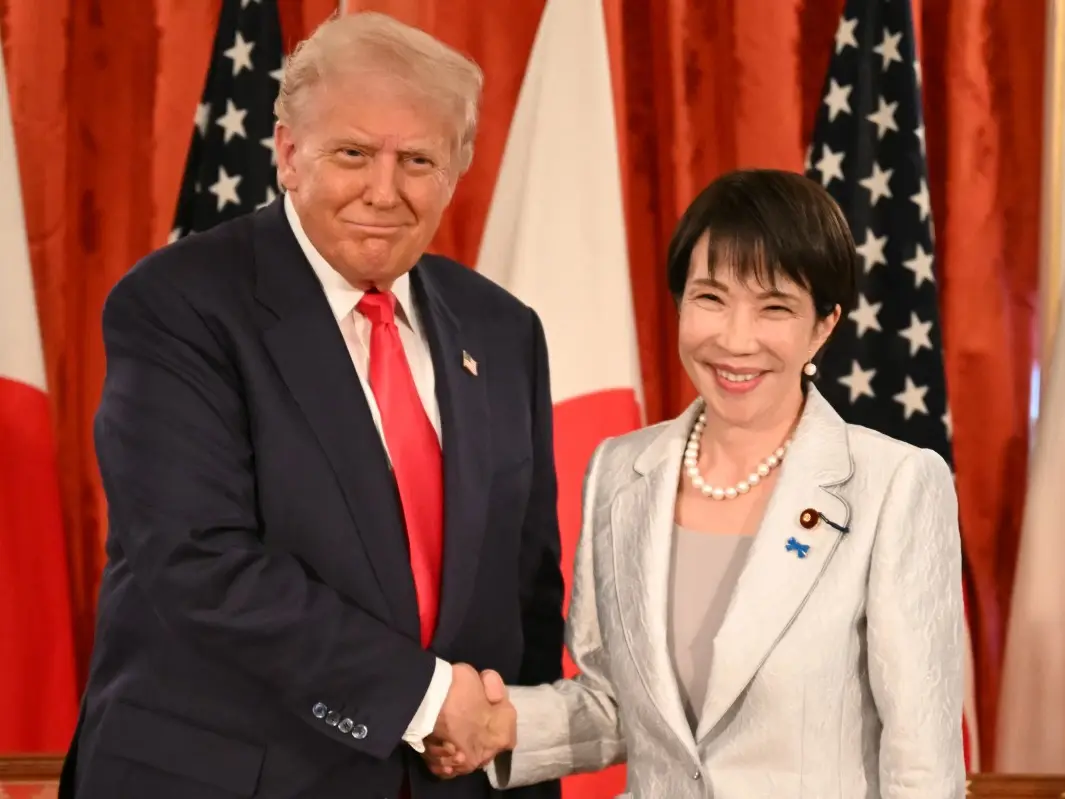
Japan's Prime Minister Sanae Takaichi (R) and US President Donald Trump attend a signing ceremony after a Japan-US Summit at the Akasaka State Guest House in Tokyo on October 28, 2025. Photograph: (AFP)
Japan faces a dilemma balancing US alliance pressure with Article 9 constraints. To secure the Strait of Hormuz, Prime Minister Takaichi may offer logistical support or minesweeping over direct combat.
US President Donald Trump recently called for naval participation from its allies, including Japan, in the Strait of Hormuz to ensure maritime security. While Japan relies heavily on the US security umbrella, particularly regarding regional tensions with China, North Korea, and Russia, acting on the American president's request has significant legal and diplomatic challenges.
The Japanese Prime Minister Sanae Takaichi’s upcoming visit to Washington could be seen as pressure to demonstrate "enthusiasm" for the alliance. But the Japanese government faces a high legal threshold for deploying the Self-Defence Forces (SDF) into potential conflict zones. Defence Minister Shinjiro Koizumi has remained cautious, noting that any such mission would require strict parliamentary approval and a clear "self-defence" justification.
Also read: UAE's Fujairah operations suspended after drone attack - why it's a huge deal for global oil market
Beyond legal hurdles, Japan maintains a long-standing diplomatic relationship with Iran, which it seeks to preserve. To support the US without entering direct combat, Japan may consider alternative contributions, such as:
About Japan's 1947 'Pacifist' constitution, written by US
The 1947 "Pacifist" constitution, enacted during the post-World War II Allied occupation and largely drafted by American officials, is the cornerstone of the nation's post-war identity, specifically in the Constitution of Japan, Article 9. It says that the Japanese people "forever renounce war as a sovereign right of the nation and the threat or use of force as means of settling international disputes."
Trending Stories
&imwidth=280&imheight=210&format=webp&quality=medium)
&imwidth=280&imheight=210&format=webp&quality=medium)
&imwidth=280&imheight=210&format=webp&quality=medium)
&imwidth=280&imheight=210&format=webp&quality=medium)
&imwidth=280&imheight=210&format=webp&quality=medium)
&imwidth=280&imheight=210&format=webp&quality=medium)
&imwidth=280&imheight=210&format=webp&quality=medium)
&imwidth=280&imheight=210&format=webp&quality=medium)
&imwidth=280&imheight=210&format=webp&quality=medium)
&imwidth=280&imheight=210&format=webp&quality=medium)
&imwidth=280&imheight=210&format=webp&quality=medium)
&imwidth=280&imheight=210&format=webp&quality=medium)
&imwidth=280&imheight=210&format=webp&quality=medium)
&imwidth=280&imheight=210&format=webp&quality=medium)
&imwidth=280&imheight=210&format=webp&quality=medium)
&imwidth=280&imheight=210&format=webp&quality=medium)
&imwidth=280&imheight=210&format=webp&quality=medium)
&imwidth=280&imheight=210&format=webp&quality=medium)
&imwidth=280&imheight=210&format=webp&quality=medium)
&imwidth=280&imheight=210&format=webp&quality=medium)
&imwidth=280&imheight=210&format=webp&quality=medium)
&imwidth=280&imheight=210&format=webp&quality=medium)
&imwidth=280&imheight=210&format=webp&quality=medium)
&imwidth=280&imheight=210&format=webp&quality=medium)
&imwidth=280&imheight=210&format=webp&quality=medium)
&imwidth=280&imheight=210&format=webp&quality=medium)
&im=FitAndFill=(700,400)&imwidth=280&imheight=210&format=webp&quality=medium)
&im=FitAndFill=(700,400)&imwidth=280&imheight=210&format=webp&quality=medium)
&imwidth=280&imheight=210&format=webp&quality=medium)
&imwidth=280&imheight=210&format=webp&quality=medium)
&imwidth=280&imheight=210&format=webp&quality=medium)
&imwidth=280&imheight=210&format=webp&quality=medium)
&imwidth=280&imheight=210&format=webp&quality=medium)
&imwidth=280&imheight=210&format=webp&quality=medium)
To accomplish this, the article further specifies that "land, sea, and air forces, as well as other war potential, will never be maintained."
Over the decades, this has been interpreted not as a total ban on defence, but as a mandate that the military (the Self-Defence Forces) exist only for "minimum necessary" protection. While recent legislative reinterpretations have allowed for "collective self-defence" (aiding an ally under specific conditions), the 1947 framework continues to limit Japan’s ability to engage in overseas military operations that do not directly threaten Japanese sovereignty.
Disclaimer: WION takes utmost care to accurately and responsibly report ongoing conflicts in West Asia involving Israel, Iran, US, Gulf nations and non-state actors like Hezbollah, Hamas, Houthis, Islamic State, and others. Claims and counterclaims, disinformation and misinformation are being made online and offline. Given this context, WION cannot independently verify the authenticity of all statements, social media posts, photos and videos.

