

&imwidth=800&imheight=600&format=webp&quality=medium "Sri Lankan President Dissanayake thanks PM Modi as India sends 38,000 MT emergency fuel")
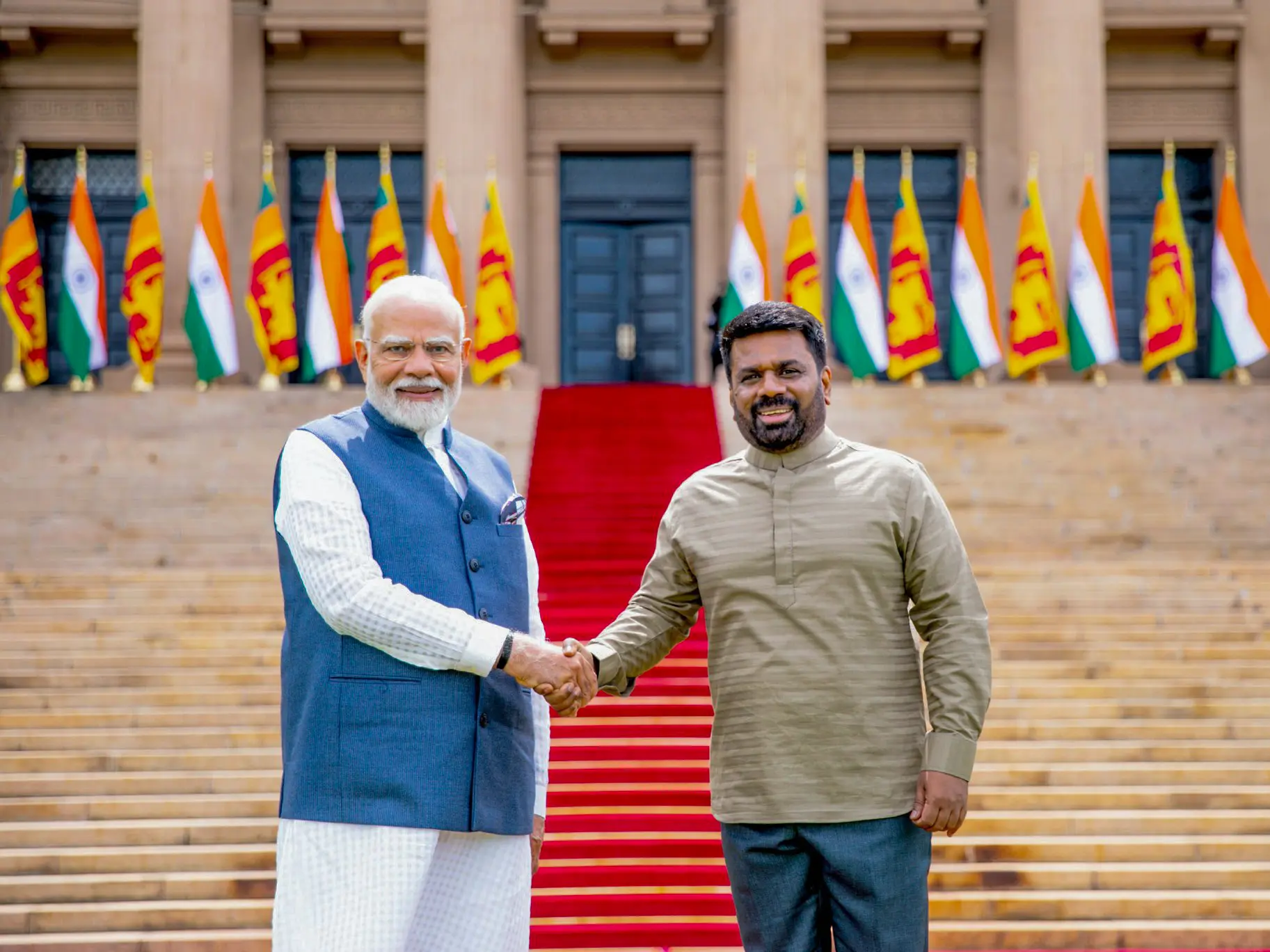
Sri Lankan President Anura Kumara Dissanayake on Sunday (March 29) thanked Prime Minister Narendra Modi for sending an emergency fuel shipment to ease supply disruptions in the island nation triggered by the West Asia conflict.
A consignment of 38,000 metric tonnes (MT) of fuel, including 20,000 MT of diesel and 18,000 MT of petrol, reached Colombo on Saturday. The shipment arrived as part of emergency support through the local operations of Indian Oil Corporation via Lanka IOC.
“Spoke with PM @narendramodi a few days ago about the fuel supply disruptions Sri Lanka is facing due to the Middle East conflict. Grateful for India’s swift support. 38,000 MT of fuel arrived in Colombo yesterday,” Dissanayake posted on X.
The Sri Lankan President also thanked External Affairs Minister S. Jaishankar for his support. “My thanks also to EAM @DrSJaishankar for his close coordination”, he said.
Sri Lanka’s Member of Parliament Namal Rajapaksa hailed India’s ‘Neighbourhood First policy’ and called for the country’s government to consider a model similar to India’s recent fuel tax adjustment.
"Prime Minister Modi and the people of India once again uphold the Neighbourhood First policy through the timely shipment of 38,000 tonnes of petroleum to Sri Lanka," Rajapaksa said in a post on X, adding that the nation has consistently stood as Sri Lanka’s first responder in times of crisis, from critical supplies to economic assistance, which is a true reflection of its Neighbourhood First policy.
Citing India’s recent change in fuel excise policy, he called upon the Sri Lankan government to consider a model similar to India’s recent fuel tax adjustment. "India reduced excise duty not to lower prices immediately, but to stabilise the market and prevent further increases during global oil price shocks," he noted.
"As Sri Lanka moves forward, the government must also strengthen its own economic policies. While fiscal discipline is important, reducing excessive tax burdens, as seen in India’s more growth-oriented approach, could help stimulate investment, ease pressure on citizens, and support long-term recovery," the MP said.
Sri Lanka continues to face a deepening energy crisis as the ongoing West Asia conflict disrupts global fuel supplies. The government has rationed fuel and introduced a four-day working week in the state sector as a measure to conserve energy.
Most state institutions, schools and universities have shifted to reduced schedules, while transport services have seen lower activity. Banks are operating on shorter hours, and several private firms have adopted work-from-home arrangements to curb energy use.
Fuel prices in the country have already risen sharply after strikes involving the United States and Israel on Iran escalated tensions, triggering retaliatory attacks that have disrupted global energy supplies. The conflict intensified in the second week of March as attacks targeted energy assets, including oil tankers, refineries and LNG facilities.
Trending Stories
&imwidth=180&imheight=135&format=webp&quality=medium)
Trump says he 'may' meet North Korean leader Kim Jong Un during upcoming Asia trip
&im=FitAndFill=(700,400)&imwidth=180&imheight=135&format=webp&quality=medium)
Navratri 2026: 9 days, 9 forms of Goddess Durga and 9 colours- Check the complete list
&imwidth=180&imheight=135&format=webp&quality=medium)
India's Ajit Doval, Iran's Mohsen Rezaei hold talks amid escalating West Asia tensions, discuss 'issues of mutual interest'
&imwidth=180&imheight=135&format=webp&quality=medium)
Opposition’s 10 demands in Supreme Court petition range from stay on SIR to audit of voter rolls
&imwidth=180&imheight=135&format=webp&quality=medium)
Anti-SIR protest in Mumbai: Protestors wear black masks & ribbons in Mumbai
&imwidth=180&imheight=135&format=webp&quality=medium)
'Almost certainly': UK Prime Minister Andy Burnham says Iran's IRGC behind RAF Fairford threat
&im=FitAndFill=(700,400)&imwidth=180&imheight=135&format=webp&quality=medium)
New OTT releases this week (October 12-18, 2026): Sacrifice, Koffee with Karan S9, Roadies Rebirth- 6 titles coming on Netflix, JioHotstar and more
&imwidth=180&imheight=135&format=webp&quality=medium)
Girl 'dead' for 8 hours wakes up at her own funeral, dad insists she wasn't breathing
&imwidth=180&imheight=135&format=webp&quality=medium)
Pakistan's government blames PTI for rise of terrorism in Khyber Pakhtunkhwa
&imwidth=180&imheight=135&format=webp&quality=medium)
Sidhu Moose Wala’s younger brother wins hearts by recreating late singer’s signature move at Toronto Hologram Show
&imwidth=180&imheight=135&format=webp&quality=medium)
'I will not be silenced': Ilhan Omar alleges political intimidation after federal officers search her Washington home
&im=FitAndFill=(700,400)&imwidth=180&imheight=135&format=webp&quality=medium)
How does a robot decide what to do next?
&imwidth=180&imheight=135&format=webp&quality=medium)
Rahul Gandhi's plea against Election Commission delayed as Supreme Court registry flags 14 ‘defects’
&imwidth=180&imheight=135&format=webp&quality=medium)
'Turn approver, resign, we'll forgive you': Rahul Gandhi claims receiving messages from CEC Gyanesh Kumar
&imwidth=180&imheight=135&format=webp&quality=medium)
'Ouch!!! That must hurt': Kangana Ranaut hails Kamal Haasan's sharp reply to Elon Musk over Starlink row
&imwidth=180&imheight=135&format=webp&quality=medium)
UK school ditches technology, shifts from screen to pen and paper for learning
&imwidth=180&imheight=135&format=webp&quality=medium)
Houthis warns US of 'painful response' if Washington joins Saudi war in Yemen as airlines suspend flights to Saudi Arabia
&imwidth=180&imheight=135&format=webp&quality=medium)
BCCI rejects venue shift reports, India vs Sri Lanka 1st ODI to remain in Delhi
&imwidth=180&imheight=135&format=webp&quality=medium)
Korean peninsula tensions escalate as North Korea launches multiple ballistic missiles, PACOM says 'no threat to US personnel'
&imwidth=180&imheight=135&format=webp&quality=medium)
Elon Musk pumps $276 million into Republican campaigns ahead of US midterm elections
&imwidth=180&imheight=135&format=webp&quality=medium)
Congress demands action against chief election commissioner
&imwidth=180&imheight=135&format=webp&quality=medium)
Trump weighs firing Kimberly Guilfoyle as US ambassador to Greece amid misconduct allegations: Report
&imwidth=180&imheight=135&format=webp&quality=medium)
'Absolutely disgusting': Australia slams US plan to livestream Nidal Hasan's execution; Mike Johnson raises concerns, warns of terrorist propaganda
&imwidth=180&imheight=135&format=webp&quality=medium)
UK PM Andy Birnham renews claims of Russian meddling in Brexit vote
&imwidth=180&imheight=135&format=webp&quality=medium)
China’s gold rush puts billion in focus
&imwidth=180&imheight=135&format=webp&quality=medium)
Delhi protest: CJI Surya Kant declines to meet India Bloc leaders
&imwidth=180&imheight=135&format=webp&quality=medium)
'I am thoroughly unamused': Judge slams Trump administration after 400 trees cut at Washington golf course
&imwidth=180&imheight=135&format=webp&quality=medium)
Robotic surgery, advanced treatment: What is coming to this small Gujarat town?
&imwidth=180&imheight=135&format=webp&quality=medium)
‘This is just the start’: Maaya Rajeshwaran on historic ITF title, confidence boost and future goals
&imwidth=180&imheight=135&format=webp&quality=medium)
1,500 drones illuminate Mumbai sky as Cordelia Cruises unveils second ship, Cordelia Sky
