South Africa Elections: Corruption, jobs top issues as Cyril Ramaphosa's ANC faces tough battle

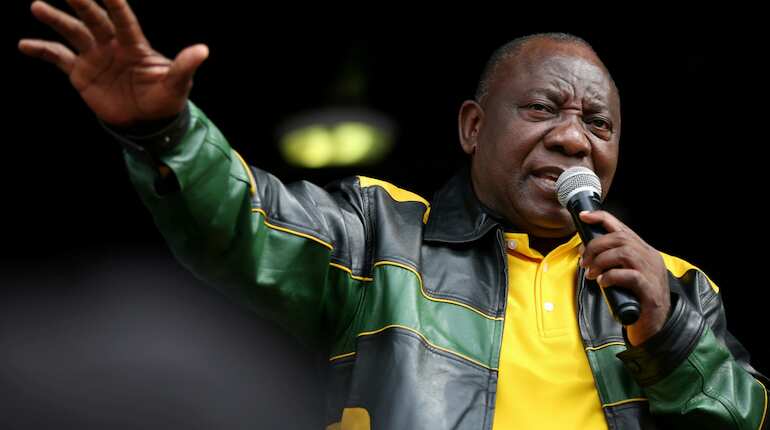
Cyril Ramaphosa
South Africa goes to polls this week in what will be the sixth elections in the country since the end of apartheid in 1994. The elections, due on May 8 is expected to be a referendum on the ruling African National Congress (ANC) that has been in power since 1994 but now faces infighting and division.
South African President Cyril Ramaphosa who took over from Jacob Zuma last year is facing a tough battle. Corruption, jobs remain a key issue for South Africans in major cities like Pretoria, Johannesburg and Durban.
At the Univesity of Pretoria, WION spoke to a few students, who were divided if Cyril will make a comeback.

One student said, "I will say he has good chances of winning. The problem is he has promised us as South Africans that he will tackle corruption in ANC. Which, hasn't been done, or it has not been done in a way that the general public can notice.''
Another female student retorted, "But then Ramaphosa promised things and he delivered. Example, the rand (African currency) has not been fluctuating as much and compared to the dollar it has been stronger. Our foreign relations have grown in such a way to get investors."
Corruption remains a huge issue, especially under former president Zuma, who was mired in corruption allegations. Other contenders in the elections are Mmusi Maimane's Democratic Alliance (South Africa) and the far-left political party Economic Freedom Fighters EFF which can disturb the calculus.
&im=FitAndFill=(700,400)&imwidth=180&imheight=135&format=webp&quality=medium)
Navratri 2026: 9 days, 9 forms of Goddess Durga and 9 colours- Check the complete list
&imwidth=180&imheight=135&format=webp&quality=medium)
Russian woman and Bihar boy's love story goes viral after she reaches India to marry him
&imwidth=180&imheight=135&format=webp&quality=medium)
Arijit Singh 9-city India stadium tour to start from January: Check venue and ticket prices
&imwidth=180&imheight=135&format=webp&quality=medium)
F1 set to return to Africa for first time since 1993
&imwidth=180&imheight=135&format=webp&quality=medium)
'Don't ever mess with nature!': Trump’s tiger attack post triggers social media backlash as victim's family issues heartbreaking tribute
&imwidth=180&imheight=135&format=webp&quality=medium)
US judge blocks Trump administration sanctions on human rights groups supporting Gaza war crimes investigation
&imwidth=180&imheight=135&format=webp&quality=medium)
Washington calls for 'de-escalation' as Ethiopia-Eritrea tensions fuel war fears
&im=FitAndFill=(700,400)&imwidth=180&imheight=135&format=webp&quality=medium)
Which jobs are safest from humanoid robots?
&imwidth=180&imheight=135&format=webp&quality=medium)
US midterms: Trump rallies behind Husted as Brown mounts challenge in crucial Ohio race
&imwidth=180&imheight=135&format=webp&quality=medium)
US police foil alleged mass shooting plot targeting Illinois Hindu temple during Navratri; 19-year-old’s manifesto called Indians ‘subhumans’
&imwidth=180&imheight=135&format=webp&quality=medium)
Group of men cheered and asked 'when’s it my turn?' as woman was assaulted inside bathroom at University of Chicago frat party
&imwidth=180&imheight=135&format=webp&quality=medium)
‘Rise up, young patriots!’: American singer Mary Millben says US donors funding CJP, backs Modi govt
&imwidth=180&imheight=135&format=webp&quality=medium)
Nobel Peace Prize winner Navi Pillay calls on US to 'get back to' being defender of human rights
&imwidth=180&imheight=135&format=webp&quality=medium)
Iran war: Will Trump, Netanyahu escalate conflict ahead of crucial elections? | Race to Power
&imwidth=180&imheight=135&format=webp&quality=medium)
Who is Abu Dhabi royal Mahrah Al Nahyan, found unconscious on London street with toddler after cocaine use
&imwidth=180&imheight=135&format=webp&quality=medium)
Iranian woman, 23, handed death sentence for ‘blasphemy’ in social media post; appeals for help
&imwidth=180&imheight=135&format=webp&quality=medium)
'Turn approver, resign, we'll forgive you': Rahul Gandhi claims receiving messages from CEC Gyanesh Kumar
&imwidth=180&imheight=135&format=webp&quality=medium)
'Leakers should be shot': Trump rages over leak of US military plans to attack Iran, slams media
&imwidth=180&imheight=135&format=webp&quality=medium)
Somaliland celebrates after Trump calls it 'a totally different country', raise hopes of US recognition
&imwidth=180&imheight=135&format=webp&quality=medium)
Bangladesh man killed after mob storms hospital, drags him away over blasphemy allegations
&imwidth=180&imheight=135&format=webp&quality=medium)
‘My president, I mean my husband’: Trump's new press secretary Katie Zacharia's first briefing goes off the rails in 14 minutes
&imwidth=180&imheight=135&format=webp&quality=medium)
Mars is not for man: Human heart is too weak to survive the trip, study shows
&imwidth=180&imheight=135&format=webp&quality=medium)
FBI refutes media report claiming Kash Patel is in Russia for talks, says he is in Virginia
&imwidth=180&imheight=135&format=webp&quality=medium)
'Ouch!!! That must hurt': Kangana Ranaut hails Kamal Haasan's sharp reply to Elon Musk over Starlink row
&imwidth=180&imheight=135&format=webp&quality=medium)
Girl 'dead' for 8 hours wakes up at her own funeral, dad insists she wasn't breathing
&im=FitAndFill=(700,400)&imwidth=180&imheight=135&format=webp&quality=medium)
New OTT releases this week (October 12-18, 2026): Sacrifice, Koffee with Karan S9, Roadies Rebirth- 6 titles coming on Netflix, JioHotstar and more
&imwidth=180&imheight=135&format=webp&quality=medium)
Did the US withhold missile warnings? Ukraine questions Washington's 'bad weather' explanation after Russian strikes kill six, cut power to 600,000
&imwidth=180&imheight=135&format=webp&quality=medium)
US Singer Mary Millben alleges foreign funding for CJP, warns against anti-Modi forces: All you need to know
&imwidth=180&imheight=135&format=webp&quality=medium)
Global energy crisis hits Indian economy
&imwidth=180&imheight=135&format=webp&quality=medium)
Hidden video recording device found on Australian Navy ship amid claims of secret filming
&imwidth=180&imheight=135&format=webp&quality=medium)
'White supremacist' terror plot against Illinois Hindu temple foiled by jammed gun: Who is Alexandros Paporakis?
&imwidth=180&imheight=135&format=webp&quality=medium)
Zelensky feels betrayed by Trump, urges Musk to restore Starlink in Ukraine; Musk responds
&imwidth=180&imheight=135&format=webp&quality=medium)
'Girls are uncomfortable': Salman Khan calls out paparazzi for bad angles, speaks on PR on Koffee With Karan
&imwidth=180&imheight=135&format=webp&quality=medium)
After flydubai co-pilot attack, Air France bans Pakistani, Muslim-majority crew on Israel flights
&imwidth=180&imheight=135&format=webp&quality=medium)
US midterms 2026: Trump under election watch? Democrats deploy 100 observers across nine states
One student said, "EFF is thriving since it cares about a post-apartheid generation."
Nelson Mandela's legacy continues to play a role. This year South Africa marks 25 years since the end of apartheid. Country's founding father Nelson Mandela's legacy continues to play an important part of political life especially the young democracy.
"He played an important role in the history of South Africa, especially since he was on the forefront of the struggle. He oversaw a peaceful transition. It is important to vote as black people since we didn't have that privileged earlier", said a lady in Johannesburg.
Asked about the Rainbow nation, Mandela dreamed off, a young South African working in a hotel said, "We see nothing. It's next to impossible right now, it's hard to see, South Africa will ever be the rainbow nation we hoped for, it is very difficult right now."
Brand South Africa, working under's Minister of Communications and Telecommunications, and who focuses on the country's image, believes democracy is the country's USP in a continent where democracy is a rare commodity.
Judy Smith-Höhn, General Manager, Brand South Africa, told WION in Johannesburg, "25 years is a great achievement...Something, we are proud of. As you know, Democracy is not a smooth ride. It allows everyone's voices to be heard and there will be issues of contention. As long as we allowed it to be discussed, then we are on a good path."
And as with every election anywhere, fake news is a major problem. Especially after the xenophobic riots in Durban in March. The rioters had attributed to President Cyril Ramaphosa's speech at ANC's election manifesto contributing to xenophobic felling. Rampaphosa had called for a tougher line on undocumented foreigners.
"We must remain vigilant. One needs to build digital capacity in future. Digital capacity to monitor. We had cases, suddenly on Friday a news story breaks, and everyone jumps into arms. Then you find the source of it, then you drill it, you say hang on. It is taking more time, more resources", Petrus de Kock; General Manager for Research; Brand South Africa, replied to WION when asked how the country is tackling fake news.
The country is excited about the elections. Airwaves are already celebrating and giving the wall to wall coverage of the election. While Mandela is the towering figure, his legacy of the rainbow country is something that unites South Africa and will continue to do so in generations to come.