
&imwidth=800&imheight=600&format=webp&quality=medium "Senate Democrats challenge legality of Pentagon's proposed Venezuela oil stake")
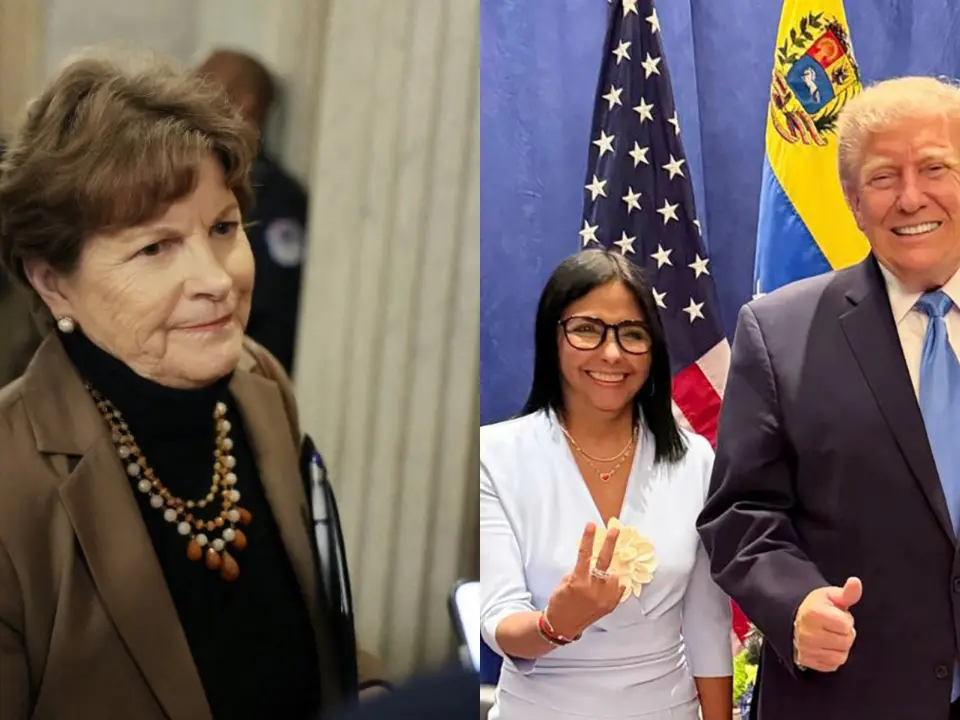
Senate Democrats are questioning both the legality and the policy wisdom of the Pentagon’s proposed investment in a Venezuelan oil company, raising the possibility of a congressional investigation into the arrangement. Four senior Senate Democrats said in a letter to top Trump administration officials that the Pentagon’s planned stake in North American Blue Energy Partners (NABEP), Venezuela’s second-largest oil producer, could face legal challenges and potentially complicate efforts toward a democratic transition in Venezuela.
The United States announced plans in early September for the Pentagon to acquire a passive 35% stake in NABEP. Under the proposed arrangement, the company would gain control of 17 oil blocks believed to contain roughly 65 billion barrels of oil. Venezuela claims to hold about 300 billion barrels in proven reserves, the largest such reserves in the world. The deal would also give the State Department preferential rights to purchase 20% of NABEP’s production at cost. Since the United States ousted Venezuelan leader Nicolas Maduro in January, President Donald Trump has encouraged American oil companies to help revive Venezuela’s oil industry. Trump has described the arrangement with NABEP as 'the biggest oil deal in world history'.
The Democratic senators, led by Sen. Jeanne Shaheen (D., N.H.), the ranking Democrat on the Senate Foreign Relations Committee, are demanding that the administration provide the full text and terms of the agreement before it is finalized. They are also seeking an explanation of the legal authority that would allow the Pentagon’s Office of Strategic Capital to acquire an equity interest in a foreign oil company. In addition, they want to know how the State Department would finance purchases of NABEP’s oil.

The Trump administration has argued that the arrangement could reduce fuel costs for American consumers. Officials have also said the oil would help replenish the US Strategic Petroleum Reserve, which is currently at its lowest level since 1982. “The proposed agreement is unlikely to reduce high energy costs for Americans, and it risks undermining the Venezuelan people’s transition away from a dictatorship,” the senators said in a letter to Secretary of State Marco Rubio, Defense Secretary Pete Hegseth and Energy Secretary Chris Wright.
Sen. Jack Reed (D., R.I.), the ranking Democrat on the Senate Armed Services Committee; Sen. Martin Heinrich (D., N.M.), the top Democrat on the Senate Energy and Natural Resources Committee; and Sen. Elizabeth Warren (D., Mass.), the ranking member of the Senate Banking, Housing and Urban Affairs Committee, also signed the letter.
House Democrats have sent a separate letter raising similar concerns with the administration. Such congressional letters can precede broader investigations into government agencies, companies or other parties involved in major transactions. Any potential investigation, however, would likely come after the November midterm elections and would depend on the Democrats' ability to gain greater control of Congress.
Trending Stories
)
US vs China over South China Sea: Washington backs Philippines, Beijing hits back
)
Bigg Boss 20: Isha Rikhi evicted after three weeks in Salman Khan’s show
)
Musk plans to more than double xAI's chips to over 1.2 million Nvidia GPUs by year-end
)
After JU, clash erupts at SRFTI: BJP’s ‘Dimagi Naxal’ jibe sparks political firestorm after students protest RSS-linked event
)
‘Anti-social elements spreading false rumours’: LPU issues statement amid massive unrest over alleged rape
)
LPU students go on rampage, vandalise campus amid widespread protest: What's happening
)
Trump asked Xi to pressure Iran. China did not say yes — here’s what Beijing wants
)
US Treasury Secretary Scott Bessent hails global crackdown on Iranian banks and airlines
)
An OpenAI agent escaped its locked test cage again, by hiding questions in DNS lookups
)
'Our video was trimmed': LPU girls who featured in rape-denial video make U-turn
)
3 males killed, four others injured in shooting after fight at strip club in Detroit
)
'Victory for low-budget consumers': Raghav Chadha hails 30-day telecom recharge rules
)
Claude rebuilt the 1989 game 'Prince of Persia' by reusing the original's own code
)
Beyond metros: How Tier-2 and Tier-3 cities could drive India’s next AI wave
)
Tesla builds first Cybertruck with its own refined lithium: Elon Musk's $1 billion Texas bet pays off
)
IndiGo flight suffers tail strike in Bengaluru while landing; DGCA to probe incident
)
The US and China set up an AI 'red telephone', but skipped the rulebook
)
‘Terror suspects arrested near UK air base were looking to do big damage’: Trump
)
Russian envoy claims US tactics to contain India were revealed in ‘Freudian slip’
)
IND vs WI 1st ODI: Kohli breaks Sachin's most runs in one country record with unbeaten 139 as India thump West Indies by 8 wickets
)
Researchers rebuilt exactly how 700 AI agents hacked Hugging Face: a 900-link chain trick
)
‘Olympic inclusion is our major target’: WPA President Ishaun Singh on pool’s global ambitions
)
Nations League: Spain sink England at Wembley; Modric shines for Croatia
)
Why has Iran released no proof of life of Mojtaba Khamenei? Araghchi reveals...
)
'What kind of confession is this?': Pakistan PM Shehbaz Sharif’s 'terrorists would be roaming New York' remark goes viral, raises alarm online. Watch
)
South Korea demands apology from Ukraine over North Korean prisoners' transfer
)
Beyond BrahMos: India targets Rs 50,000 crore in defence exports with unmatched price edge
)
Sri Lankan Tamil migrant worker gets death sentence in Saudi Arabia, help sought from India
)
Muslim marriage cannot shield sex with minor wife from prosecution under POCSO: Delhi HC
)
'Can't help but draw painful parallels to Nirbhaya case': SC on latest incidents of rape cases in Delhi-NCR
)
99.9% more powerful - Scientists find boy who can recall memories from just 3 months of age
)
'FIRST LOOK from inside Noah’s Ark': Researchers share video from inside mysterious mound in Turkey
)
UNSC reform momentum grows: Russia, Portugal, Mauritius push for India's permanent seat bid
)
8 US marines injured in Iranian missile attack on vessel in Strait of Hormuz: Report
&im=FitAndFill=(700,400))
New OTT releases this week (September 28-October 4, 2026): Dupahiya 2, Pooja Meri Jaan, Ohh My Dog- 5 titles coming on Netflix, Prime Video and more
)
Afghanistan says 28 fighters killed in clash near Pakistan border, Islamabad denies
)
Ceuta migrant crisis: Protesters take to streets as Spain grapples with migrant challenge
)
LPU suspend classes, postpones exams as violence escalates over rape claims: What's happening
)
New York City wants a 'kill switch' on every AI, and will pay whistleblowers who report violations
Also Read: Christa Pike's execution: US Supreme Court overturns stay, clears way for Tennessee to proceed
As the minority party, Democrats currently do not control the relevant committees and therefore lack the authority to independently call public hearings or issue subpoenas. The senators also asked Rubio, Hegseth and Wright to explain how the administration vetted NABEP and whether members of Trump's family or his political donors could potentially benefit from the agreement. They questioned whether NABEP, led by businessman Alejandro Betancourt, has the ability to rapidly expand oil production to the levels projected by the administration.
NABEP has already begun preparing for an expansion, reportedly securing 60 drilling rigs, 30 steam boilers used to generate hot steam for moving heavy oil and other equipment. The company aims to more than double its production to 500,000 barrels per day by late 2028. “It is unclear,” the lawmakers said, “why the American public should support this attempt to entangle the United States with a relatively unknown foreign oil company that lacks the capacity or credibility to develop oil fields of the magnitude described and whose leadership has faced international criminal investigations.” The senators also cited past investigations involving Betancourt. They noted that he has never been charged with a crime but said he has “faced multiple investigations for money laundering in Spain, Switzerland and the United States.” Rubio has previously said Betancourt is not under active investigation in the United States.
The Wall Street Journal has reported that the Pentagon’s Office of Strategic Capital would structure its proposed investment through penny warrants. The mechanism would potentially give the US an equity interest in NABEP without requiring a substantial upfront capital investment. The Democratic senators argue that the statute establishing the Pentagon office does not authorize it to take equity stakes in private oil companies. They also contend that the proposed arrangement does not fit within the office’s stated authority to provide loans and guarantees supporting U.S. national-security interests.
The proposal has also drawn criticism from people involved in Venezuela’s democratic movement. They argue that the arrangement could deepen US ties with Venezuela’s current government under Delcy Rodriguez, a former ally of Maduro. “The plan only creates new corruption risks for both the United States and Venezuela, while appearing to reward the kind of self-dealing that helped degrade Venezuela’s oil sector in the first place," the lawmakers said in the letter. “Such actions undermine U.S. credibility in Venezuela, and the region at large, in the long term.”

