Why RBI believes stablecoins fail the ‘singleness, elasticity and integrity’ test of money

&imwidth=600&imheight=450&format=webp&quality=medium "Why RBI believes stablecoins fail the ‘singleness, elasticity and integrity’ test of money")
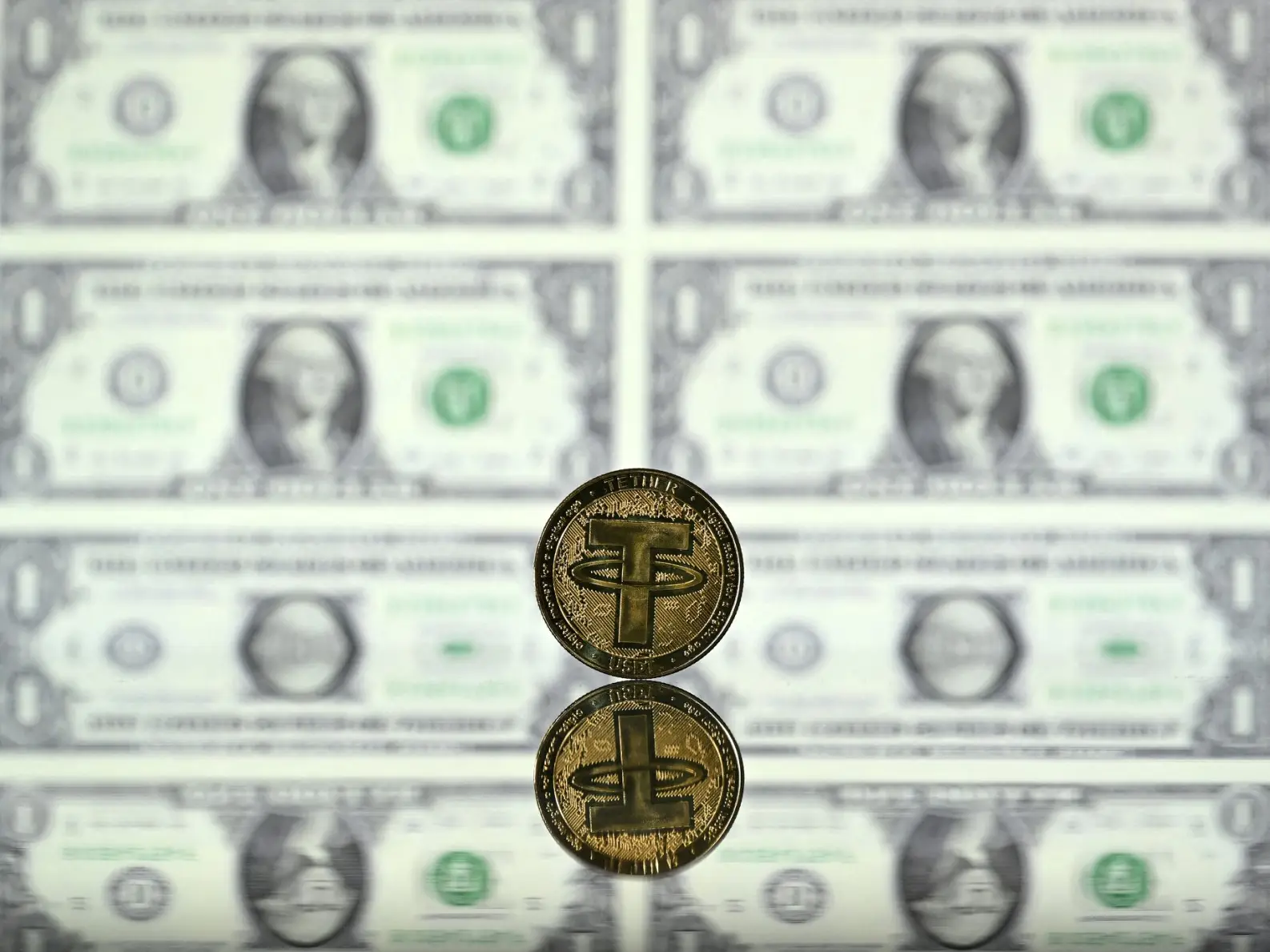
An illustration picture taken in London on May 8, 2022, shows a gold plated souvenir cryptocurrency Tether (USDT) coin arranged beside a screen displaying US dollar notes. Photograph: (AFP)
The RBI has raised concerns over stablecoins, saying they fail the core tests of money and pose risks to financial stability, while backing CBDCs as a safer digital alternative.
The Reserve Bank of India, in its payment systems report released on May 18, said that the stablecoins fail the core test of money- “singlesness, elasticity and integrity" of payments. It took a firm stance against stablecoins, saying that they pose a risk to jurisdictional and financial stability. The central bank argues instead that central bank digital currency (CBDC) is a valid alternative. It offers comparable efficiencies without the vulnerability of private and decentralised issuances.
Trump is a huge backer of stablecoins
This comes as there is a major push for stablecoins globally, US President Donald Trump strongly backs stablecoins as the core pillar of US financial strategy, and poses them as a tool of maintaining and extending the dominance of US dollars. In January 2025, right after taking office, Trump, through an executive order, halted the development of a US Central Bank Digital Currency, saying that it was to restrict the government surveillance mechanism and promote private builders. In July 2025, US President Donald Trump issued the Genius Act to create a clear regulatory framework for dollar-backed payment stablecoin. The issuer will be required to back the stablecoin with 1:1 reserves of cash or short-term treasuries and disclose their reserves monthly. This is primarily done to sell US debts, because compliant users must purchase a large amount of US treasuries to peg their stablecoin, so the government sees the private stablecoin as vital to US debt management.
Why do stablecoins fail the test of money?
The RBI had been sceptical about the unregulated digital assets; there had been previous efforts to ban crypto transactions, which were later overturned by the Supreme Court. The Reserve Bank argues that money should be interchangeable at par value (1:1) across the economy. The stablecoins, despite being backed by the US treasuries, which have high liquidity, are still market securities and subject to volatility. If the market value of the bond drops, the stablecoins lose their $1.00 peg.
Trending Stories
)
)
)
)
)
)
)
)
)
)
)
)
)
)
)
)
)
)
)
)
)
)
)
)
)
)
)
)
)
)
)
)
)
)
&im=FitAndFill=(700,400))
)
)
)
)
'The traditional monetary system, globally, rests on a two-tier banking system, wherein the central bank money-based settlement forms the edifice, while commercial banks can issue money which is beyond their reserves held, as the central bank can always provide liquidity for settlement, preventing a gridlock scenario,' read the payment systems report. The RBI is not isolated in its sentiments; many other central banks mirror it. While countries like China and the European Union are pushing for a digital yuan and a digital euro, a regulatory framework for private digital assets remains a significant challenge. Perhaps a more nuanced approach to regulation is required instead of completely discarding it. A complete disregard for private digital assets could mean missed opportunities for the burgeoning fintech sector of India.