Project KALI: The classified truth about India's electromagnetic 'God of destruction'

&imwidth=600&imheight=450&format=webp&quality=medium "Project KALI: The classified truth about India's electromagnetic 'God of destruction'")
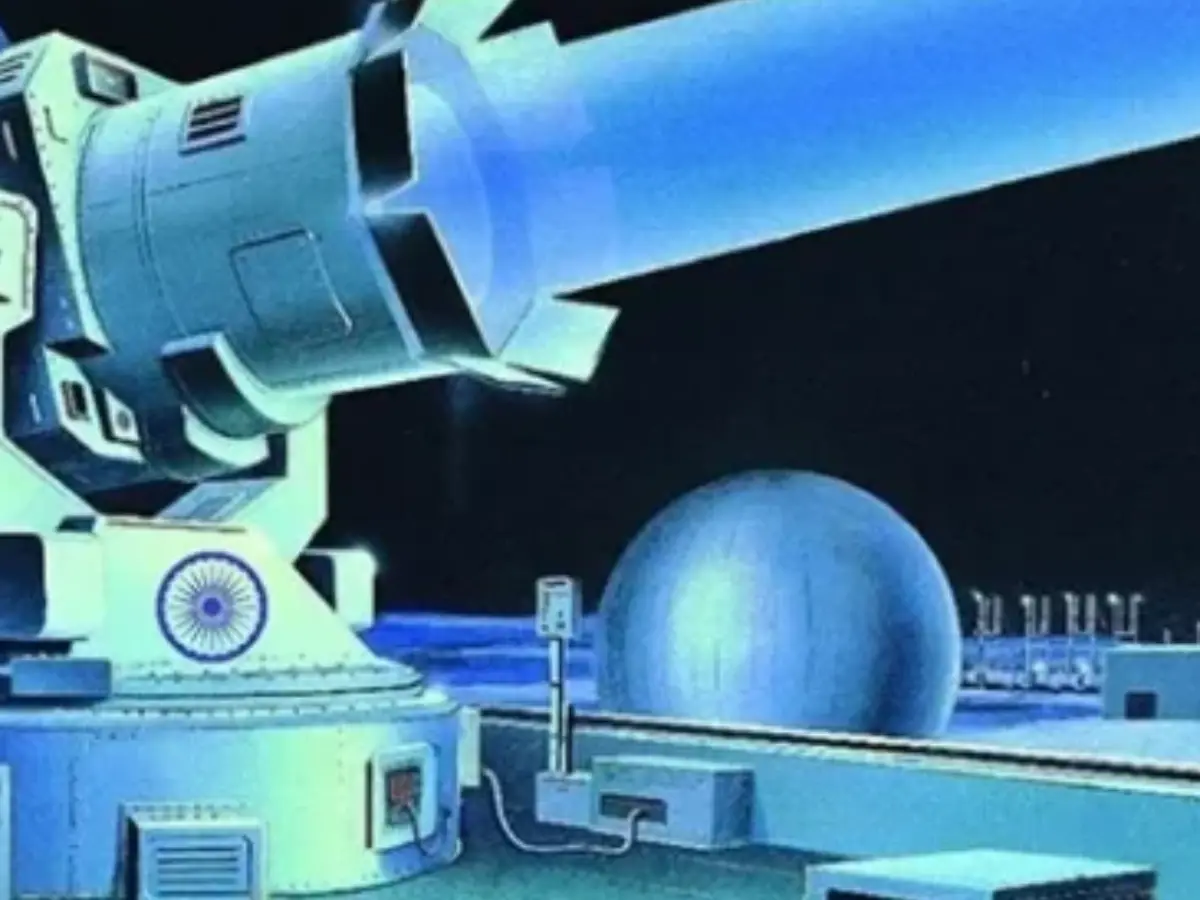
KALI - the Kilo Ampere Linear Injector Photograph: (X)
India’s KALI (Kilo Ampere Linear Injector) is a powerful directed energy weapon developed by DRDO and BARC. Using electron beams converted to microwaves, it disables enemy electronics like drones and missiles. Though not battlefield-ready, KALI marks a major leap in electronic warfare.
In the dusty laboratories of Trombay, Mumbai, and the research corridors of Hyderabad, Indian scientists have been quietly working on what might be one of the most fascinating defence technologies of our time. Meet KALI - the Kilo Ampere Linear Injector - a weapon that doesn't fire bullets or missiles, but harnesses the power of lightning itself to protect our nation.
What exactly is KALI?
Imagine a machine that can generate the power of 40 gigawatts - that's roughly equivalent to the output of 40 large nuclear power plants - and compress all that energy into a beam thinner than a pencil, lasting just a few billionths of a second. That's KALI in simple terms.
Unlike the laser weapons we see in Hollywood movies that burn holes through targets, KALI works differently. It shoots powerful beams of electrons - the same tiny particles that power our mobile phones and TVs. But these aren't ordinary electrons. They travel at nearly the speed of light and carry enormous energy.
When KALI fires, it's like creating a controlled lightning strike. These electron beams get converted into powerful microwaves that can scramble and destroy the electronic circuits inside enemy missiles, drones, or satellites - much like how a power surge can fry your television during a thunderstorm.
The Brain Behind the Brawn
Trending Stories
)
)
)
)
)
)
)
)
)
)
)
)
)
)
)
)
)
)
)
)
)
)
)
)
)
)
)
)
)
)
)
)
)
)
&im=FitAndFill=(700,400))
)
)
)
)
The story of KALI begins in 1985, when Dr. R. Chidambaram, the then-director of our Bhabha Atomic Research Centre (BARC), first conceived this ambitious project. Work began seriously in 1989, with our Defence Research and Development Organisation (DRDO) joining hands with BARC.
What started as an industrial tool has evolved into a potential game-changer for India's defence. The scientists initially wanted to use electron beams for welding and industrial applications. But they soon realised they had stumbled upon something far more significant - a weapon that could disable enemy electronics without causing physical destruction.
How KALI Works: The Magic of Invisible Warfare
Think of KALI as an extremely sophisticated version of the electromagnetic pulse (EMP) that occurs during nuclear explosions. But instead of the chaos of a nuclear blast, KALI creates a precisely controlled electromagnetic storm.
Here's how it works in simple steps:
1. Power Generation: KALI uses special water-filled capacitors (like giant batteries) to store massive amounts of electrical energy.
2. Electron Acceleration: This energy is used to accelerate electrons to incredible speeds - nearly 99% the speed of light.
3. Beam Formation : These high-speed electrons form a concentrated beam that can be directed at targets.
4. Microwave Conversion: The electron beam is then converted into powerful microwaves with frequencies between 3-5 GHz.
5. Electronic Disruption: When these microwaves hit enemy equipment, they overwhelm the delicate electronic circuits, causing them to malfunction or fail completely.
The KALI Family: From KALI-80 to KALI-10000
Like any technology, KALI has evolved through several generations. Our scientists have developed various versions:
- KALI-80 and KALI-200: The early prototypes with limited power
- KALI-1000: A more powerful version for research
- KALI-5000: The breakthrough model commissioned in 2004, producing 40 gigawatts of power
- KALI-10000: The latest version, even more powerful but also much heavier at 26 tons
The KALI-5000, weighing about 10 tons, generates electron pulses lasting 50-100 nanoseconds (that's 50-100 billionths of a second) with a current of 40,000 amperes. To put this in perspective, a typical household electrical connection carries about 10-15 amperes!
Real-World Applications: Beyond Science Fiction
● Missile Defence: When enemy missiles are detected, KALI could theoretically fire its electron beam to disrupt their guidance systems, causing them to miss their targets or crash harmlessly.
● Anti-Drone Operations : With the growing threat of hostile drones, KALI could serve as an electronic shield, disabling unauthorized aerial vehicles without creating debris that could harm civilians below.
● Satellite Protection: KALI is used to test satellites and aircraft by firing powerful microwave bursts, like a fake enemy attack. This helps scientists find weak spots in electronics. Then, they add shields and protections so systems don’t fail. It makes India’s satellites stronger against enemy weapons or solar storms.
● Electronic Warfare: In modern conflicts, disrupting enemy communication networks, radar systems, and command centers can be as effective as destroying them physically.
Testing and Development: Protecting Our Tejas
Testing the LCA Tejas: One of the most significant and publicly acknowledged applications of the KALI system was to test the electronic systems of the Light Combat Aircraft (LCA) Tejas. The aircraft was exposed to powerful electromagnetic pulses generated by a land-based KALI variant to see how its sensitive avionics and control systems would hold up.
"Hardening" and Protection: This testing process is correctly called "hardening." Modern aircraft like the Tejas are fly-by-wire, meaning they rely entirely on electronic signals. An enemy'sHigh-Power Microwave
(HPM) weapon could generate an Electromagnetic Pulse (EMP) designed to fry these circuits. By testing the Tejas with KALI, scientists could identify vulnerabilities and then develop better shielding and more resilient electronics to protect it from such attacks. This ensures the aircraft can survive and operate in an environment with heavy electronic warfare.
Dual-Use Protection: The statement that this hardening also protects against natural phenomena like solar storms is also correct. A massive solar storm can create a natural EMP effect that can cripple satellites and other electronic infrastructure. The principles of hardening an aircraft against a military EMP attack also provide significant protection against these natural geomagnetic events.
The Challenges: Not Quite Ready for Battle
Despite its impressive capabilities, KALI faces several practical challenges:
● Size and Weight: Current versions are enormous - KALI-10000 weighs 26 tons and requires 12,000 liters of cooling oil. This makes it difficult to deploy on mobile platforms.
● Power Requirements: KALI needs massive amounts of electricity to operate, limiting where it can be stationed.
● Single Shot Limitation: Most KALI systems can fire only once before requiring a long recharge time, making them unsuitable for rapid-fire scenarios.
● Range Limitations: The effective range of current systems is limited, requiring the weapon to be relatively close to targets.
International Context: The Global Race
India isn't alone in developing directed energy weapons. The United States has programs like CHAMP (Counter-electronics High-powered Microwave Advanced Missile Project), while countries like Israel, China, Russia, and the UK are all investing heavily in similar technologies.
What makes India's approach unique is our focus on electron beam technology rather than just lasers. This gives us certain advantages in electronic warfare scenarios.
The Future: DURGA and Beyond
KALI is just one part of India's broader directed energy weapons program. We're also developing:
Project DURGA: A laser-based system designed to destroy physical targets
Anti-Drone Lasers: Already being tested, these can neutralize hostile drones
High-Power Microwave Systems: For broader electronic warfare applications
Secrecy and Speculation
The Indian government maintains strict secrecy around KALI's current capabilities. When asked in Parliament about KALI's military induction, former Defence Minister Manohar Parrikar simply stated that such information was "sensitive in nature and its disclosure is not in the interest of national security."
This secrecy has led to wild speculation, including unverified claims that KALI was somehow involved in the 2012 Siachen avalanche that killed Pakistani soldiers. However, there's no credible evidence supporting such theories.
Economic and Strategic Impact
The development of KALI represents India's growing capabilities in cutting-edge defence technology. Companies like Bharat Electronics Limited (BEL) are now manufacturing components for directed energy weapons, creating a new industrial ecosystem.
From a strategic perspective, KALI provides India with:
- Deterrence: Potential adversaries must consider the risk of their electronic systems being disabled
- Force Multiplication: One KALI system could theoretically neutralize multiple incoming threats
- Clean Warfare: Electronic attacks cause no physical destruction or casualties
The Road Ahead
While KALI in its current form may not be ready for battlefield deployment, it represents a crucial stepping stone toward future directed energy weapons. Indian scientists are working on:
1. Miniaturization: Making the systems smaller and more mobile
2. Rapid Refire: Reducing recharge times for multiple shots
3. Power Efficiency: Reducing the enormous power requirements
4. Range Extension: Increasing effective targeting distance
What This Means for India's Security
In an era where warfare is becoming increasingly electronic, KALI provides India with a crucial capability. Modern militaries depend heavily on electronic systems - from satellite navigation to missile guidance to communication networks. A weapon that can disable these systems without physical destruction offers significant strategic advantages.
As tensions persist with our neighbors and new threats emerge from non-state actors using drones and electronic warfare, technologies like KALI become increasingly relevant for our national security.
Conclusion: The Silent Revolution
KALI represents a quiet revolution in Indian defence technology. While it may not grab headlines like fighter jets or missiles, this technology could prove crucial in future conflicts. It embodies India's growing technological sophistication and our ability to develop indigenous solutions to complex security challenges.
As we move into an age where cyber warfare and electronic attacks become commonplace, having the ability to fight fire with fire - or in this case, electronics with electronics - will be essential for maintaining our sovereignty and security.
The scientists at BARC and DRDO continue their patient work, refining and improving KALI. While the full capabilities remain classified, one thing is clear: India is building formidable defenses for the digital age, one electron beam at a time.
