Pezeshkian warns Macron of 'broad consequences' if Hormuz is threatened, says Iran open to negotiations but...

&imwidth=600&imheight=450&format=webp&quality=medium "Pezeshkian warns Macron of 'broad consequences' if Hormuz is threatened, says Iran open to negotiations but...")
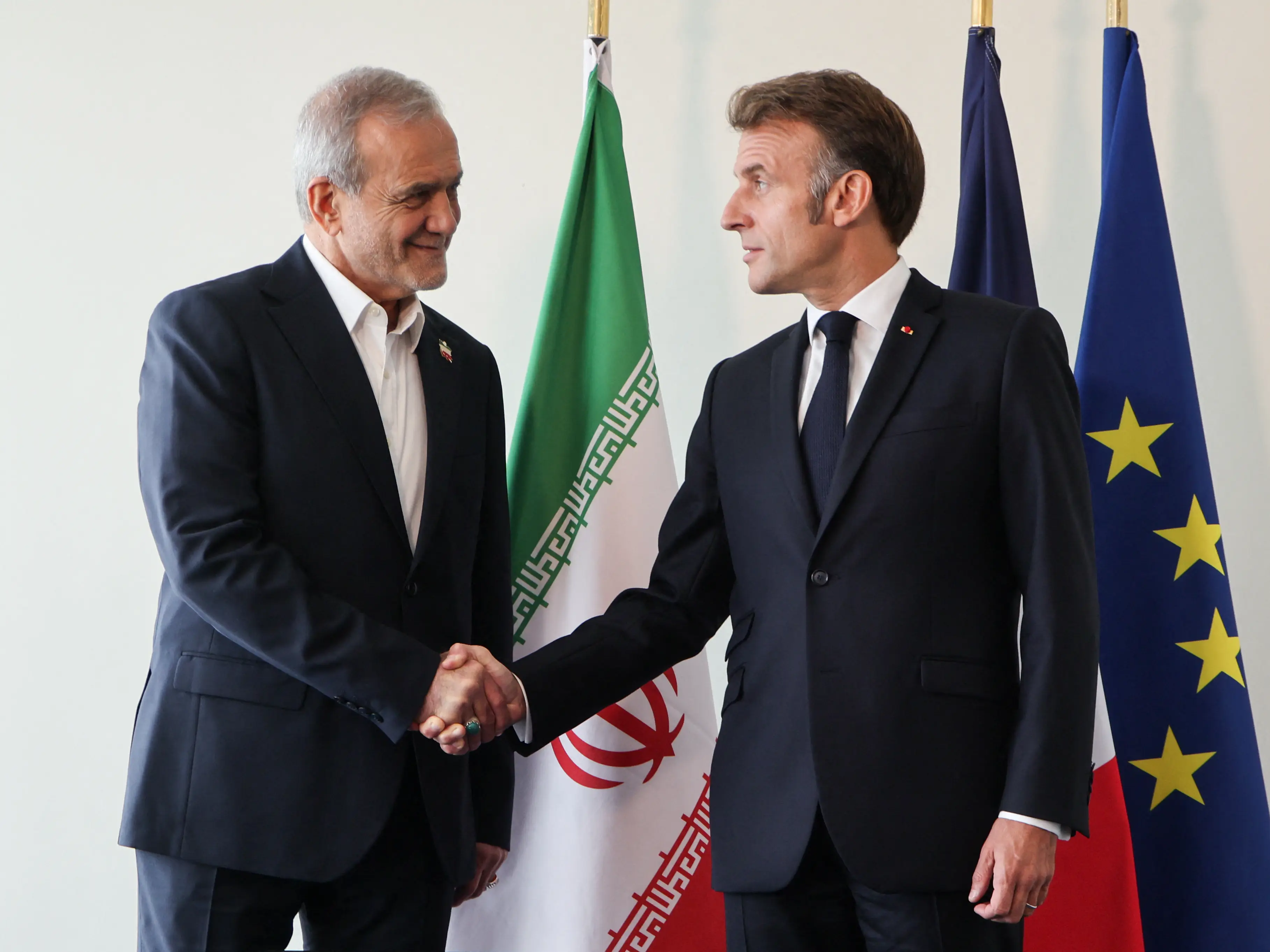
Pezeshkian warns Macron of 'broad consequences' if Hormuz is threatened, says Iran open to negotiations but... Photograph: (AFP)
Is Iran opening the door to talks—or setting strict conditions first? Masoud Pezeshkian says negotiations can continue, but only under international law, while warning any threat to the Strait of Hormuz will have global consequences.
Scroll down to read more.
Iranian President Masoud Pezeshkian has warned that any threat to the Strait of Hormuz will carry serious consequences for global trade, as he signalled Tehran's continued commitment to diplomacy, but strictly on its own terms. The Iranian president said that Tehran was open to continued negotiations but only within the framework of international law. He made the remarks during a phone call with French President Emmanuel Macron, in which the two leaders discussed the Pakistan-mediated ceasefire process, regional developments, and the state of nuclear negotiations. The call came days after direct US-Iran talks in Islamabad ended without an agreement.
Also read | 'A backstab to the resistance': Hezbollah demands Lebanon cancel 'futile' Washington talks with Israel
Iran open to talks but...
According to Iran's presidency, Pezeshkian told Macron that his country's negotiating team had approached the Islamabad talks with "seriousness and goodwill," but that progress at the expert level had been blocked by what he described as "maximalist demands and lack of political will" on the American side. He stopped short of declaring the process dead, but made clear that Tehran would only continue negotiations "within international legal frameworks" aimed at protecting the rights of the Iranian people.
Iran is fully prepared to respond to Trump's Hormuz blockade
On the Strait of Hormuz, Pezeshkian's language was pointed. Iran, he said, has consistently sought to ensure safe maritime passage through the waterway. But he added that threats to its security, a reference to Trump's recent warnings about targeting Iranian infrastructure if the strait isn't fully reopened, would have "broad consequences for global trade." He said Iran is fully prepared to respond to any scenario in line with its national interests.
Trending Stories
&im=FitAndFill=(700,400)&imwidth=280&imheight=210&format=webp&quality=medium)
&imwidth=280&imheight=210&format=webp&quality=medium)
&imwidth=280&imheight=210&format=webp&quality=medium)
&imwidth=280&imheight=210&format=webp&quality=medium)
&imwidth=280&imheight=210&format=webp&quality=medium)
&imwidth=280&imheight=210&format=webp&quality=medium)
&imwidth=280&imheight=210&format=webp&quality=medium)
&imwidth=280&imheight=210&format=webp&quality=medium)
&imwidth=280&imheight=210&format=webp&quality=medium)
&imwidth=280&imheight=210&format=webp&quality=medium)
&imwidth=280&imheight=210&format=webp&quality=medium)
&imwidth=280&imheight=210&format=webp&quality=medium)

&imwidth=280&imheight=210&format=webp&quality=medium)
&imwidth=280&imheight=210&format=webp&quality=medium)
&imwidth=280&imheight=210&format=webp&quality=medium)
&imwidth=280&imheight=210&format=webp&quality=medium)
&im=FitAndFill=(700,400)&imwidth=280&imheight=210&format=webp&quality=medium)
&im=FitAndFill=(700,400)&imwidth=280&imheight=210&format=webp&quality=medium)
&imwidth=280&imheight=210&format=webp&quality=medium)
&im=FitAndFill=(700,400)&imwidth=280&imheight=210&format=webp&quality=medium)
&imwidth=280&imheight=210&format=webp&quality=medium)
&imwidth=280&imheight=210&format=webp&quality=medium)
&imwidth=280&imheight=210&format=webp&quality=medium)
&imwidth=280&imheight=210&format=webp&quality=medium)
&imwidth=280&imheight=210&format=webp&quality=medium)
&imwidth=280&imheight=210&format=webp&quality=medium)
&imwidth=280&imheight=210&format=webp&quality=medium)
&im=FitAndFill=(700,400)&imwidth=280&imheight=210&format=webp&quality=medium)
&imwidth=280&imheight=210&format=webp&quality=medium)
&imwidth=280&imheight=210&format=webp&quality=medium)
&imwidth=280&imheight=210&format=webp&quality=medium)
&im=FitAndFill=(700,400)&imwidth=280&imheight=210&format=webp&quality=medium)
&imwidth=280&imheight=210&format=webp&quality=medium)

&imwidth=280&imheight=210&format=webp&quality=medium)
&im=FitAndFill=(700,400)&imwidth=280&imheight=210&format=webp&quality=medium)
Speaking on the nuclear issue, Pezeshkian said Iran had previously established clear frameworks with European countries and remains ready to pick up those discussions, insisting Tehran has never acted outside international regulations. This is disputed by Washington and several European governments.
Macron calls for peace in Lebanon
Macron, meanwhile, raised Lebanon, pushing for its inclusion within the framework of any initial ceasefire agreement, a point that remains a sticking point given Israel's insistence that its operations against Hezbollah are separate from the broader Iran deal. He also shared his views on the nuclear file and the legal status of the Strait of Hormuz, though the statement from Iran's presidency did not detail his specific positions.
Disclaimer: WION takes utmost care to accurately and responsibly report ongoing conflicts in West Asia involving Israel, Iran, US, Gulf nations and non-state actors like Hezbollah, Hamas, Houthis, Islamic State, and others. Claims and counterclaims, disinformation and misinformation are being made online and offline. Given this context, WION cannot independently verify the authenticity of all statements, social media posts, photos and videos.

