Oil prices cross $105 per barrel first time since Russia's Ukraine invasion

&imwidth=600&imheight=450&format=webp&quality=medium "Oil prices cross $105 per barrel first time since Russia's Ukraine invasion")
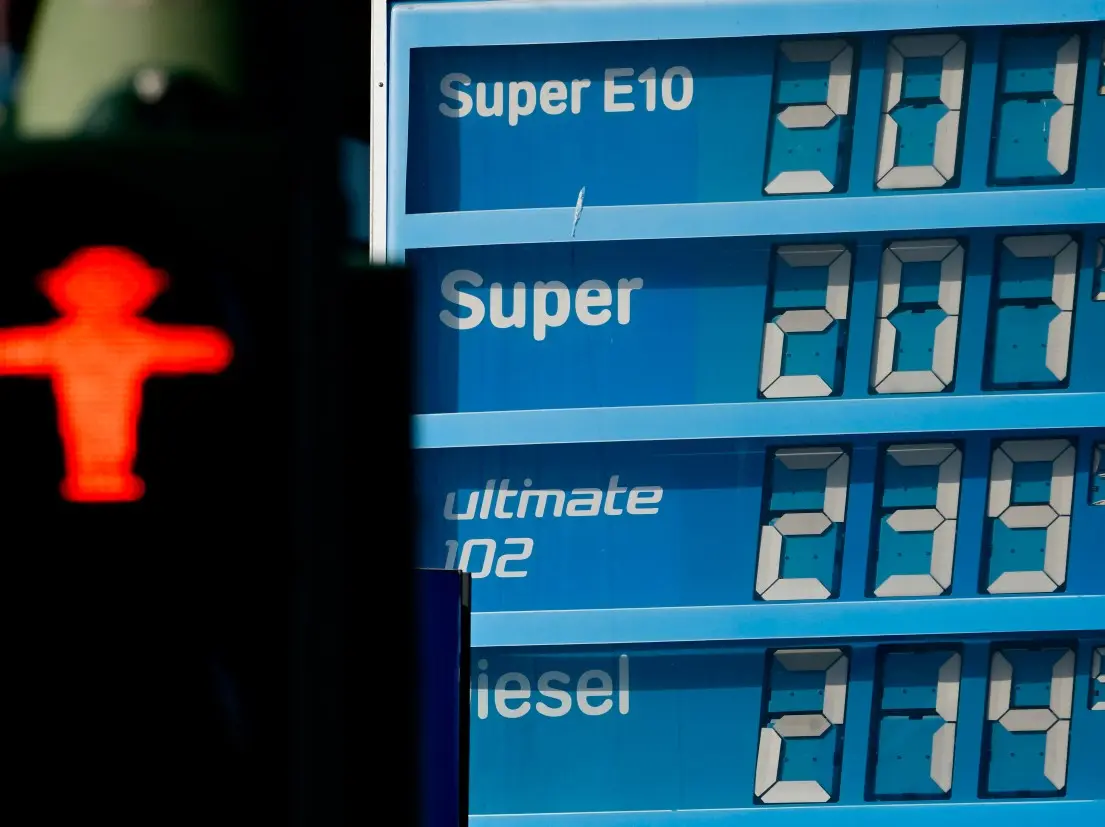
A photo taken on March 13, 2026 shows a display with the prices for Super E10, Super, Diesel and other fuel at an Aral oil and gas station in Berlin, Germany. Photograph: (AFP)
Global oil prices surged past $100 per barrel as the US-Israel war with Iran entered its third week, raising fears of supply disruption through the Strait of Hormuz and triggering volatility in energy markets.
Global benchmark for oil, Brent Crude prices on Sunday crossed $106.12 a barrel before settling on $105.9 on Monday as the US-Israel war on Iran enters its third week. At the time of writing, WTI Crude is trading at $100.4 per barrel, up by $1.68 per cent, and Murban Crude is trading at $117.5 per barrel, up by 3.09 per cent from March 15. Oil Prices tend to be more volatile in after-hours trading; last Sunday, it reached $120 per barrel, before settling at $100 during the Monday.
The last time oil traded above $100 when Russia attacked Ukraine in March 2022, and it stayed there till July, 2022. The International Energy Agency member countries have agreed on the largest collective action on Wednesday to release 400 million barrels of emergency oil. However, experts suggest this is just a drop in the bucket compared to global oil needs.
This comes after the US attacked Kharg Island, Iran's most important oil export terminal in the Persian Gulf. Iran threatened to retaliate against the region. A drone attack had already disrupted a United Arab Emirates energy hub, and the US embassy in Baghdad warned US citizens to leave Iraq. It said that the US attack on oil infrastructure will open up a new dimension of the war, as Iran will also target Gulf energy terminals in the region. Trump said that the US may carry out more strikes on Kharg Island 'just for fun'.
As pressure increases on the global trade choke point Strait of Hormuz, the shockwaves are being felt across the global market. The oil disruption has led to a 24 per cent rise in US gas prices to $3.70 a gallon since the start of the war. The closure of Hormuz has also triggered a crisis of Liquified Natural Gas supply in the south-east asia. Both Saudi Arabia and the United Arab Emirates are now cut off from the global oil market.
The US is scrambling to build a coalition of its allies to secure the Strait of Hormuz. However, its traditional allies either seem cautious or uninterested in any joint operation. The Trump administration has conceded that it would take weeks before the US Navy is prepared to take on the task of securing the Strait of Hormuz.
&im=FitAndFill=(700,400))
)
)
)
)
)
)
)
)
)
)
&im=FitAndFill=(700,400))
)
)
&im=FitAndFill=(700,400))
)
)
)
)
&im=FitAndFill=(700,400))
)
)
)
)
)
)
)
)
)
)
&im=FitAndFill=(700,400))