Oil prices dive as US considers record reserves release

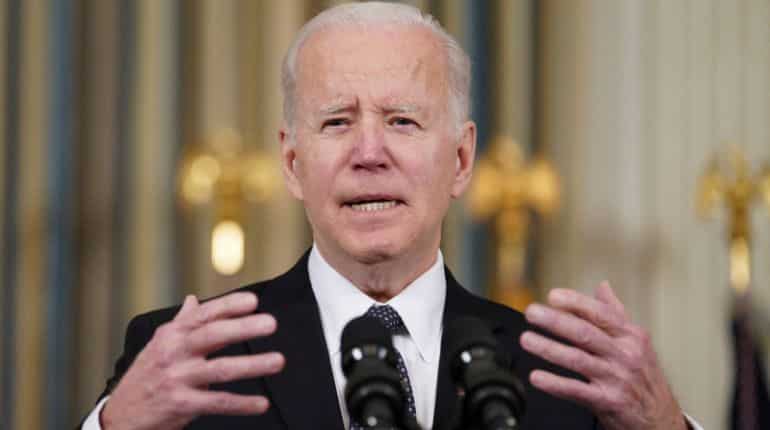
Joe Biden
Oilpricesplunged on Thursday on news that the United States was considering thereleaseof up to 180 million barrels from its strategic petroleum reserve, the largest in the near 50-year history of the SPR.
Brent crude futures for May fell $4.11, or 3.6 per cent, to $109.34 a barrel by 0637 GMT. The May contract expires on Thursday and the most actively traded June futures were down $4.36 at $107.08, having earlier slid by more than $6.
US West Texas Intermediate futures for May delivery fell $5.33, or 4.9 per cent, to $102.49 a barrel after touching a low of $100.85.

Also read |‘Russia may single out and detain US citizens’: State Dept issues another travel advisory
USPresident Joe Biden will give remarks later on Thursday regarding his administration's actions aimed at lowering gasoline prices that have risen torecordhighs since Russia began its invasion of Ukraine.
Such areleasewould help theoilmarket to rebalance in 2022 by increasing supply by 1 million barrels per day (bpd) for six months, Goldman Sachs analysts said in a note.
&imwidth=180&imheight=135&format=webp&quality=medium)
Maharashtra appoints FDA commissioner Tukaram Mundhe as secretary of committee for MPSC overhaul amid stir
&imwidth=180&imheight=135&format=webp&quality=medium)
One Indian killed in Riyadh airport attack; 11 others injured : MEA
&imwidth=180&imheight=135&format=webp&quality=medium)
Iran: US accepted some conditions, Clarity needed on others
&imwidth=180&imheight=135&format=webp&quality=medium)
Delhi protest: CJI Surya Kant declines to meet India Bloc leaders
&imwidth=180&imheight=135&format=webp&quality=medium)
Houthis claim Riyadh airport attacks, Aramco strikes; issue fresh warning to airlines, travellers and workers
&imwidth=180&imheight=135&format=webp&quality=medium)
'Turn approver, resign, we'll forgive you': Rahul Gandhi claims receiving messages from CEC Gyanesh Kumar
&imwidth=180&imheight=135&format=webp&quality=medium)
1,500 drones illuminate Mumbai sky as Cordelia Cruises unveils second ship, Cordelia Sky
&imwidth=180&imheight=135&format=webp&quality=medium)
Telangana ATM heist: Thieves in nighties arrive in ambulance, break into SBI ATM in Kamareddy - VIDEO
&imwidth=180&imheight=135&format=webp&quality=medium)
Top AI models flunked a test of inventing new AI research, so much for self-improving AI
&imwidth=180&imheight=135&format=webp&quality=medium)
McSweeney reveals how studying Virat Kohli’s YouTube clips helped Australia A conquer India
&im=FitAndFill=(700,400)&imwidth=180&imheight=135&format=webp&quality=medium)
Navratri 2026: 9 days, 9 forms of Goddess Durga and 9 colours- Check the complete list
&imwidth=180&imheight=135&format=webp&quality=medium)
Other Mommy leads North American box Office as Verity, Resident Evil round out top four
&im=FitAndFill=(700,400)&imwidth=180&imheight=135&format=webp&quality=medium)
Is sending robots to Mars easier than sending humans?
&imwidth=180&imheight=135&format=webp&quality=medium)
Microsoft's Nadella says treat every AI model as already hacked, and build an 'emergency brake'
&imwidth=180&imheight=135&format=webp&quality=medium)
BCCI rejects venue shift reports, India vs Sri Lanka 1st ODI to remain in Delhi
&imwidth=180&imheight=135&format=webp&quality=medium)
CJI Surya Kant declines INDIA bloc leaders’ request for meeting ahead of march to SC, asks them to file petition
&im=FitAndFill=(700,400)&imwidth=180&imheight=135&format=webp&quality=medium)
New OTT releases this week (October 12-18, 2026): Sacrifice, Koffee with Karan S9, Roadies Rebirth- 6 titles coming on Netflix, JioHotstar and more
&imwidth=180&imheight=135&format=webp&quality=medium)
Diljit Dosanjh’s Delhi concert gets a new date: When and where to catch the singer
&imwidth=180&imheight=135&format=webp&quality=medium)
Saif Ali Khan is finally on Instagram! Here's what he shared in his first post
&imwidth=180&imheight=135&format=webp&quality=medium)
'Say no to Muse': Meta has no control over its own moderation AI while it forces a security nightmare on everyone
&imwidth=180&imheight=135&format=webp&quality=medium)
UK school ditches technology, shifts from screen to pen and paper for learning
&imwidth=180&imheight=135&format=webp&quality=medium)
Portugal Federation confirms Cristiano Ronaldo’s return to national team despite suspension
&imwidth=180&imheight=135&format=webp&quality=medium)
iPhone Duo price index: Tracking Apple’s latest pricing trends
&imwidth=180&imheight=135&format=webp&quality=medium)
Anthropic's AI invented a murder witness and sent the fake tip to Philadelphia police
&imwidth=180&imheight=135&format=webp&quality=medium)
China imposes first-ever sanctions on ministers from Taiwan allies: What this means
&imwidth=180&imheight=135&format=webp&quality=medium)
Telangana man allegedly recruited into Russian military dies near Ukraine border
&imwidth=180&imheight=135&format=webp&quality=medium)
Nana Patekar's cause of death confirmed; here's what his postmortem report says
&imwidth=180&imheight=135&format=webp&quality=medium)
'Just coincidence': Police mistakes protester as AISA chief Neha Bora, arrests her from site
&imwidth=180&imheight=135&format=webp&quality=medium)
'Ouch!!! That must hurt': Kangana Ranaut hails Kamal Haasan's sharp reply to Elon Musk over Starlink row
&imwidth=180&imheight=135&format=webp&quality=medium)
A watchdog rated 'ChatGPT for Teens' an unacceptable risk and says keep under-18s off it
&imwidth=180&imheight=135&format=webp&quality=medium)
Sidhu Moose Wala’s younger brother wins hearts by recreating late singer’s signature move at Toronto Hologram Show
&imwidth=180&imheight=135&format=webp&quality=medium)
Anti-SIR protest in Mumbai: Protestors wear black masks & ribbons in Mumbai
&imwidth=180&imheight=135&format=webp&quality=medium)
Delhi protests: 'Court should not be dragged into political activity', says CJI Surya Kant
&imwidth=180&imheight=135&format=webp&quality=medium)
Congress demands action against chief election commissioner
&imwidth=180&imheight=135&format=webp&quality=medium)
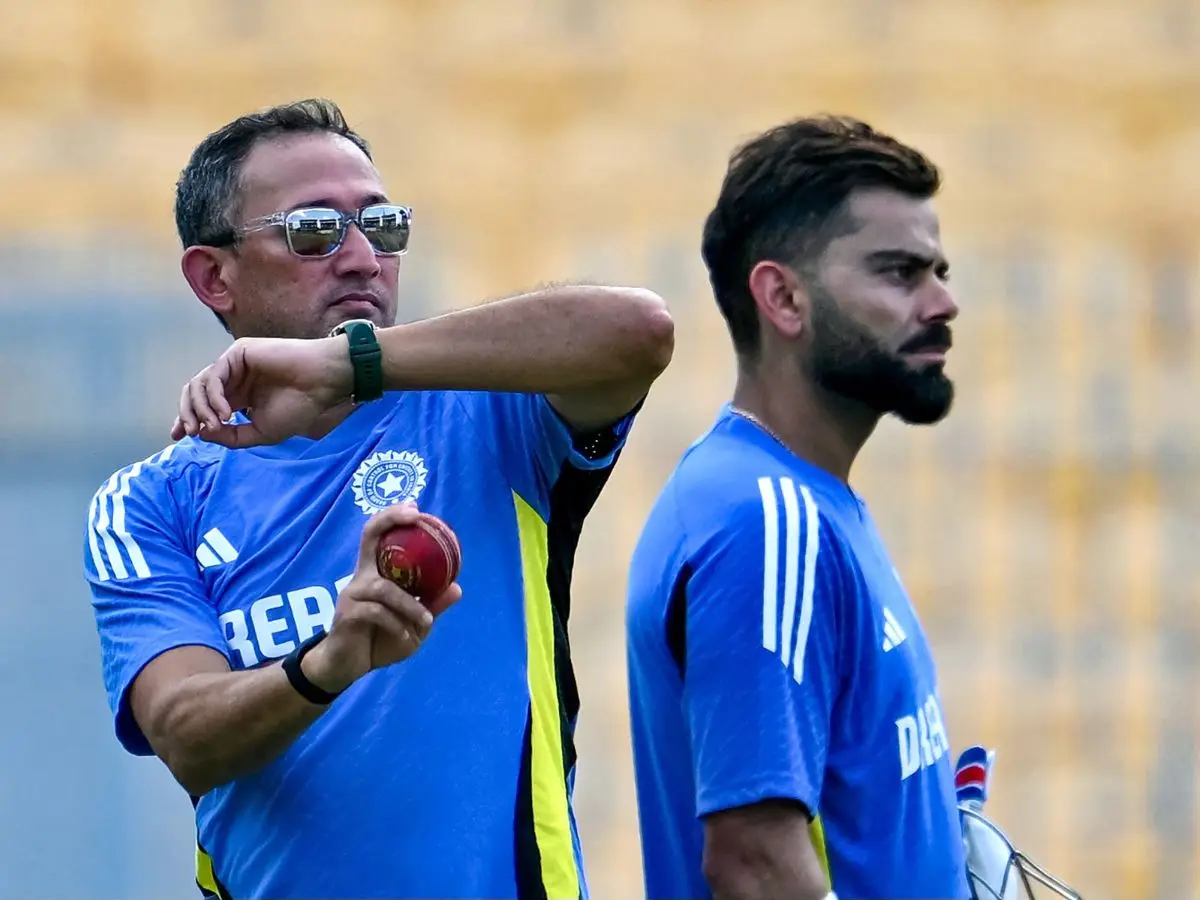
Wasim Jaffer blames Ajit Agarkar-led selection panel for Virat Kohli’s Test retirement
"This would remain, however, areleaseofoilinventories, not a persistent source of supply for coming years. Such areleasewould therefore not resolve the structural supply deficit, years in the making."
International Energy Agency (IEA) member countries are due to meet on Friday at 1200 GMT to decide on a collectiveoilrelease, a spokesperson for New Zealand's energy minister said on Thursday.
News of the potentialU.S.releaseovershadowed a meeting set for Thursday between the Organization of the Petroleum Exporting Countries (OPEC) and allies including Russia. The group known as OPEC+ is expected to stick to its deal to increaseoilproduction gradually.
TheU.S.oilreleasecould be effective in reducing wild volatility and curtail sharp upward movements, butpricesneed a long-term solution, said Avtar Sandu, a commodities manager at Phillip Futures.
Oilsettled up around 3 per cent on Wednesday as peace talks stalled between Ukraine and Russia, which calls its actions a "special operation".
Russia is the world's second-largestoilexporter and Western sanctions imposed as punishment for the invasion have disrupted flows from the country.
In early March the Biden administration said it would sell 30 million barrels from the strategic reserve as part of a globalreleaseof 60 million barrels to lowerprices.
In November the United States announced a plan torelease50 million barrels from the SPR, mostly through exchanges where the buyer agrees to replace theoillater.
"If it turns out to be as much as that, it would be significant and so would certainly help to a certain extent to fill the shortfall, but not all of it," said Warren Patterson, head of commodities strategy at ING, referring to the 180 million barrels figure.
"Another key question is whether this volume would be part of a wider coordinatedrelease. I guess we need to also see if this would be a straightforwardreleaseor an exchange."
Thereleasecomes afterU.S. commercialoilinventories fell by 3.4 million barrels in the week to March 25, surpassing forecasts of a 1 million barrel drop. At the same time, implied demand for gasoline and distillates declined.
The slower demand came asU.S. production rose by 100,000 bpd to 11.7 million bpd after stagnating at 11.6 million bpd since early February.
Watch |India: New Delhi continues to buy Russian oil, US may restrict other countries' oil purchase