No more meat? In the aftermath of COVID-19 in China, people are turning to plant-based substitute

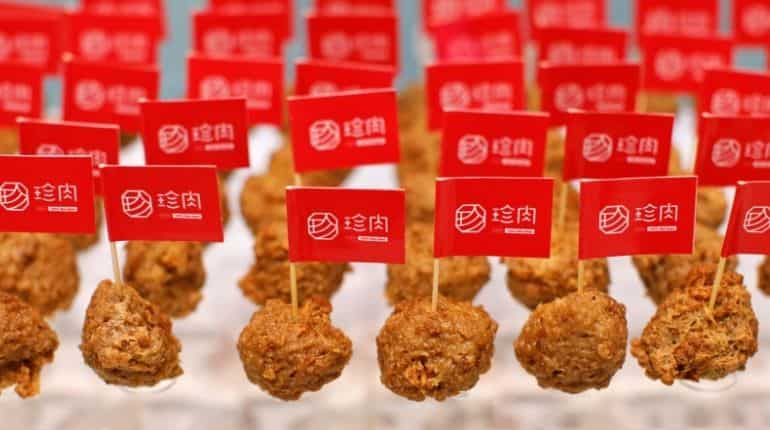
Plant-based meatballs produced by Zhenmeat are seen displayed at a Hope Tree restaurant in Beijing, China September 4, 2020. Picture taken September 4, 2020
The advent of a global pandemic is making many shrug at the thought of eating meat, especially when exotic animals are involved.
China is the hub of all kinds of uncanny food - be it centipedes, dogs, or tarantulas - everything is a delicacy in China. However, the public sentiment and consumption patterns may be shifting after the havoc wreaked by COVID-19.
A more health conscious population

Many Chinese companies are investing in plant-based meat products in the wake of a more health conscious population owing to coronavirus.
China currently has a huge meat supply chain, and it is not going to be tremendously altered. But vegetarian alternatives to meat are gaining prominence across the world, including China.

)
Wildfire tears through forests in Spain's Valencia
)
Pakistan boycotts chess match against Israel at Olympiad
)
Sydney Sweeney defends provocative ad choice, the internet is still not impressed
)
The Early Spring season 2 is happening, but fans have one request - 'don't change the actors'
)
Pakistan: Imran Khan's sons Kasim & Sulaiman claim their father is 'tortured' in jail
)
US trade tariff: 100% tariff targets Russian buyers amid trade tensions
)
Lionel Messi for 2026 Ballon d’Or over Mbappe and Yamal, says Diego Simeone
)
240-million-year-old bizarre 'pig with a tusk' creature creates new dilemma over origin of dinosaurs
)
Prime Minister Narendra Modi's birthday: Italian PM Meloni sends birthday wishes
)
Trump praises India’s Opium crackdown, hails anti-drug efforts
)
US Treasury rallies global financial institutions for Op Economic Outcast to isolate Iran
)
Trump calls Canada-EU associate membership plan ‘laughable’ and threatens 'very serious tariffs'
)
Trump gets new power to hit India, China with up to 100% tariffs as US Senate clears Russia sanctions bill
&im=FitAndFill=(700,400))
Suriya and Jyothika say ‘I do’ again after 20 years! See their dreamy wedding pics
)
Hong Kong unveils 11 new measures to boost birth rates, offers higher cash bonuses and housing perks
)
Formula One reveals the 2027 race calendar; Monaco to host sprint race for the first time
)
UN General Assembly 2026: What is veto power. Which countries have it and how does it work?
)
US House votes 417-3 to pass Ratepayer Protection Act targeting AI data center electricity costs
)
Pakistan naval vessel returns to harbour with 'severe damage' after collision with Indian warship in Arabian Sea
)
Protests erupt over migrant housing plan in Piddington
)
All Indian goods to get duty-free access to New Zealand
)
Veteran actor Anant Nag honoured with Indian cinema’s highest award
)
Former India player Diana Edulji wants Smriti Mandhana to replace Harman as skipper at the earliest
)
No Pandya as Auqib Nabi earns maiden ODI call-up; Mayank returns for WI T20Is| check full squads
)
India breaks silence on US Russia sanctions bill, 100% tariff threat: ‘Committed to energy security’ for 1.4 billion
)
Abhishek Sharma rises to No. 2 in T20Is; ENG’s Robinson 3rd after record Pakistan Tests
)
Saudi Vs Houthis: Yemeni military rebels clash with Houthis
)
Europe wants a common playbook for security threats, seeks security beyond NATO
)
Bigg Boss 20: Mahhi Vij reveals she lost Yuva role to Kareena Kapoor; 'didn’t work out in my favour'
)
Saudi vs Houthis: Riyadh claims to have shot Houthi drone targeting Mecca
)
Want to get married within a year? Why 18 lakh people rush to Jaipur for ‘sacred henna’
&im=FitAndFill=(700,400))
New OTT releases this week (September 14-20, 2026): Lust Stories 3, Waiting Hai, Irumudi- 5 new titles coming on Netflix, Prime Video and more
)
Pak batter Rizwan's petition against being questioned by cyber crime agency rejected by court
)
Chiefs tight end Travis Kelce named one of the victims in $35 million ponzi scheme
)
Fed raises rates for first time in 3 years, Kevin Warsh defies Trump as inflation mounts
)
Shahzad Bhatti Network declared terrorist organisation under UAPA: Govt order
)
AUS vs SA: Steve Smith still gets 'little flashbacks' from sandpaper gate
)
‘Imagine 50 AI fighters cornering one manned jet’: India’s mobbing doctrine eyes a new era of air warm
)
Daayra movie review: Kareena Kapoor, Prithviraj Sukumaran shine in Meghna Gulzar’s cop-versus-cop crime thriller
)
Katrina Kaif’s postpartum weight is not the problem; your gaze is
)
Taiwan seeks deeper India ties as direct flights restart soon and chip projects advance
)
Former OpenAI researcher warns of growing risks from Artificial Intelligence
Beyond Meat Inc, a company from the US recently signed a deal to set up a production facility near Shanghai.
Earlier, the company had partnered with Starbucks to serve its plant-based meat products in coffee shops across China.
Local players are not behind. Beijing’s Zhenmeat produces plant-based meatballs, steak, pork, beef patty, porn loin, dumplings, and crayfish. Zhenmeat is one of many Chinese companies that are starting to turn to plant based food in a country that consumes all kinds of meat.
"Now after COVID-19 consumers are more concerned about health and restaurant brands are responding to this,” Zhenmeat founder and CEO Vince Lu said in an interview, Reuters reported.
Lu added that sales were "up considerably" since June, suggesting that people are responding to the coronavirus crisis.
Meat is the real competition
Customers at Hope Tree restaurant, where the meatballs are being served, said that the plant-based meatballs tasted like tofu.
“Actually you can tell that it isn't meat but the feel of it in your mouth is very similar to beef. And I guess that plant-based meat is a little healthier than beef,” Audrey Jiang, 30, told Reuters.

Ben Cavender, China Market Research Group Director claimed that taste will be the primary signifier of the future of the plant-based market.
"When we interview consumers the vast majority say they're open to trying these products once," he said.
"But the big question is how do they like it? Do they see how they can fit it into their diet on daily basis, whether that's cooking at home or at restaurants? But if they do like it they'll keep buying”, Cavender added.
Zhenmeat’s Lu added that even though there is a lot of competition in the market, the biggest competition was the meat industry itself.
“The most important thing is that our true competitors are not those global giants who have already achieved great success such as Beyond Meat or Impossible Foods,” he said.
"Our true competitor is the whole livestock sector. It's the animal protein industry”, Lu concluded.