Musk is building a $16.8 billion chip factory in Texas and it could grow to $119 billion

&imwidth=600&imheight=450&format=webp&quality=medium "Musk is building a $16.8 billion chip factory in Texas and it could grow to $119 billion")
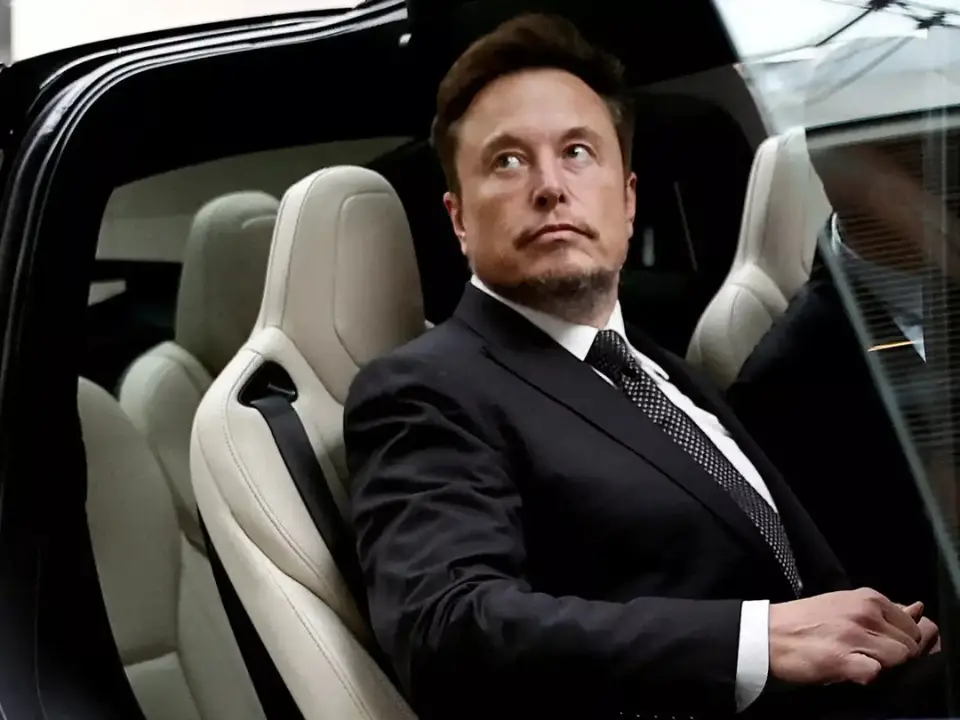
Musk is building a $16.8 billion chip factory in Texas and it could grow to $119 billion Photograph: (Reuters)
Tesla and SpaceX have confirmed Terafab, a jointly built semiconductor complex in Grimes County, Texas, with a $16.8 billion first phase and at least 3,000 workers. Bringing logic, memory, packaging and testing onto one site of more than 100 million square feet, future phases could take total investment to $119 billion.
Elon Musk's two largest companies are building a chip factory together, and the scale of the plan is difficult to overstate.
The Project
Tesla and SpaceX have confirmed that Terafab, their jointly developed semiconductor manufacturing complex, will be built in Grimes County, Texas — roughly an hour northwest of Houston and two hours from Gigafactory Texas.
The first phase carries an investment of $16.8 billion and a planned workforce of at least 3,000. The total site footprint is projected to exceed 100 million square feet. Future expansion phases could push cumulative investment to as much as $119 billion.
The facility is designed to bring logic manufacturing, memory production, packaging and testing together on a single site — an unusual degree of vertical integration. Most chips today are fabricated in one country, packaged in another and tested in a third. Terafab's premise is to collapse that supply chain into one location.
What The Chips Are For
Trending Stories
)
)
)
)
)
)
)
)
)
)
)
)
)
)
)
)
)
)
)
)
)
)
)
)
)
)
)
)
)
)
)
)
)
)
&im=FitAndFill=(700,400))
)
)
)
)
The output is intended for Musk's own companies rather than the merchant market: AI chips for Tesla vehicles, for the Optimus humanoid robot programme, and for SpaceX computing systems. The stated ambition is production of AI chips at scale for use both on Earth and in space.
That vertical integration is the strategic point. Tesla's autonomous driving ambitions, Optimus, and SpaceX's onboard computing all depend on custom silicon, and all currently depend on external foundries operating at capacity with multi-year order books. Building the fab removes that dependency.
It also fits a pattern now visible across the industry. Anthropic confirmed this month that it is assembling an in-house chip design team. OpenAI unveiled its Broadcom-built Jalapeño chip in June. Google has TPUs, Amazon has Trainium, Meta has MTIA. Everyone operating at frontier scale has concluded that paying a chip vendor's margin indefinitely is untenable — but Terafab goes further than designing silicon. It manufactures it.
The Practical Constraints
Two details in the announcement are worth attention because they address the things that actually stop projects of this kind.
The first is water. Semiconductor fabrication is extraordinarily water-intensive, and the company has specified that Terafab will draw from the nearby Gibbons Creek Reservoir rather than local groundwater. That is a deliberate choice, and a timely one — Google's $15 billion data centre in Visakhapatnam is currently facing litigation and street protests in a city that receives 410 million litres of water a day against demand of 480 million. Water sourcing is now the first question any large facility of this type has to answer.
The second is state support. Texas Governor Greg Abbott's office has extended a $30 million Texas Enterprise Fund grant to SpaceX in connection with the expansion.
The Bigger Bet
American semiconductor manufacturing has been the subject of enormous federal effort and expense for several years, on the argument that a country which designs the world's most advanced chips but manufactures almost none of them has a strategic problem.
Terafab is a private answer to that question, at a scale that dwarfs most public programmes. A $119 billion cumulative investment, if the later phases proceed, would be among the largest privately funded industrial projects in American history.
The caveat is that first phases and projected total phases are very different commitments. The $16.8 billion is announced and sited. The $119 billion is a projection contingent on demand, capital, and the successful operation of the first phase. Advanced fabs are among the most difficult facilities in the world to bring to yield, and companies with decades of foundry experience have struggled with exactly that step.
What is not in doubt is the direction. The AI build-out has reached the point where the largest players are no longer buying compute, or even designing it — they are building the factories that make it.
