‘Kill zone’ in Taiwan Strait: Why Taiwan is expanding its anti-ship arsenal against China, which missiles form its core

&imwidth=600&imheight=450&format=webp&quality=medium "‘Kill zone’ in Taiwan Strait: Why Taiwan is expanding its anti-ship arsenal against China, which missiles form its core")
Rising arsenal and asymmetric strategy Photograph: (AFP)
The primary goal is not to match China ship-for-ship, but to render the island too costly to assault. Mobile coastal missile batteries are a fraction of the cost of the amphibious transport ships and guided-missile destroyers they target.
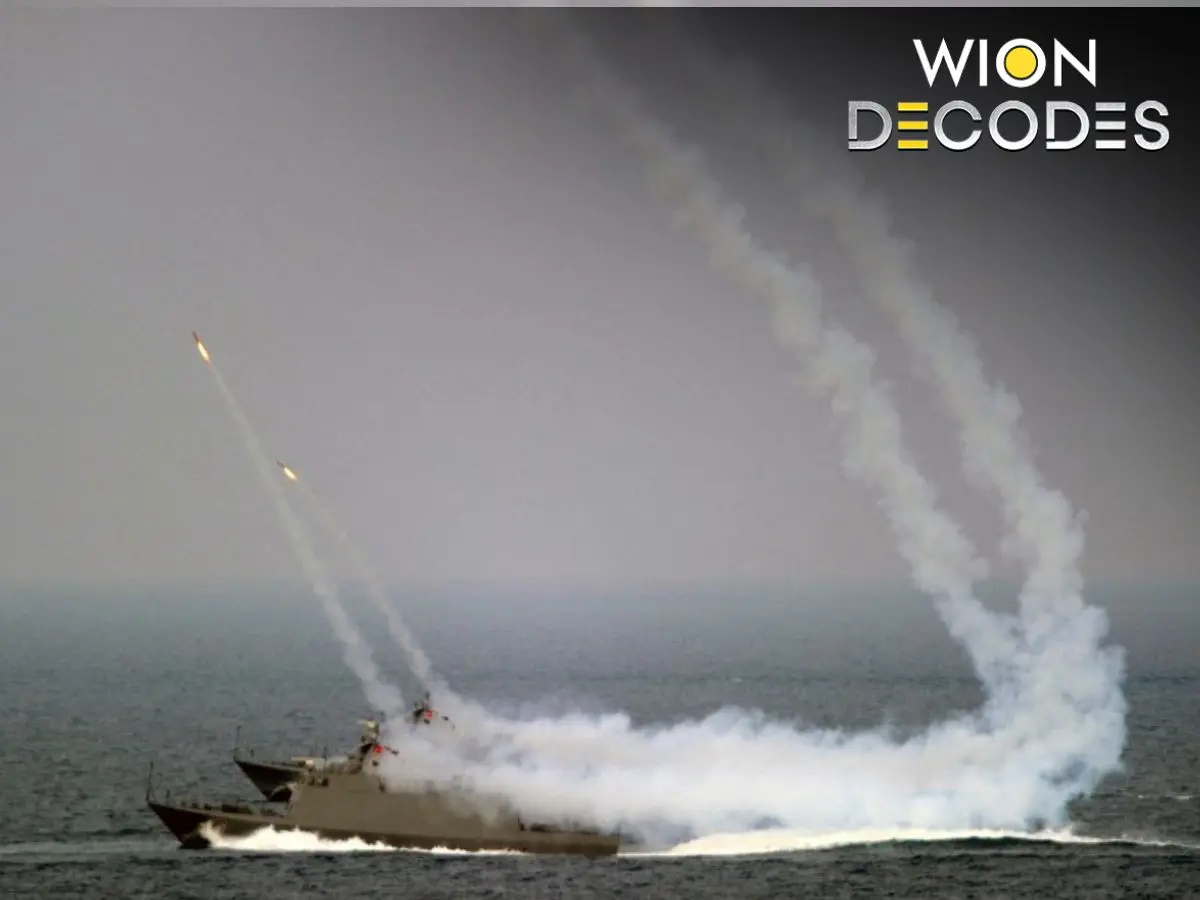
Taiwan is preparing a sharp expansion of its anti-ship missile arsenal, which is expected to exceed 1,800 missiles by early 2029, according to a Reuters calculation based on arms trade data, US export approvals, defence analysis, and official interviews. The buildup reflects Taipei’s shift towards an asymmetric defence strategy aimed at offsetting China’s superior conventional firepower through large numbers of relatively low-cost but highly lethal weapons.
Faced with a massive disparity in conventional military size and industrial output, Taiwan's defence planners have firmly embraced asymmetric warfare, frequently termed the porcupine strategy. The primary goal is not to match China ship-for-ship, but to render the island too costly to assault. Mobile coastal missile batteries are a fraction of the cost of the amphibious transport ships and guided-missile destroyers they target. By focusing heavy resources on smaller, easily concealed, and highly mobile strike platforms, Taiwan aims to establish a resilient network capable of surviving initial heavy bombardment and remaining operational to contest an invasion fleet. The strategy also incorporates shorter-range missiles and drone swarms, drawing lessons from conflicts in Ukraine and Iran, where less powerful actors have used missiles and unmanned systems to challenge stronger militaries.
Harpoon and Hsiung Feng at the core
The spearhead of Taiwan’s anti-ship capability is formed by US-supplied Harpoon missiles and domestically developed Hsiung Feng missiles. According to Taiwan’s defence planning and officials cited by Reuters, these systems are central to creating what analysts describe as a ‘kill zone’ in the Taiwan Strait, a heavily contested maritime corridor where concentrated missile fire would aim to inflict severe losses on an invading force.
ALSO READ: India eyes largest-ever drone order! $2 billion military purchase to boost domestic industry
The Harpoon Block II is a sea-skimming, all-weather cruise missile capable of over-the-horizon strikes using GPS-aided inertial navigation and active radar terminal guidance. It can be launched from ships, aircraft, submarines, or mobile coastal defence vehicles. With a 500-pound warhead and a range exceeding 67 nautical miles, it is designed to strike ships and coastal targets with high precision.
Trending Stories
&imwidth=280&imheight=210&format=webp&quality=medium)
&imwidth=280&imheight=210&format=webp&quality=medium)
&imwidth=280&imheight=210&format=webp&quality=medium)
&imwidth=280&imheight=210&format=webp&quality=medium)
&imwidth=280&imheight=210&format=webp&quality=medium)
&imwidth=280&imheight=210&format=webp&quality=medium)
&imwidth=280&imheight=210&format=webp&quality=medium)
&imwidth=280&imheight=210&format=webp&quality=medium)
&imwidth=280&imheight=210&format=webp&quality=medium)
&imwidth=280&imheight=210&format=webp&quality=medium)
&imwidth=280&imheight=210&format=webp&quality=medium)
&imwidth=280&imheight=210&format=webp&quality=medium)
&imwidth=280&imheight=210&format=webp&quality=medium)
&imwidth=280&imheight=210&format=webp&quality=medium)
&imwidth=280&imheight=210&format=webp&quality=medium)
&imwidth=280&imheight=210&format=webp&quality=medium)
&imwidth=280&imheight=210&format=webp&quality=medium)
&imwidth=280&imheight=210&format=webp&quality=medium)
&imwidth=280&imheight=210&format=webp&quality=medium)
&imwidth=280&imheight=210&format=webp&quality=medium)
&imwidth=280&imheight=210&format=webp&quality=medium)
&imwidth=280&imheight=210&format=webp&quality=medium)
&imwidth=280&imheight=210&format=webp&quality=medium)
&imwidth=280&imheight=210&format=webp&quality=medium)
&imwidth=280&imheight=210&format=webp&quality=medium)
&imwidth=280&imheight=210&format=webp&quality=medium)
&im=FitAndFill=(700,400)&imwidth=280&imheight=210&format=webp&quality=medium)
&imwidth=280&imheight=210&format=webp&quality=medium)
&imwidth=280&imheight=210&format=webp&quality=medium)
&imwidth=280&imheight=210&format=webp&quality=medium)
&imwidth=280&imheight=210&format=webp&quality=medium)
&imwidth=280&imheight=210&format=webp&quality=medium)
&imwidth=280&imheight=210&format=webp&quality=medium)
&imwidth=280&imheight=210&format=webp&quality=medium)
&imwidth=280&imheight=210&format=webp&quality=medium)
Complementing it is Taiwan’s indigenous Hsiung Feng III (Brave Wind III), a supersonic anti-ship missile in service since 2011. With a range of up to 150 km, and extended variants reportedly reaching 400 km, it is designed for rapid, high-impact strikes against naval targets, making interception more difficult due to its speed of up to 780 m/s. Taiwanese defence planners estimate that by 2029, the arsenal will include around 850 Harpoon missiles and over 1,000 Hsiung Feng II and III missiles, bringing the total to roughly 1,850 anti-ship weapons.
‘Kill zone’ doctrine and strategic intent
Military analysts in Taiwan describe the purpose of this buildup as denial rather than destruction. As Ou Si-fu of Taiwan’s Institute for National Defence and Security Research told Reuters, “Our goal is to stop them from landing and completing their mission, not to destroy every PLA ship.” The aim is to make any amphibious operation across the Taiwan Strait prohibitively costly for China’s navy and supporting transport fleet.
Defence analysts note that long-range precision missiles pose a significant challenge to any invasion force, arguing that such weapons could strike ships “before they even set out across the Taiwan Strait.” However, experts also highlight vulnerabilities. Much of Taiwan’s missile force remains deployed on ships or fixed installations, making them potentially susceptible to pre-emptive strikes. Taiwanese officials say efforts are underway to increase mobility and dispersal, with plans to integrate coastal radars, missiles and drones under a new Littoral Combat Command from July 1.
The Mathematics of Cost Asymmetry
Modern warships, such as guided-missile destroyers, amphibious assault ships, and aircraft carriers, are extraordinarily complex engineering feats. They cost anywhere from hundreds of millions to billions of pounds to construct, take years to build, and require highly trained crews of hundreds of sailors. In contrast, a modern anti-ship missile costs a fraction of that amount. This means a defending force can purchase hundreds of missiles for the price of a single enemy warship. If even a small percentage of those missiles bypass a ship’s air defences and strike their target, the economic and operational loss to the attacking nation is catastrophic.
Building deterrence under pressure
Taiwan’s anti-ship missile expansion is also tied to major arms procurement from the United States, including Harpoon missile systems and additional precision weapons. Officials say deliveries stretching into 2029 could significantly strengthen coastal defence capabilities, though timelines remain subject to delays.
Beijing continues to assert sovereignty over Taiwan and has not ruled out force to achieve unification. Taipei rejects these claims, maintaining that its future must be decided by its people alone. In this strategic standoff, Taiwan’s missile-centric defence posture is increasingly seen as central to its effort to deter blockade or invasion attempts across one of the world’s most sensitive maritime flashpoints.