Is Trump’s ‘third-term’ talk just a joke or a test? Here’s what history suggests | WION Explains

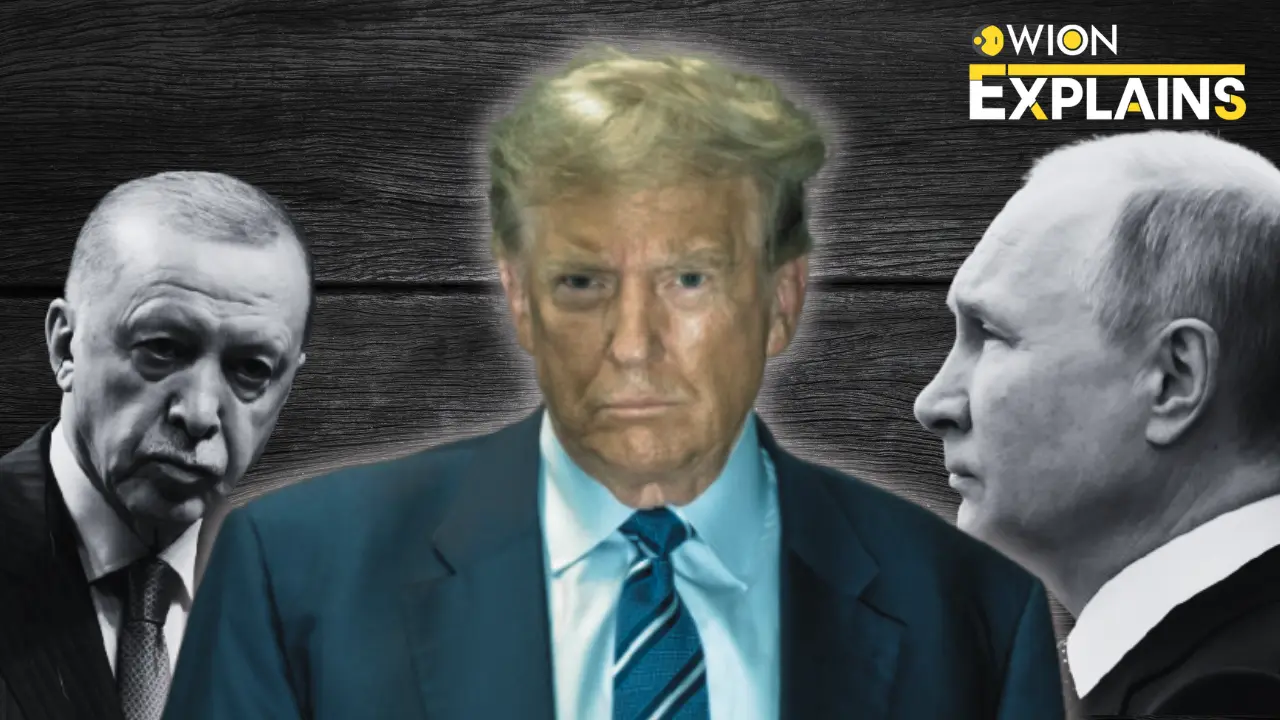
World | The constitutional amendment may not be that easy for Trump to make a way to secure a third-term in the office. But it's Trump. He may not need to change the laws to rule America.
“A republic, if you can keep it.”
- Benjamin Franklin
US President Donald Trump has multiple times said that he is "not joking" about his desire to serve a third-term in the White House.
"I'm not joking... a lot of people want me to do it," Trump said.
In 2020, Trump said, “We are going to win four more years. And then after that, we’ll go for another four, because they spied on my campaign."
In January this year, he told his supporters that it would be "the greatest honour of my life to serve not once, but twice or three times or four times". But, he then said this was a joke for the "fake news media". Umm ... was it?
Trending Stories
)
)
)
)
)
&im=FitAndFill=(700,400))
)
)
)
)
)
)
)
)
)
)
)
)
)
)
)
)
)
)
)
)
)
)
)
)
)
)
)
)
)
)
)
)
The "third-term" desire might sound like a signature joke of Trump - but history tells us that authoritarian ambition often begins with humour, applause, and “what if” speculation. So, is Trump testing the waters?
What does the US Constitution say about a third term?
As per the American Constitution, Trump cannot serve a third term in the Oval Office, at least not under the current law.
The 22nd Amendment to the US Constitution, ratified in 1951, states: “No person shall be elected to the office of the President more than twice…” - US Constitution amendment XXII.
Why this rule?
This amendment of limiting the presidency till only two terms was adopted after the unplanned fourth-term presidency of Franklin D Roosevelt in 1945. That time, his tenure had alarmed lawmakers amid global trends of authoritarianism.
Is it just a joke?
When Donald Trump "jokes" and makes such statements, he may not be laying out a policy plan, but rather testing political boundaries.
In political terms, Trump's third-term statements aligns quite perfectly with the Overton Window - a model that describes how the range of acceptable discourse can be expanded by gradually introducing extreme ideas, often through humour or hyperbole.
Trump is not new to use such tectics. History has numerous such examples where leaders normalised radical ambitions through jest.
1. Julius Caesar, the Roman dictator, initially presented himself as a restorer of the republic before becoming “dictator perpetuo” (dictator for life).
2. In 2008, the Russian President, Vladimir Putin, faced the end of his second term in office as president. The constitution did not allow him to run for a third term. Putin then orchestrated a power switch with then-Prime Minister Dmitry Medvedev. After serving as the Russian prime minister, Putin came back into power as the president in 2012. In January 2020, Putin drafted a constitutional amendment that would allow him to remain president for two more terms, till 2036.
3. Hugo Chávez - former president of Venezuela, held a 2009 referendum to eliminate presidential term limits, framing it as “democratic will.”
4. In 2017, the Turkish President Recep Tayyip Erdoğan used constitutional referenda to extend his powers that could keep him in office until 2029.
In each of these cases, the power shift started with a populist leader floating the idea, often cloaked in nationalism.
If not the presidency, then 'shadow presidency'
The constitutional amendment may not be that easy for Trump to make a way to secure a third-term in the office. But it's Trump. He may not need to change the laws to rule America. He can possibly use the method of “shadow presidency” in which he could work as the de facto leader of the Republican Party or manipulate the system through his loyalists in government.

