
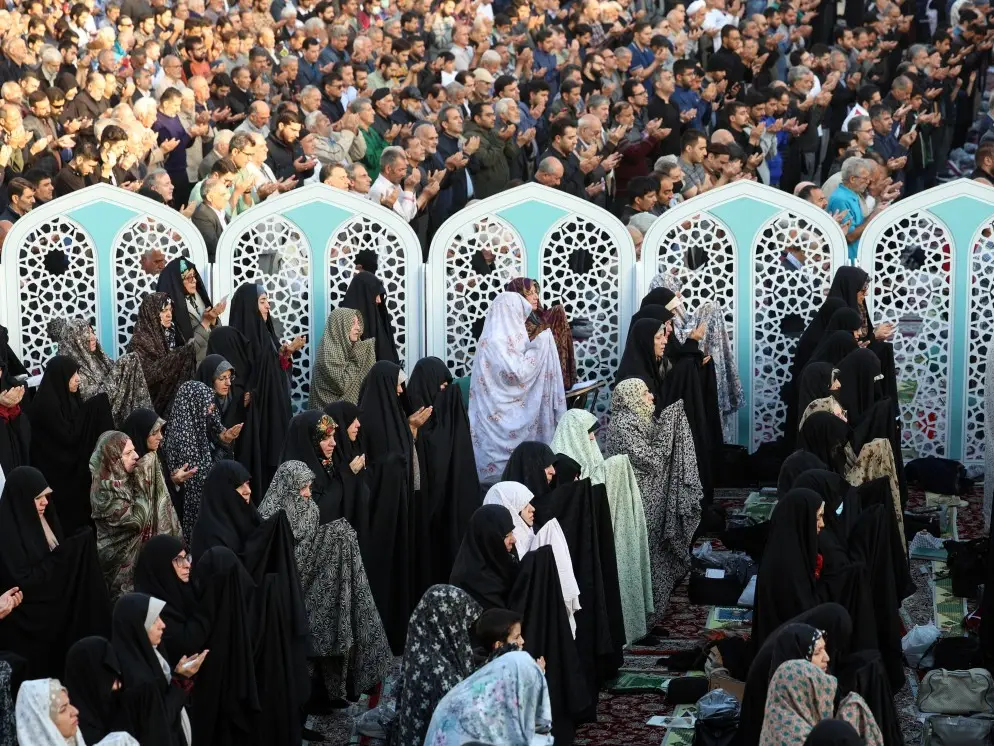
&imwidth=800&imheight=600&format=webp&quality=medium "Authorities seek divine intervention as water crisis might force Iran to evacuate its capital, Tehran")
Iran is facing its worst water crisis in a decade, with dangers looming that the capital city of Tehran might become uninhabitable soon. As the city continues to pray for rain, President Masoud Pezeshkian warned that mere rationing will not solve the problem; if there is no rainfall in December, citizens will be in grave trouble.
“Even if we ration, if it doesn’t rain again, then we won’t have water at all,” said President Masoud Pezeshkian in the first week of November.
Why is Iran facing a water shortage?

Climate change has significantly hurt the water reservoirs. Iran is in its sixth straight drought year, and temperature in Iran crosses 122 degrees Fahrenheit during the summer. Iran's state media have reported that Iran received 40 per cent less rainfall last year compared to its 57-year average in Iran. The forecast also predicts continuous dry conditions towards the end of December. Tehran is solely dependent on the five reservoirs, which are fed from the rivers outside the city. They used to collectively store 500 million cubic metres now have barely 250 million. These issues extend far beyond Tehran, Iran’s second-largest city. Mashad's water reserves plunged below 3 per cent. Nationally, 19 major dams, roughly 10% of Iran’s total, have run dry.
Furthermore, the 12-day war with Israel has also damaged the water infrastructure. Citizens also blame the mismanagement: “The authorities have known about this problem for years, but nothing has been done,” said Sadegh Razavi, a restaurant owner in Iran. Iran's Minister of Energy, Abbas Aliabadi, warned that they will resort to a power cut at night. Citizens lament that the historic Persia, even after being so rich in minerals and natural reserves, has to suffer from a water crisis and power cuts.
Researchers, eventhough they argued for the narrative of climate change, also highlighted the mismanagement and systemic corruption that resulted in the dire crisis. “The problem is mismanagement and systemic corruption in the system that basically allows powerful organisations to even build dams or diversion tunnels without even getting permits,” said Amir AghaKouchak, a California-based researcher. There has been an overdraft of groundwater, which is making the soil salty, and lakes are disappearing. Iran's state media have reported several critics blaming the years of illegal well drilling and inefficient agricultural practices. President Pezeshkian have blamed the previous governments for the mismanagement. There had been instances of unrest in southwestern Khuzestan province, sometimes escalating to violence.
Trending Stories
)
Nigeria: Protesters take to the streets, police fire shots
)
US-Iran war: Tehran draws red lines — seven demands before any peace talks
)
Russia-Europe tensions: Polish PM warns Russian attacks could test NATO's unity
&im=FitAndFill=(700,400))
‘Not the US or China’: These are the countries leading the world in arable land
)
EXCLUSIVE | Singer Hanita Bhambri on her Toxic debut, working with Vishal Mishra and more
)
Sikh bus driver assaulted, bus stolen and rammed into cars in England; video surfaces
)
Mark Carney mimics Trump in hilarious moment over C$70 billion clean-energy investment; room erupts in laughter
&im=FitAndFill=(700,400))
Before Extraordinary Minami Minami, these popular K-dramas got Japanese versions
)
'Were you here to sell chickpeas?': Wasim Akram criticises Babar Azam's captaincy
)
Aravana prasadam shortage at Sabarimala temple in Kerala triggers protests, TDB questioned
)
‘End of my career...’: NSA Doval recalls tense Sikkim mission when China captured Indian intelligence team
)
Report: Iran rebuilding Taleghan 2, nuclear site tied to past weapons research, hit twice by Israel
)
Trump defends AI amid growing alarm, announces new 'AI force' and promises an 'AI czar'
)
Iran sets 7 conditions to end war with US: What are Tehran’s demands?
)
Trump announces ‘AI Force’ as debate grows over AI risks and regulation
)
China may have gained access to US's classified F-35 jets; parts meant for repairs diverted to Hong Kong, sparking Pentagon inquiry
)
Man breaks open wall hiding hundreds of books since 15 years
)
Gaza under attack: Health chief's son killed in IDF strikes
)
S Jaishankar, former Army chief among high-profile names issued Delhi SIR notices
)
Arvind Kejriwal, family members, Delhi CM Rekha Gupta get SIR notices
)
AI actress Tilly Norwood glitches mid-interview, switches from English to Chinese | Watch
)
Saudi vs Houthis: Houthis claim missiles & drones used in attack on key Saudi sites
)
Ed Sheeran addresses Macklemore's removal, Gaza conflict during Philadelphia concert: 'I cannot hide how I feel'
)
‘Will go to any extent’: Pakistan vows to defend Saudi Arabia amid Houthi attacks
66 years of the Indus Waters Treaty: How India and Pakistan settled a bitter river dispute
)
The Verdict | When precision fails: US commits war crime in Minab school strike, UN finds
)
9 women found dead near Johannesburg: South Africans rally, demand 'enough' to femicide
)
Kampala-Ankara rift deepens: Uganda suspends military ties, seeks Fred Lumbuye's extradition
)
Several petrol pumps, other businesses to refuse UPI payments above Rs 2,000 from Oct 16: Is it legal?
)
US-Iran war: Tehran sets seven conditions to re-engage in talks with US
)
Reacher star Alan Ritchson opens up about alleged blackmail, suicide attempt during difficult period
)
West Indies Squad for India Series: Hetmyer included for T20Is, Holder rested
)
Trump bans CNN, MS NOW and Politico from White House over ‘FAKE NEWS’
&im=FitAndFill=(700,400))
How many F-35s does Britain, Japan and Israel have?
)
Harry Brook targets long reign at top of T20I rankings after Sri Lanka sweep
)
Russia's deadly Ukraine strikes kill 2 in Sumy, hit Dnipro mall
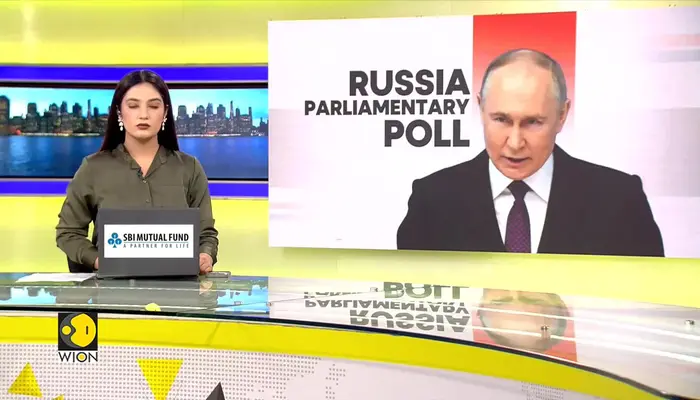)
Russia holds first parliamentary elections since the beginning of the Ukraine war
&im=FitAndFill=(700,400))
Meet top 5 Indian batters with fastest T20I centuries
)
Raphinha hat-trick powers Barcelona to 3-1 win over Sevilla in La Liga
)
Authorities are calling for divine intervention. "In the past, people would go out to the desert to pray for rain,” said Mehdi Chamran, head of Tehran’s City Council, state media reported. "Perhaps we should not neglect that tradition." Other stopgap measures include decreasing water pressure and transferring some of the water from its reserves. But without a December rain, the crisis is unavoidable.

