

&imwidth=800&imheight=600&format=webp&quality=medium "Iran to feature prominently during Xi-Trump summit: Where do US and China stand on Hormuz issue?")
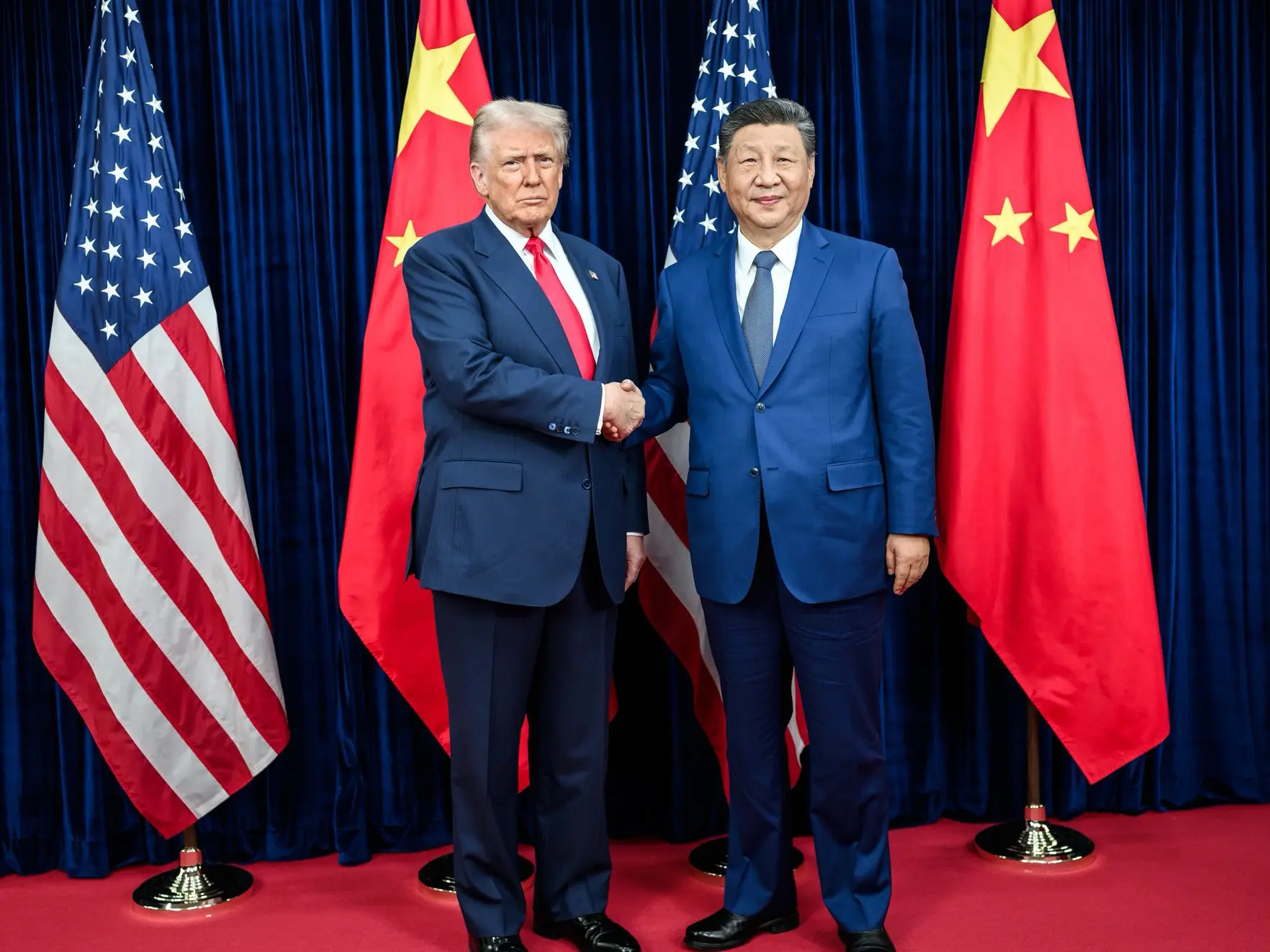
As US President Donald Trump departs for a highly anticipated visit to China on Tuesday (May 12), the ongoing geopolitical tensions in West Asia are expected to feature prominently during the discussions. A senior administration official told news outlets in an anonymous briefing on Sunday that Trump could “apply pressure” to China on Iran in areas such as oil sales and Tehran’s purchase of potential dual-role military-civilian goods.
US Treasury Secretary Scott Bessent last week accused China of “funding” Iran. “Iran is the largest state sponsor of terrorism, and China has been buying 90 per cent of their energy, so they are funding the largest state sponsor of terrorism,” Bessent told Fox News on May 7.
Trump's visit to Beijing has already been impacted by the Iran war and the shipping crisis in the Strait of Hormuz. It was scheduled for earlier this year but was postponed in March due to the US-Israeli strikes on Iran, which began on February 28, and the eventual ceasefire to negotiate a peaceful exit from the war. Washington also staged a naval blockade of the Islamic Republic in hopes of forcing Tehran to accept a peace proposal.
China’s stance on the Hormuz crisis
China is one of the nations most severely impacted by the closure of the vital waterway, as it acquires nearly 20 per cent of its energy through the strait. Beijing has called for open and secure shipping multiple times; however, it has termed the US naval blockade "a dangerous escalation of unilateralism."
On April 15, Chinese Foreign Ministry spokesperson Guo Jiakun stated, "The blockade of international waterways is a violation of international law and a direct threat to global supply chain stability. We urge the US to cease these provocative actions and return to the path of diplomatic dialogue."
Trending Stories
&imwidth=180&imheight=135&format=webp&quality=medium)
Other Mommy leads North American box Office as Verity, Resident Evil round out top four
&im=FitAndFill=(700,400)&imwidth=180&imheight=135&format=webp&quality=medium)
Navratri 2026: 9 days, 9 forms of Goddess Durga and 9 colours- Check the complete list
&imwidth=180&imheight=135&format=webp&quality=medium)
Anti-SIR protest in Mumbai: Protestors wear black masks & ribbons in Mumbai
&imwidth=180&imheight=135&format=webp&quality=medium)
BCCI rejects venue shift reports, India vs Sri Lanka 1st ODI to remain in Delhi
&imwidth=180&imheight=135&format=webp&quality=medium)
Diljit Dosanjh’s Delhi concert gets a new date: When and where to catch the singer
&im=FitAndFill=(700,400)&imwidth=180&imheight=135&format=webp&quality=medium)
Is sending robots to Mars easier than sending humans?
&imwidth=180&imheight=135&format=webp&quality=medium)
A watchdog rated 'ChatGPT for Teens' an unacceptable risk and says keep under-18s off it
&imwidth=180&imheight=135&format=webp&quality=medium)
1,500 drones illuminate Mumbai sky as Cordelia Cruises unveils second ship, Cordelia Sky
&imwidth=180&imheight=135&format=webp&quality=medium)
'Just coincidence': Police mistakes protester as AISA chief Neha Bora, arrests her from site
&imwidth=180&imheight=135&format=webp&quality=medium)
Anthropic's AI invented a murder witness and sent the fake tip to Philadelphia police
&imwidth=180&imheight=135&format=webp&quality=medium)
Congress demands action against chief election commissioner
&imwidth=180&imheight=135&format=webp&quality=medium)
CJI Surya Kant declines INDIA bloc leaders’ request for meeting ahead of march to SC, asks them to file petition
&imwidth=180&imheight=135&format=webp&quality=medium)
Saif Ali Khan is finally on Instagram! Here's what he shared in his first post
&imwidth=180&imheight=135&format=webp&quality=medium)
'Turn approver, resign, we'll forgive you': Rahul Gandhi claims receiving messages from CEC Gyanesh Kumar
&imwidth=180&imheight=135&format=webp&quality=medium)
One Indian killed in Riyadh airport attack; 11 others injured : MEA
&imwidth=180&imheight=135&format=webp&quality=medium)
Top AI models flunked a test of inventing new AI research, so much for self-improving AI
&imwidth=180&imheight=135&format=webp&quality=medium)
Wasim Jaffer blames Ajit Agarkar-led selection panel for Virat Kohli’s Test retirement
&imwidth=180&imheight=135&format=webp&quality=medium)
'Ouch!!! That must hurt': Kangana Ranaut hails Kamal Haasan's sharp reply to Elon Musk over Starlink row
&imwidth=180&imheight=135&format=webp&quality=medium)
Sidhu Moose Wala’s younger brother wins hearts by recreating late singer’s signature move at Toronto Hologram Show
&imwidth=180&imheight=135&format=webp&quality=medium)
UK school ditches technology, shifts from screen to pen and paper for learning
&imwidth=180&imheight=135&format=webp&quality=medium)
Telangana ATM heist: Thieves in nighties arrive in ambulance, break into SBI ATM in Kamareddy - VIDEO
&imwidth=180&imheight=135&format=webp&quality=medium)
Houthis claim Riyadh airport attacks, Aramco strikes; issue fresh warning to airlines, travellers and workers
&imwidth=180&imheight=135&format=webp&quality=medium)
Portugal Federation confirms Cristiano Ronaldo’s return to national team despite suspension
&imwidth=180&imheight=135&format=webp&quality=medium)
Delhi protests: 'Court should not be dragged into political activity', says CJI Surya Kant
&im=FitAndFill=(700,400)&imwidth=180&imheight=135&format=webp&quality=medium)
New OTT releases this week (October 12-18, 2026): Sacrifice, Koffee with Karan S9, Roadies Rebirth- 6 titles coming on Netflix, JioHotstar and more
&imwidth=180&imheight=135&format=webp&quality=medium)
Microsoft's Nadella says treat every AI model as already hacked, and build an 'emergency brake'
&imwidth=180&imheight=135&format=webp&quality=medium)
Delhi protest: CJI Surya Kant declines to meet India Bloc leaders
&imwidth=180&imheight=135&format=webp&quality=medium)
Telangana man allegedly recruited into Russian military dies near Ukraine border
&imwidth=180&imheight=135&format=webp&quality=medium)
China imposes first-ever sanctions on ministers from Taiwan allies: What this means
&imwidth=180&imheight=135&format=webp&quality=medium)
McSweeney reveals how studying Virat Kohli’s YouTube clips helped Australia A conquer India
&imwidth=180&imheight=135&format=webp&quality=medium)
Maharashtra appoints FDA commissioner Tukaram Mundhe as secretary of committee for MPSC overhaul amid stir
&imwidth=180&imheight=135&format=webp&quality=medium)
Iran: US accepted some conditions, Clarity needed on others
&imwidth=180&imheight=135&format=webp&quality=medium)
Nana Patekar's cause of death confirmed; here's what his postmortem report says
&imwidth=180&imheight=135&format=webp&quality=medium)
iPhone Duo price index: Tracking Apple’s latest pricing trends
&imwidth=180&imheight=135&format=webp&quality=medium)
'Say no to Muse': Meta has no control over its own moderation AI while it forces a security nightmare on everyone
The US position: Pressure and peace terms
Washington expects Chinese support to persuade the Islamic Republic to accept its peace terms, as Beijing remains one of the major importers of Iranian oil despite the ongoing crisis. Several reports have also suggested its military support. In an interview with Time Magazine on May 1, 2026, Trump himself commented on the situation, saying, "China is possibly helping Iran a lot more than they should be. They are giving them a financial lifeline and possibly more than just parts for their drones."
The US is expected to use this week's summit to present evidence of "dual-use technology" transfers and demand that Beijing use its leverage as a mediator in the “Islamabad Talks” to secure a final deal. For the Trump administration, the goal is clear: to press China to withdraw its economic and tacit military support, forcing Tehran to accept the current peace proposal.
