Iran demands US fulfill 7 conditions for reopening Strait of Hormuz shipping corridor

&imwidth=600&imheight=450&format=webp&quality=medium "Iran demands US fulfill 7 conditions for reopening Strait of Hormuz shipping corridor")
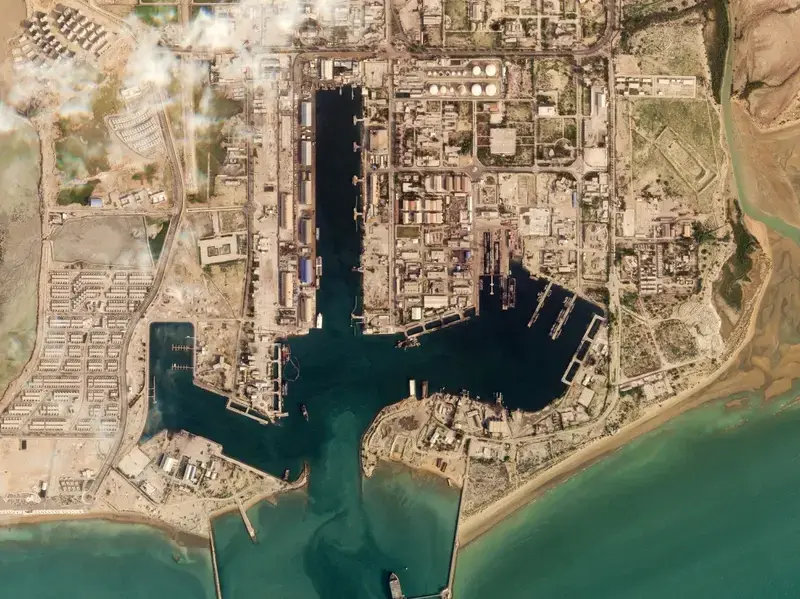
Strait of Hormuz Photograph: (Credit: AFP)
Iran has issued seven specific conditions to the United States via intermediaries, warning that the Strait of Hormuz will remain closed to commercial shipping until Washington meets all demands.
Iran has sent a list of seven specific conditions to the United States through intermediary channels, saying the strategically crucial Strait of Hormuz will remain closed to standard commercial navigation until Washington meets every demand, according to Iranian media Tasnim, citing informed sources.
The directive, which has received formal authorisation from Iran’s highest political and security leadership, explicitly ties the unblocking of the shipping corridor to concrete policy steps by the US government.
The development follows recent diplomatic engagements between Iranian and Omani officials aimed at mitigating maritime tensions in the region. However, news outlets in Tehran underscored that bilateral arrangements reached with Muscat concerning navigation channels do not constitute an agreement to reopen the waterway. Instead, Iranian officials clarified that regional security mechanisms and transit routes discussed with Oman operate independently of the primary standoff with Washington.
"Until these seven conditions, which have been approved by Iran's top officials, are met, the Strait of Hormuz will remain closed," an informed source reported to the Tasnim News Agency. The source emphasised that the timeline and feasibility of reopening the passage rest entirely on decisions made by the United States.
Trending Stories
)
)
)
)
)
)
)
)
)
)
)
)
)
)
)
)
)
)
)
)
)
)
)
)
)
)
)
)
)
)
)
)
)
)
The ongoing closure of the Strait of Hormuz poses severe risks to global economic stability. Positioned between Iran to the north and Oman to the south, the narrow passage serves as the primary maritime entry and exit point for the Persian Gulf. At its narrowest point, the shipping lanes measure just two miles wide in each direction, making maritime transit uniquely vulnerable to military blockade or regional conflict.
Historically, approximately 20 per cent of the world’s petroleum supply and nearly 25 per cent of global liquefied natural gas (LNG) exports pass through the corridor daily. Acting as a primary energy artery, the strait links West Asia energy producers directly to key consumer markets across Asia, Europe, and North America.
International energy analysts warn that prolonged operational disruption of the maritime route trigger severe energy supply deficits, sharp inflation, and volatility in global commodity markets. While diplomatic efforts mediated by regional partners like Oman remain active, Iranian officials maintain that no general resumption of maritime traffic will occur without explicit compliance from Washington regarding their submitted terms.

