

&imwidth=800&imheight=600&format=webp&quality=medium "Intel's fall: Firm that once called its engineers 'rock stars' is now on US govt crutches amid China chip wars. How did it get here?")
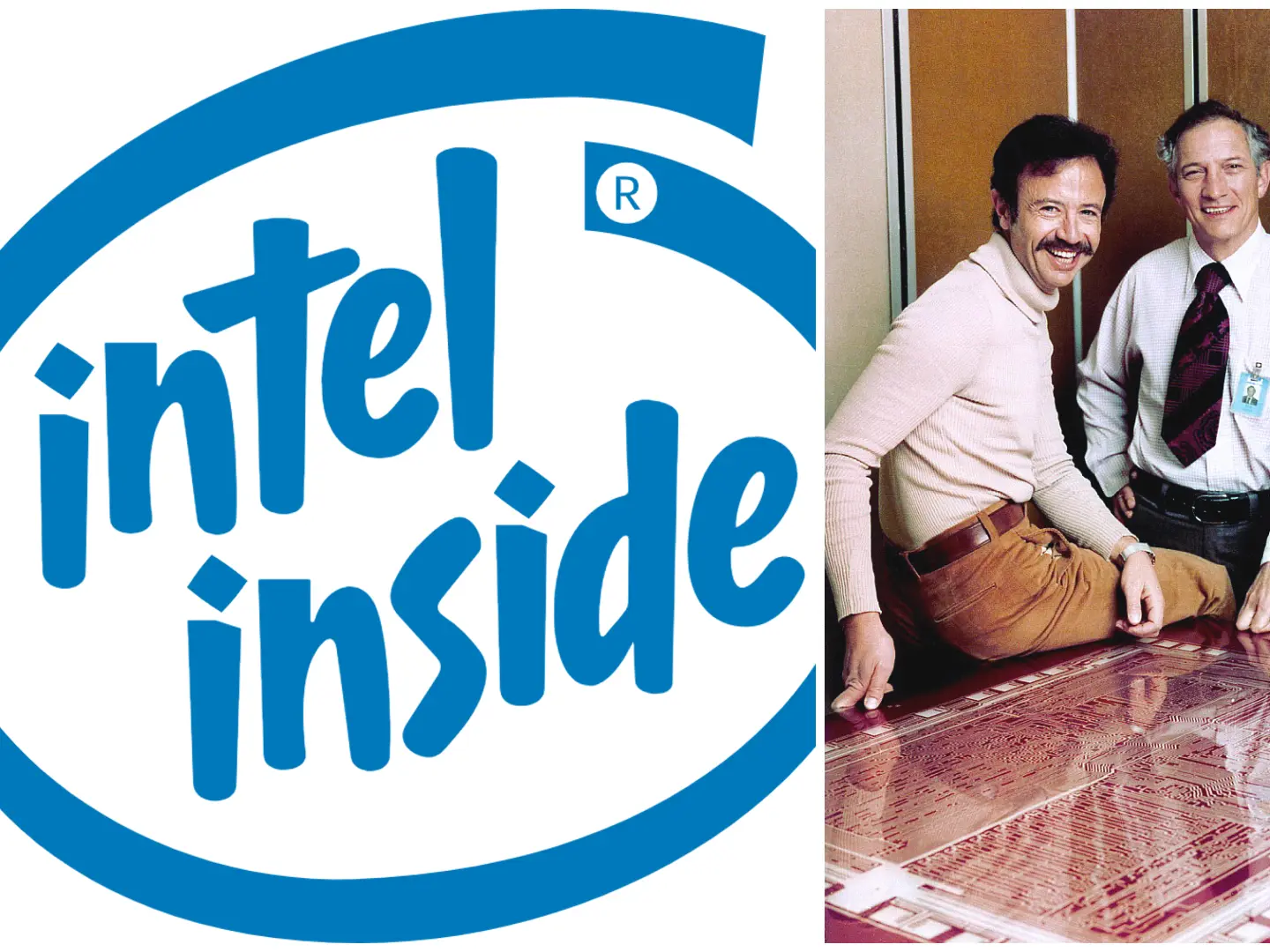
In a widely recognised ad campaign, Intel called its engineers “rock stars.” Its main branding for years was “Intel Inside,” and for a long time, that was true—nearly every personal computer came equipped with an Intel processor. But today, the company is effectively receiving a virtual bailout from the US government. How did this former semiconductor titan fall from grace? It’s a story of strategic mistakes, slow adaptation to technological shifts, and a global chip war increasingly dominated by China. Here’s how Intel went from captain to cautionary tale.
What’s the current stock status of Intel? A decline in market cap
As of August, Intel’s stock had dropped sharply from its 52-week high of around $51.28 to approximately $25—a fall of nearly 52 per cent. At the end of 2023, the company had a market capitalisation of roughly $210.5 billion. By mid-2025, that had fallen to about $90.6 billion, marking a decline of nearly 57 per cent.
Intel’s early years: The founding story
Intel was founded on 18 July 1968 by pioneering engineers Robert Noyce and Gordon Moore, and was joined by venture capitalist Arthur Rock, who helped secure the company’s initial funding. Originally incorporated as NM Electronics, the name was later changed to Intel—short for “Integrated Electronics.” Noyce is credited as one of the inventors of the integrated circuit. Moore became widely known for Moore’s Law, a prediction that the number of transistors on a chip would double approximately every two years, improving performance while reducing cost. Together, the trio laid the foundation for one of the most influential technology companies in the world.
Trending Stories
&imwidth=180&imheight=135&format=webp&quality=medium)
Viral video shows cross falling on Colombia priest, no official confirmation | WATCH
&imwidth=180&imheight=135&format=webp&quality=medium)
Rafale Marine fighter begins flight trials in Goa ahead of Indian Navy induction
&imwidth=180&imheight=135&format=webp&quality=medium)
Ranbir Kapoor apologises for Dussehra speech slip, clarifies remark at Ramayana event
&imwidth=180&imheight=135&format=webp&quality=medium)
Meta slapped with $25 billion fine in New Mexico over Facebook data practices, company plans appeal
&imwidth=180&imheight=135&format=webp&quality=medium)
WATCH: Woman IPS officer fires several rounds of AK-47, ignites debate online
&imwidth=180&imheight=135&format=webp&quality=medium)
EU probes Booking.com under Digital Services Act
&imwidth=180&imheight=135&format=webp&quality=medium)
Pakistan signs another defence pact even as Makkah Alliance shows no teeth. This time, it's with Qatar, Indonesia, Turkey
&imwidth=180&imheight=135&format=webp&quality=medium)
Ilhan Omar breaks silence over alleged marriage to her brother; Trump thinks it's 'really good answer'
&imwidth=180&imheight=135&format=webp&quality=medium)
US-Iran war: Bibi, Trump gamble on new Iran war to save themselves in polls
&imwidth=180&imheight=135&format=webp&quality=medium)
From Agni-V to Project Kusha: How are India’s indigenous missile systems and defence shield reshaping modern warfare
&imwidth=180&imheight=135&format=webp&quality=medium)
'It's a crime not to see this scene': Tehran puts Trump 'behind bars'
&imwidth=180&imheight=135&format=webp&quality=medium)
Will Rohit and Kohli play ODI World Cup 2027? BCCI president Manhas says board 'not in a position to comment'
&imwidth=180&imheight=135&format=webp&quality=medium)
Why websites around the world are suddenly going offline? What you need to know about PHP
&imwidth=180&imheight=135&format=webp&quality=medium)
US midterms 2026: What polls and prediction markets indicate about Congress
&imwidth=180&imheight=135&format=webp&quality=medium)
'You are a dummy, you are a stupid person': Trump loses temper with CNN, ABC reporters after questions about Russia sanctions
&imwidth=180&imheight=135&format=webp&quality=medium)
China's dancing robot turns violent bodyguard, lifts cars and fights intruders - Watch
&imwidth=180&imheight=135&format=webp&quality=medium)
16-foot doomsday fish in Chile triggers fears that the next earthquake is coming
&imwidth=180&imheight=135&format=webp&quality=medium)
US to get 850 F-35 stealth fighter jets under 10-year Pentagon-Lockheed deal
&imwidth=180&imheight=135&format=webp&quality=medium)
Are the US and Israel preparing for another major attack on Iran? Here's what report claims
&imwidth=180&imheight=135&format=webp&quality=medium)
Priyanka Chopra celebrates Dussehra 2026 with Nick Jonas and daughter Malti Marie | See pics
&im=FitAndFill=(700,400)&imwidth=180&imheight=135&format=webp&quality=medium)
New OTT releases this week (October 19-25, 2026): Gajab Raat to Chaar Yaar-8 titles to watch during Dussehra week on Netflix, Prime Video and more
&imwidth=180&imheight=135&format=webp&quality=medium)
‘I caution the president...’: Trump’s ex-press secretary warns after Zacharia’s exit
&imwidth=180&imheight=135&format=webp&quality=medium)
'Father of all bombs' vs 'mother of all bombs': Iran threatens US with new weapon as Trump hints at MOAB strike
&imwidth=180&imheight=135&format=webp&quality=medium)
Diljit Dosanjh's Oct 30 Delhi show hits roadblock, Delhi Police denies permission
&imwidth=180&imheight=135&format=webp&quality=medium)
Australia police arrest former national 100m champ Jake Doran for alleged child abuse
&imwidth=180&imheight=135&format=webp&quality=medium)
'Gyanu must go': CJP's Saurav Das, Ashutosh Ranka after release, despite Jantar Mantar protest undertaking
&imwidth=180&imheight=135&format=webp&quality=medium)
Kolkata airport: CISF detects ₹1.13 crore in US dollars hidden in bags of 2 Bangkok-bound passengers
&imwidth=180&imheight=135&format=webp&quality=medium)
Feds obtain DNA evidence that could prove Ilhan Omar married her brother: Report
&imwidth=180&imheight=135&format=webp&quality=medium)
US midterms 2026: Trump's approval rating hits record low as Democrats gain ground
Intel’s peak: The “rock star” era of the 2000s
During the rise of the internet in the 2000s, Intel dominated the global tech landscape by supplying the hardware that powered most personal computers and laptops, including those made by Microsoft and Apple. In 2009, a marketing campaign presented Intel engineers—such as Ajay Bhatt, co-inventor of USB—as “rock stars,” elevating their image to that of cultural icons. The “Intel Inside” campaign, launched in the 1990s, had already made the company a household name and synonymous with high-performance computing.
Intel missed two buses: Mobile chips and artificial intelligence
Intel’s strong focus on personal computers ultimately contributed to its decline, as global computing shifted rapidly towards smartphones. Intel was not prepared for the mobile revolution, which was led by ARM-based processors developed by companies like Qualcomm. Intel’s processors consumed too much power and were unsuitable for mobile devices.
Under CEOs such as Paul Otellini, Brian Krzanich, and Bob Swan, Intel has been accused of prioritising short-term profits over innovation. For example, Krzanich delayed the adoption of extreme ultraviolet lithography (EUV), a move that allowed competitors to overtake Intel in advanced chip manufacturing. During Swan’s tenure, the company reportedly spent billions on stock buybacks instead of investing heavily in research and development.
Rise of AI chip makers: New Kids on the Block
The artificial intelligence boom required high-performance processors, and formerly smaller players like Nvidia seized the opportunity with their graphics processing units (GPUs). In 2020, one of Intel’s key clients, Apple, began transitioning to its own M1 chips—designed in-house and manufactured by TSMC—dealing a significant blow to Intel’s market dominance.
How Intel lost ground amid global chip wars
The chip wars of the 2020s were triggered by multiple factors, including geopolitical tensions between the US and China, growing demand for AI processing chips, and the global rollout of 5G technology. These factors created a perfect storm that caught Intel off guard. Its once-celebrated integrated design-and-manufacture model became a liability, while competitors like AMD gained market share by leveraging TSMC’s superior fabrication technologies.
Intel’s attempts to expand its foundry business faltered. Projects such as the development of glass substrates were scaled back, and the automotive chip division was shut down.
In 2024, CEO Pat Gelsinger was removed after Intel’s stock fell by 60 per cent. He was replaced by Lip-Bu Tan, and the company laid off up to 20 per cent of its workforce. Even prominent engineers such as Jim Keller exited.
US government ‘bailout’ of Intel: A lender of last resort comes in
Recognising Intel’s importance to national security and technological independence, the US government made a historic intervention under the 2022 CHIPS and Science Act. The company reportedly received up to 10.9 billion dollars—7.9 billion for commercial fabrication facilities in states like Arizona, New Mexico, Ohio, and Oregon, and 3 billion for producing military-grade chips under the Secure Enclave programme.
In August 2025, the Trump administration converted roughly 8.9 billion dollars of these grants into a 10 per cent equity stake in Intel, making the US government its largest shareholder.
The deal included non-voting shares and a 5 per cent warrant, which would allow the government to expand its stake if Intel’s foundry unit loses majority control.
Additionally, SoftBank invested 2 billion dollars in support of Intel’s turnaround efforts.
Critics have compared the government's move to the 2008 bailout of the US auto industry, warning that financial aid alone may not resolve Intel’s deeper challenges, such as its technological lag behind TSMC and Nvidia.
Can Intel catch up in the near future?
While a turnaround is not impossible, recent failures suggest caution. Intel has yet to attract major foundry clients like Apple or Nvidia. Its much-publicised Intel 18A process, set to launch in 2025, is already facing scepticism over whether it can match the performance and efficiency of competitors’ offerings.
A breakthrough innovation could still restore Intel’s standing, but as of now, its “rock star” era is clearly over. The company faces an uncertain future as it struggles to remain competitive in a global market increasingly dominated by faster-moving rivals—including those from China.

