8 Arab, Muslim countries back sanctions on Israeli settlements: How effective can they be?

&imwidth=600&imheight=450&format=webp&quality=medium "8 Arab, Muslim countries back sanctions on Israeli settlements: How effective can they be?")
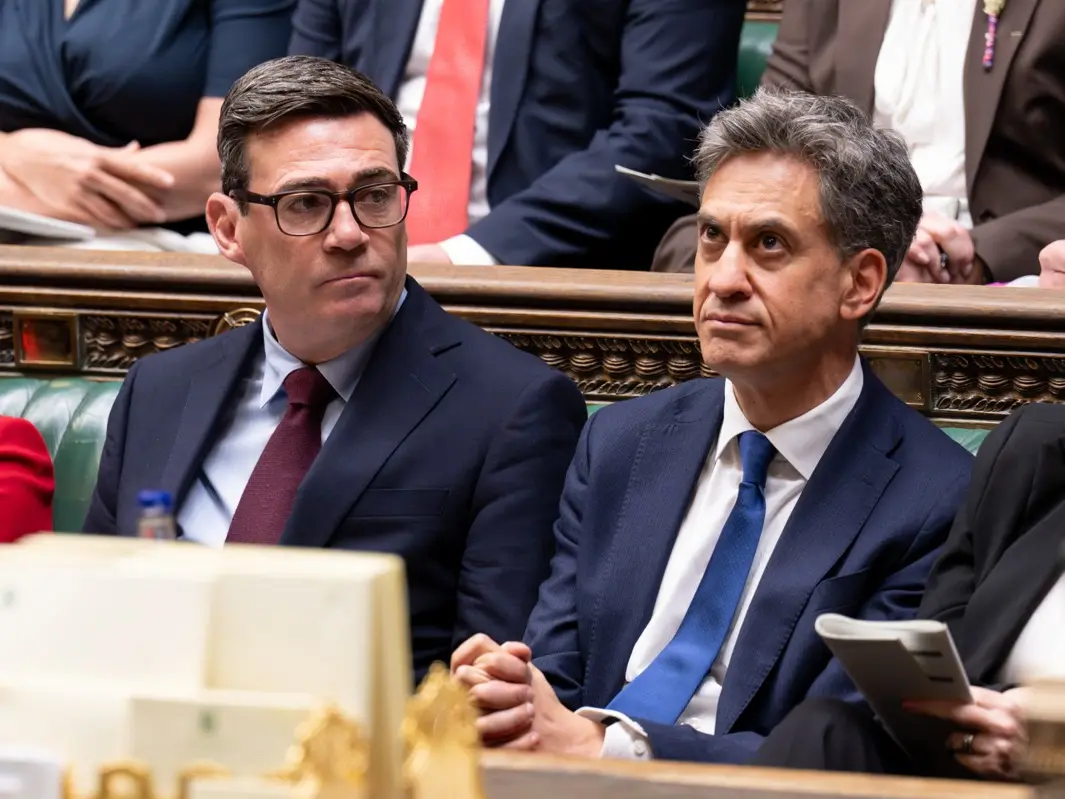
Britain's Prime Minister Andy Burnham and Britain's Foreign Secretary Ed Miliband Photograph: (AFP)
Eight Arab and Muslim countries backed UK measures targeting Israeli settlements, but questions remain over how effectively the sanctions can be enforced.
Eight Arab and Muslim countries have welcomed UK-led sanctions on the Israeli settlements in the occupied West Bank and urge other countries to take similar steps. In a joint statement issued by the Foreign ministers of these eight countries, they said that they "welcome the decision of the Government of the United Kingdom to ban the import of goods from illegal Israeli settlements in the Occupied Palestinian Territory."
The countries include: Jordan, the United Arab Emirates, Indonesia, Pakistan, Turkiye, Saudi Arabia, Qatar and Egypt. They have urged Britain to mobilise other countries to join in such measures, which are consistent with international law, the Saudi Press Agency reported.
It came after the UK, France and Canada joined nine other European countries to impose a curb on the Israeli settlements in the West Bank to keep the hope of a two-state solution alive.
How effective can these sanctions be?
The UK government has announced five measures, banning trade with illegal settlements, taking action on services by creating a new designation; the Foreign, Commonwealth & Development Office (FCDO) to target individuals and companies that facilitate illegal settlement; and banning the advertising and promotion of property in illegal settlements, strengthening the UK's sanctions regime and using that regime to target human rights violators.
Trending Stories
&imwidth=280&imheight=210&format=webp&quality=medium)
&imwidth=280&imheight=210&format=webp&quality=medium)
&imwidth=280&imheight=210&format=webp&quality=medium)
&imwidth=280&imheight=210&format=webp&quality=medium)
&imwidth=280&imheight=210&format=webp&quality=medium)
&imwidth=280&imheight=210&format=webp&quality=medium)
&imwidth=280&imheight=210&format=webp&quality=medium)
&imwidth=280&imheight=210&format=webp&quality=medium)
&imwidth=280&imheight=210&format=webp&quality=medium)
&imwidth=280&imheight=210&format=webp&quality=medium)
&imwidth=280&imheight=210&format=webp&quality=medium)
&imwidth=280&imheight=210&format=webp&quality=medium)
&imwidth=280&imheight=210&format=webp&quality=medium)
&imwidth=280&imheight=210&format=webp&quality=medium)
&imwidth=280&imheight=210&format=webp&quality=medium)
&imwidth=280&imheight=210&format=webp&quality=medium)
&imwidth=280&imheight=210&format=webp&quality=medium)
&im=FitAndFill=(700,400)&imwidth=280&imheight=210&format=webp&quality=medium)
&imwidth=280&imheight=210&format=webp&quality=medium)
&imwidth=280&imheight=210&format=webp&quality=medium)
&im=FitAndFill=(700,400)&imwidth=280&imheight=210&format=webp&quality=medium)
&imwidth=280&imheight=210&format=webp&quality=medium)
&imwidth=280&imheight=210&format=webp&quality=medium)
&imwidth=280&imheight=210&format=webp&quality=medium)
&imwidth=280&imheight=210&format=webp&quality=medium)
&imwidth=280&imheight=210&format=webp&quality=medium)
&imwidth=280&imheight=210&format=webp&quality=medium)
&im=FitAndFill=(700,400)&imwidth=280&imheight=210&format=webp&quality=medium)
&imwidth=280&imheight=210&format=webp&quality=medium)
&imwidth=280&imheight=210&format=webp&quality=medium)
&imwidth=280&imheight=210&format=webp&quality=medium)
&imwidth=280&imheight=210&format=webp&quality=medium)
&im=FitAndFill=(700,400)&imwidth=280&imheight=210&format=webp&quality=medium)
&imwidth=280&imheight=210&format=webp&quality=medium)
&imwidth=280&imheight=210&format=webp&quality=medium)
After the sanctions were announced by the UK and its allies, there are questions about how they plan to distinguish goods from Israel and the occupied West Bank, the illegal Israeli settlements, and the occupied Palestinians. The total trade of the UK with Israel stands at £6bn ($8.1bn) in 2025, according to UK government figures. The government has already admitted that it would be difficult to "obtain accurate figures for UK trade” with Israeli settlements. The UK labels everything as Palestinian from the West Bank, and trade with Palestine in the FY2026 ending March stood at £40m, which is 0.67 per cent of the total UK-Israel trade. UK imported £6m worth of goods from Palestine, which is 0.1 per cent of the annual trade with Israel.
The UK plans to use zip codes to untangle Palestinian farmers and Israeli settlers. But this approach has a major loophole: settlers could simply label everything from Israel, and UK customs could not possibly verify the chemical composition or DNA to make a precise judgement. The UK is yet to lay out a draft on the details, which is likely to follow in the next few months.
Burnham said they had to "stand for something"
British Prime Minister Andy Burnham said to Parliament on Wednesday that it had to “stand for something”. He said that Britain had long supported the two-state solution, but it needed to be backed by actions.
"Leadership is about taking action where there is injustice, where we need to correct unfairness, people being driven out of their homes," he said.
"In this difficult and dangerous world, Britain has to stand for something," said Burnham, who succeeded Starmer after his resignation in July.
The import ban was announced by the British Foreign Secretary, Ed Miliband, who described himself as a “proud Jew”, marking one of the most significant policy shifts towards Israel in years.
The ban does not include exports. An Al Jazeera investigation found 17 companies linked to Israeli settlements hold UK public-sector contracts worth 2.1 billion pounds.
"Yesterday I called for the British government to end the use of British military facilities by Israel, and to end the manufacture of Elbit Systems in Britain and the supply of parts for the F-35 jets, which are being made in Britain,” said Independent lawmaker and Former Labour Party leader Jeremy Corbyn.
UK has imposed a ban on all new licenses for arms and other exports that will be used in occupation. But the fundamental contradiction continues: the UK continues to empower Israeli defence manufacturers by providing them with millions in huge contracts.